Resisting a Human Anthropocene: Diasporic African Religious Experiences in Nature

Writer Hassaun Jones-Bey introduces a human Anthropocene as corollary for our planet’s new geological era. The commodification of enslaved Africans and their descendants in the US shows human nature resisting the same commodification that’s visited upon non-human nature.


3,050 words: estimated reading time = approximately 12 minutes


My artistic process is both intuitive and backwards. If I were a painter, I would describe it as throwing all of the paint up on the canvas, then subtracting some things, moving other things around, and also adding some back until it seems to work. It might be described as putting together a puzzle in which it is okay to change the shape and appearance of the pieces, to throw some pieces away, to go out and find totally new pieces, and to even change the size and shape of the entire puzzle. Part of this comes from a couple of decades of creating ‘word pictures’ on the professional side of my life as a science journalist, while also ‘painting with light’ as an amateur landscape photographer.

Human Anthropocene: commodifying human and non-human nature 

The puzzle I’m completing right now suggests that the commodification of non-human nature over the past 500 years has a corollary in the commodification of human nature during the same period. I think of it as a human corollary for the geological Anthropocene. I focus specifically on the commodification of enslaved Africans and their descendants in the Americas, particularly in the US. The evolution of musical expression among these people seems to offer a record of human nature resisting the same commodification that has been visited upon non-human nature.

What I’ve essentially done is draft an essay that asks questions based upon my research (which is actually an interpretive analysis of what others have written rather than original field research). My online essay crunches tens of thousands of academic words down into seven or eight 1,000-word blog posts. I tell it like a story and illustrate it with embedded videos to provide the actual pieces of my puzzle. The idea I was hoping to develop further in connecting with ClimateCultures was that paying more attention to the resistance of human nature might provide useful perspectives concerning the escalating crises that human nature continues to aggravate in non-human nature. My interpretation of C. Eric Lincoln’s concept of ‘Black Religion’ — based on a common experience that crosses the various doctrinal and denominational lines in Western religion — plays a central role in this storytelling, because of the Blackamerican need to reconnect societal religion with actual religious experience.

The story narrative grows out of a musically expressed West African river proverb. Its wisdom seems to have traveled to America with enslaved Africans by traversing the environmental water cycle as rivers do. It refers to the Creator in the terms of religious experience of human and non-human nature, as opposed to what modern Western culture would describe as a ‘religion’. The original essay was based on my own interpretation (once again) of a lyrically told Akan proverb about the crossing of a river and a path. The river is described as ‘elder’ because the river comes from the creator.

Akan proverb, translated in Michael Bakan’s ‘World Music: Traditions and Transformations 2nd Edition’ & featured in Hassaun Jones-Bey’s ‘A Blues Gospel of Anthropocene?’

My initial interpretation of this proverb, in accordance with the textbook in which I encountered it, involved visualizing the intersection like a two-dimensional Cartesian plot or essentially a cross, with the river as the vertical axis and the path as the horizontal axis. My thought was that the exchange of commodities upon the path (which is created by human technologies that kill or at least limit life) need to serve the life that comes from the Creator (in the form of rivers for instance), and not the other way around. I write in the essay:

Paths are technologies as opposed to ecologies. So in this context, the proverb of the river and the path seems to suggest that the Creator gives life through complex environmental cycles and ecologies that essentially embody the Creator’s sacred ego, which might be thought of as the essence of life itself.

Equating the path with the river—or even more so exalting the technology above the ecology—would seem to miss this point. It imagines a human ego that is equal to or even above that of the Creator because of the human capacity to kill. This appears to be the fundamental point of what Lincoln referred to as Black religion. Enslaved Africans and their descendants in the Americas found themselves ensnared in a “white” colonial ego that attempted to commodify them as its tools or technologies. As a result, Black religion arose to reassert the light of the Creator over the darkness of colonial ego.

To apply the wisdom of the West African proverb to the passage of time and events in the Americas, I translate it into a metaphor of light that also plays a prominent role in scriptures of Western religion. The water cycle metaphor seems to naturally give way to a metaphor of changing light over the course of four annual seasons. All of this seems to be represented for both light and water — the biospheric water cycle and the daily cycle of the sun as observed from the earth — in a puzzle piece that I stumbled upon a decade ago. It is a symbol that was evidently found in one form or another among the artifacts of enslaved Africans and their descendants in the Americas, and has been described as representing the ‘four movements’ of the sun. The structure also seems applicable to periodic cycles of religious and cultural experience and expression that have been and still are observed in human communities throughout the world. The cross in this symbol is intersected by a closed circle or ellipse that I imagine as illustrating an environmental life cycle or ecology, as perhaps the inner meaning of the entire symbol.

Human Anthropocene: showing River and Path with environmental life cycle. An image by Hassaun Jones-Bey.
‘River and Path’ representation with environmental life cycle. Image: Hassaun Jones-Bey © 2023.

The horizontal bar still represents the path. I think of it now as human technology that embodies a human ego — particularly in a context of modern Western religion that seems to separate the Creator from nature and to place humanity in between. To my mind, this is the modern Western separation of religion from religious experience that necessitated the development of Black religion. It also seems to be fundamental to what I refer to as the human Anthropocene. For me the intersecting environmental cycle is what brings everything and everyone back together. It represents resistance to commodification by both human and non-human nature.

In the process of writing this blog post, I also happened upon a hilltop memorial to Cesar Chavez (1927-1993) and Dolores Huerta (still living) in the McLaughlin Eastshore State Park in Berkeley, CA. The memorial (as illustrated and described in the images below) conveys a religious experience of non-human nature as understood through Chavez’ and Huerta’s Andean culture, which — the memorial literature states — was also expressed through the Virgen de Guadalupe in the Catholicism of many Mexican and Native American people. The structure of the memorial conveys a religious experience of the changing angle of sunlight as it cycles through four annual seasons to powerfully illustrate a narrative of farmworkers’ struggle against commodification in the Americas.

Human anthropocene: 3 images showing a hilltop memorial to Cesar Chavez and Dolores Huerta, McLaughlin Eastshore State Park - Berkeley, CA. Photographs by Hassau Jones-Bey.
3 images: hilltop memorial to Cesar Chavez and Dolores Huerta, McLaughlin Eastshore State Park – Berkeley, CA. Photographs: Hassaun Jones-Bey © 2023.

As it turns out, this memorial was threatened by commodification as well. A year ago a newspaper commentary article, ‘Berkeley Marina Plan would destroy Cesar Chavez Park,’ argued that changes proposed in a city plan for the Berkeley Marina “would transform the park from a place of relief from urban stress into a high-pressure commercial amusement park.”

I initially learned about this from a local resident who shared memories of participating in successful community opposition to the original plan. According to a news article published last month in another city paper, ‘New Master Plan for Berkeley Waterfront Park,’ a new plan for the waterfront area has scrapped a proposed ferry terminal from the initial plan and will instead fill in a portion of the bay to create a potentially much more lucrative ‘container terminal’ for international shipping.

Another key factor the local resident shared with me was the rising cost of real estate and just plain living was driving long-term residents out of the area (all-too-often a factor in the history of Blackamerican community experience), which is currently true of the San Francisco Bay Area in general. The relationship between people and land seems key here.

Modern Western culture seems more likely to describe the water in the river as a natural resource and the talent of a drummer as an entertainment resource. Resources (including the “human resources” currently measured in “man-hours”) may be used wisely or even reverently, but they are still resources to be used rather than ecologies of which we are composed and in which we participate.

During the late nineteenth and early twentieth centuries throughout the Americas, a combination of ‘Jim Crow’ religion, ‘scientific racism,’ ‘social Darwinism,’ and emerging global markets pushed formerly enslaved ‘black’ people and culture to the margins of society and often to the margins of existence. Reading about this makes me think of the homelessness and despair one sees in the midst of soaring affluence today but on a much grander scale. Since all of these folks and their communities were actually human and not just commodities, this also seems like a massive demolition of human community consciousness — particularly in terms of the Black religious experience that C. Eric Lincoln described as Black religion.

Cycles of water, cycles of history

The process of working back through this with climate crises in mind and connecting it directly to the commodification of non-human nature led to a good bit of revising in my online essay. It also provided a great deal of focusing, clarity, and brevity (significantly increasing the ratio of music videos to words), which I am quite pleased with and grateful for.

As mentioned above, it is helping me to understand and articulate one of the intuitive pieces that just kind of showed up to become an essential piece of the puzzle, which I mentioned briefly above. An environmental water cycle characterizes each of the century-long quadrants in the religious history that I tell. Such a cycle also works for the larger historical cycle that arises from putting the four quadrants together into a single US history. I still describe it that way at the outset, as follows:

The narrative begins with an “apocalypse” that stripped diverse African people of lands, identity, and dignity to create “black” disposable commodities for colonizing an entire hemisphere where the sacred ecology consciousness of indigenous civilizations was also being marginalized and exterminated. The narrative continues into a rainstorm “genesis” of enslaved Africans and their descendants creating “Blackamerican” identity, evidenced in Negro Spirituals.

After emancipation, headwaters of “blues people” flowed in “exodus” from Jim Crow persecution. This Great (rural-to-urban) Migration became a blues river that overflowed its banks. It burst the Jim Crow dam with a global “gospel” of social change. The freshwater river emptied into a saltwater ocean of “New Jim Crow” massive incarceration, from which hip-hop arose in a “pentecost” of storm clouds spreading globally with post-modern “tongues of fire.

Seasons of change

When I am actually telling the story I used the water cycle to create, however, the narrative seems to flow much more smoothly when I use a metaphor of natural light as it changes during the course of four annual seasons. So in the essay, after introducing the concept of human community ecology and its emigration to the Americas in the first two chapters, I then proceed through a “winter solstice darkness of colonial ego” in the third chapter; a “spring equinox light of Blackamerican genesis and ring shout spirituals” in the fourth chapter; a “summer solstice light of Blackamerican exodus and Blues-matrix Gospel” in the fifth chapter; and an “autumnal equinox light of Blackamerican Pentecost and Hip Hop hybridity” in the sixth chapter. Each of these chapters covers one of my four quadrants, covering the past 500 years of US history. The seventh chapter asks four questions that suggest a problem-solving hypothesis based on my suggested correlation of an Anthropocene in non-human nature to an Anthropocene in human nature.

Originally, I attempted to avoid the potential confusion of a mixed metaphor by going back and changing the water metaphor in each quadrant to a light metaphor. After doing so and reflecting on it, however, it seemed both strained and ineffective. Obfuscating words seemed to overwhelm the visual, audible, and tactile imagery. Simply returning to the mix of metaphors, however, appeared to intuitively translate the embodied religious ecology that seems to flow so naturally in indigenous stories into a religious, scientific, and cosmological imagery of light within the more conceptual and less embodied languages of modern Western literature. 

In any event, after struggling through all of this analysis, I encountered a musical video on YouTube by Afro-Cuban pianist, composer and bandleader Omar Sosa that brought the two metaphors together so seamlessly that I embedded it in my online essay. I’ve also included it here below.

This also produced a kind of surprise result that didn’t show up in my academic research. As mentioned previously, the original research arranges the past half-millennium of history into four cycles, which I ultimately arrange as four quadrants of one large cycle at the conclusion. Upon doing so, the upcoming global climate crisis seems as if it might be accompanied or perhaps even preceded by a potentially much more catastrophic repeat of the human ‘climate crisis’ that modern Western culture visited upon the global hemisphere that started to become the Americas 500 years ago. The previous human climate crisis seems to have been caused in large part by abuse of emerging technologies, and revolutionary changes seem to be taking place in those same technologies now. The most important technology to refocus in addressing the Anthropocene, however, showed up as multi-national corporations, which I imagine as pseudo-religious community technologies focused on individual economic prosperity rather than on human community ecology embodying the Creator’s ego.

The hilltop memorial to Cesar Chavez and Dolores Huerta seemed to speak to me during this process with a confirming perspective that was indigenous to the  Americas. I’ve inserted a couple of landscape views that I took with my phone from that area after a recent rainstorm.

3 images: lands, sea, air, light – northern California. Photographs: Hassaun Jones-Bey © 2023

As I write this post, my online essay consists of an introduction and seven chapters. A major goal has been to make the whole thing flow like the river cycle that it flows from. There are two additional blog-length items as well. One is the story of a 400-year-old European song that emigrated to America during the antebellum period to eventually become a political rock song and jazz ballad. The other is a lyrical poem of Black religious experience, ‘Ms. Tubman’s Soldiers,’ that inspired the visual design of the homepage. I posted both of them previously and moved them around to try and make them fit. I ended up taking them down, however, upon realizing that they are not really part of the river I’m attempting to depict. Once the river is complete, I will probably put them back up separately, and also start reposting a lot of music that was just random stuff previously, but now has a meaningful context.

All of that said, I’m not really sure how or to what degree all of this really belongs in the ClimateCultures orbit. I am still thankful for the editorial feedback and stimulus to create a much better piece than I could have otherwise. I would also appreciate any such feedback from the broader community as well.


Find more

You can read Hassaun’s online essay A Blues Gospel of Anthropocene? at his site, Peace Jungle, where hyperlinks throughout the essay text point to sources of additional information.

The newspaper articles about Chavez Park that Hassaun mentions are: Berkeley Marina Plan would destroy Cesar Chavez Park (Berkleyside, 24/4/22); and New Master Plan for Berkeley Waterfront Park (Berkeley Daily Planet, 1/4/23).

The book from which the English translation of the Akan proverb is taken is Michael Bakan’s World Music: Traditions and Transformations (McGraw Hill – now available in a 4th edition, 2024).

Hassaun’s suggestion of the human Anthropocene ties in with the crisis he describes as visited by modern Western culture upon the global hemisphere that started to become the Americas 500 years ago. Geography professors Mark Maslin and Simon Lewis have suggested that the Anthropocene began with European colonisation and mass slavery, with the death of 56 million indigenous people across the Americas in just 100 years of Christopher Columbus setting foot on the Bahamas: “deadly diseases hitched a ride on new shipping routes, as did many other plants and animals. This reconnecting of the continents and ocean basins for the first time in 200 million years has set Earth on a new developmental trajectory. The ongoing mixing and re-ordering of life on Earth will be seen in future rocks millions of years in the future. The drop in carbon dioxide at 1610 provides a first marker in a geological sediment associated with this new global, more homogeneous, ecology, and so provides a sensible start date for the new Anthropocene epoch.”

Hassaun adds some additional sources: “Black Reconstruction in America 1860-1880 (1999, Simon & Schuster) by W.E.B. Du Bois (the first modern American sociologist) provides well-documented and particularly valuable perspectives on the post-emancipation marginalization of ‘black’ humanity in the US. And Afro-Latin America, 1800-2000 (2004, Oxford University Press) by George Reid Andrews devotes an entire chapter to the simultaneous ‘whitening’ throughout the rest of the Americas. B.W. Higman has also written a number of fascinating articles on “The Sugar Revolution” as what I tend to imagine as the commodifying engine that drove modern Western culture’s initial expansion throughout the global Western Hemisphere.”

ClimateCultures explores many aspects of the human Anthropocene and its more-than-human aspects in our members’ series A History of the Anthropocene in 50 Objects and our new series with Martin Mahony and his students on the University of East Anglia’s Geography and Environmental Sciences course: Museum of the Anthropocene.

Hassaun Jones-Bey

Hassaun Jones-Bey

A retired engineer, science journalist and founder of Peace Jungle, which began as a musical storytelling project when online discourse associated 'apocalypse' with the impending twenty-first century.

Ecoart in Action – Provocations to Creative Engagement

In their third collaborative post reviewing Ecoart in Action, artists Claire Atherton, Beckie Leach, Genevieve Rudd and Nicky Saunter explore the provocations this book offers for ecoart practices and discourse — complementing their earlier discussions on the book’s activities and case studies.


2,100 words: estimated reading time = 8 minutes + optional 20-minute video


In their previous collaborative posts on this book, participatory arts practitioner Claire Atherton, teacher and storyteller Beckie Leach, environmental community arts projects leader Genevieve Rudd, and entrepreneurial thinker and practical activist Nicky Saunter reviewed the earlier sections, which provide ecoart activities and case studies from around the world. The book ends with this section — a series of provocations where contributors from the international Ecoart Network focus on theories underpinning ecoart practices, offering ideas for creativity in different learning environments and communities. As you will see in their video discussion, our four artist-reviewers found many opportunities in the wide-ranging provocations on offer.

The full set of eleven provocations is:

— Allodoxic Interventions as a Form of Ecoart
— Ecoartists as Key Educators in Eco-Transdisciplinary Learning
— A Framework for Ecosocial Art Practice: Integrating Guattari’s Ecosophy and Action Research
— The Art of Inquiry: A Learning Manifesto
— Collaboration, Complexity, and Systems Change: Interview with Newton Harrison
— Village Triangles: Complexity with and Beyond Systems Thinking
— The Role of Life-Centered Learning and Interdependency in an Interdisciplinary Curriculum
— Curating Ecoart Practices: Interview with Amy Lipton
— Scores for Climate Justice
— Organizing the Approach to Sensitive Conditions: Applying a Boolean Analysis to Trigger Point Theory as Aesthetic Activism
— A Call to Embrace Ecological Grief

Validation and realisation

Claire and Nicky both selected Hans Dieleman’s Ecoartists as Key Educators in Eco-Transdisciplinary Learning. For Claire, the piece resonated strongly: “The whole provocation to me felt like a massive validation. Yes, finally someone gets the relevance, the point of what I’m actually doing! So I just read the whole thing with a huge smile on my face.” For Nicky, this provocation had meaning because of a lack she perceives in modern education:

“I had enormous freedom as a child. I was given the ‘bones structure’ of how to do something and then sent off to play quite a lot, which children today seem to rarely get outside of Forest School. I’ve come to realise more and more that for some children the whole of school is just not a good idea … I love the fact that at some point in there, he says artists have the ’embodied and enacted knowing’, so they are key. I thought that’s interesting, that’s where I feel the connection to it. Yes, I feel that that for me is not difficult, it’s effortless — and trying to explain it to other people is so hard.”

Nicky also highlighted Newton Harrison’s Collaboration, Complexity, and Systems Change as a good example of using an interview to convey the value of collaborative approaches and as an alternative format among the more essay-like pieces: “I liked the fact that it was written as an interview; I found it easier to read than a piece of text if the text had been that long.”

And Beckie also chose this example to focus on, sharing that she was attracted to Newton and Helen Harrison’s work together as artists. “That was why I went to it because I’m really interested in how you do more collaboration around ecoart, and work with people so you can bounce off them and not do things alone. I think that’s a really important way forward for art. It’s not doing things in isolation, it’s doing things in community, and it’s working against that whole myth of the artist being this solo creative genius doing things on their own — that doesn’t work in the world in the same way anymore.”

Provocations to collaboration. Showing 'Wish jars' (2018), a collaborative performance. Photograph: Beckie Leach.
‘Wish jars’ (2018) A collaborative performance. Photograph: Beckie Leach © 2018.

Ecoart creativity for grief and love

Genevieve chose Ruth Wallen’s A Call to Embrace Ecological Grief, having also looked at  Ecoartists as Key Educators in Eco-Transdisciplinary Learning. Whereas the latter offered a boost, speaking to the value of the practice, the provocation on ecological grief “spoke to something deeper in me. … It made me think of the work of ONCA and the Remembrance of Lost Species Day and that sense of ritual practice.

“And this feels like it’s coming from a very different direction, really facing that pain, that difficulty, and the total avoidance of that that happens a lot. This feels like the real guts of it … It’s hard and it’s scary. And I think the framing of this as the last piece in the book felt really powerful. … This is our real lived experience, loss. There it is, at the end of the book, before the bibliography, the closing of the book. The quiet power of that.”

This sparked a very interesting series of reflections between all four on our approaches to death — of people, of habitats and species — and how art might have a role in dealing with these endings. Might ecoartists create rituals for loss, for example, maybe taking provocations from the book as a way into using or developing some of its earlier activities and case studies? Beckie reflected that “This is why a lot of us do it. It’s at the heart of why most of us are here. And I feel like there’s this incredibly fine line between grief and love, where they’re always intertwined. How do you get into the heart of that when it’s culturally avoided? … Drawing that out with some compassion and some humour is a very tricky but potentially beautiful thing.”


From provocations back to activities

Reflecting on this section as a whole, Claire said that although the text of some of the provocations might seem wordy and “you do have to sit in a quiet space with a cup of tea where no one’s going to interrupt you … once you get into that it kind of takes you somewhere, I think: it is a provocation, like a space where you enter … It feels different to the other two sections in the sense that I think I could have just sat there with a notepad and pen and made loads of mind maps…”

Provocations to creativity. Showing land art on the beach, created by a workshop group in 'Coasters' (a project by Genevieve Rudd). Photograph by Claire Atherton.
Land art on the beach – created by a workshop group in ‘Coasters’ (a project by Genevieve Rudd). Photograph: Claire Atherton © 2022

And delving into the final section of a book like this does naturally invite reflections on the book as a whole and on this shared experience of it, as Beckie, Claire, Genevieve and Nicky did in the final part of their time together. This was also an opportunity to think about how the book might be updated or adapted in ways that fellow artists might find even more valuable.

Nicky: “I think it’s a really, really good resource, and I know that over time I will go back and look up some more of the people and the ideas. I really enjoyed, last time [the case studies] going in more deeply and looking them up to see these people speaking about their work and to see examples. That’s been an absolute joy. I wondered if it would be nice with each case study, if it would be possible, to have a short interviewy bit with the person who’d written it, just to find out what drives them.”

Beckie: “I think I love this book. And really I love the process of doing this together as well. I feel like I’ve got so much out of the different bits we’ve all chosen and the different ways we’ve gone into it and interpreted it. I would like a map for this book. I think I find it a bit overwhelming, that it is so big and so full of text and I don’t know where to start. And when you’ve pulled back the layers, it’s so deep and it’s so rich and there are so many gems in there — but I don’t see it when I flick through. And I have a tendency to read books backwards, so sometimes I want pictures and I want a map, something to just grab me a little bit and pull me into a page. There’s so many amazing ideas in here and I’m excited to read more of them, and I’m just thinking about the best way to dip into it for me, as well.”

Genevieve: “A book like this usually takes me years to read. I am a slow reader. Doing it all together has really brought it alive and I really love the process. This would be perfect as a ‘book club’ book. Trying out the different workshop sessions on each other — that could be another way that other audiences could connect with it. It is a lot, but it feels like something I want to keep going back to.”

Claire: “I am a visual learner so the fact there are so few pictures. … Something to help guide you through, because it is so huge… I do think the accessibility of it for people who are dyslexic or neurodiverse or come at things from a different perspective and maybe aren’t able to sit and read loads and loads of text, that could be a barrier that I do think we need to acknowledge. So, some keys or some guides or maps.”

Nicky: “They do have the themes that they’ve pulled out, but don’t give you the ability to look through by themes. On an online book you could do that: you could use them as tags and look back. You could colour code those. It’s interesting, isn’t it, that the cover is so colourful and the book is so uncolourful?”

Beckie: “It’s not a comment on the quality of the book, because there’s so much in it: it’s like an addition.”

All four saw the book as a starting point, a help when thinking through future activities, but also a great support in terms of offering contexts for their practices and evidence of the great heritage that the work of ecoartists offers internationally — as well as a stimulus for rich conversations such as these in the shared review process. In a sense perhaps, the book acts as one of its own provocations: a collaborative practice that has brought together a mix of approaches in theories and examples that offer valuable insight and stimulus.

As Nicky observes: “Art is part of our shared culture and at all levels it contributes to the ongoing conversation by reaching parts that other methods just don’t permeate. We believe because we feel, and art helps us to communicate and sense emotions. Ecoart is providing a vital bridge between us and the rest of nature. We seem unable to stop our destructive behaviour through factual knowledge alone; we need to feel it in our bones.”

Provocations to Joy. Showing a collage created by Nicky Saunter during covid lockdown.
JOY. Collage produced during lockdown. Nicky Saunter © 2021

***

Completing this phase of what promises to be an ongoing conversation between them, our four artist-reviewers came up with a provocation of their own to share. Beckie, Claire, Genevieve and Nicky hope that you will find in this a way to recognise, reflect and move on with experiences of ecological loss in your own neighbourhood and the grief this entails.

Make space to notice and connect with ecological loss. Where is this happening in your local patch? In gardens, public spaces, high streets or developed land, for example.

Create a simple ritual to honour the moment — such as a sipping on a foraged tea, creating a ‘gathered material’ mandala, walking barefoot or scattering (native, environment-appropriate) seeds. The ‘right’ ritual will emerge as you spend time in the space of loss. Remember to take good care — of yourself, of others, of the place you are in — as you embark on this discovery.

And, when your ritual encounter with this loss has settled in the moment, look also for something that offers you hope. Something nearby, on the ground or water, among plants or trees, or in the sky. Whether ‘human’ or ‘natural’, mark this sign of ecological hope amidst grief.

Provocations to hope. Showing a rainbow over the North Sea and eroding cliffs in Suffolk". Photograph by Genevieve Rudd.
“A rainbow, for hope, over the North Sea and eroding cliffs at Corton, Suffolk” (March 2023). Photograph: Genevieve Rudd © 2023

Find more

Ecoart in Action: Activities, Case Studies, and Provocations for Classrooms and Communities, edited by Amara Geffen, Ann Rosenthal, Chris Fremantle, and Aviva Rahmani (2022) is published by New Village Press (outside the USA, published here). It is compiled from 67 members of the Ecoart Network, a group of more than 200 internationally established practitioners. The book is also available as an ebook, which may be an easier format to navigate between the various themes for some users. The Ecoart website includes discussion on the book and its ideas, with recordings from various events with various contributors and other Ecoart members.

In Ecoart Activities – Working With Place & People, Beckie, Claire, Genevieve and Nicky review the book’s first section, which offers 25 different ecoart activities.

In Ecoart Case Studies – Theory into Practice, they share their responses to Section 2, which offers 26 case studies.

You can find out more about Remembrance Day for Lost Species (30th November) and the work that ONCA, amongst others, does to mark this day of art and activism.

Claire Atherton

Claire Atherton

An artist inspired by nature and using paint, clay, fabric and natural materials to explore how we intuitively respond to nature and the environment around us.

Beckie Leach

Beckie Leach

An artist, teacher and storyteller creating experiences for participation with the natural environment, and training as a facilitator in deep listening and the work that reconnects.

Genevieve Rudd

Genevieve Rudd

An artist exploring time and seasons using Cyanotype and Anthotype photographic techniques and leading heritage and environmental community arts projects through drawing, textiles and found materials

Nicky Saunter
Nicky Saunter
A practical activist, campaigner, social entrepreneur and artist with a particular focus on communication, between people and between humans and the rest of the natural world.

Living (and Composing) in the Anthropocene

Composer Stanley Grill shares his Music for the Earth project and how his feelings about climate change have a way of turning into music evoking connections with the natural world and our obligation to be caretakers, not destroyers.


1,880 words: estimated reading time = 7.5 minutes 


By nature, I’m a loner and a contemplative – not an activist. By practice, I’m a composer – and music has, since childhood, been a source of solace and a world more real to me than the world of people and all of their strange beliefs that strike me, by and large, as entirely unhinged from reality. I am not a religious person, but inclined to believe that most of the stories people tell themselves to explain the world are fantastical illusions.

The view of mankind as a unique species somehow granted dominion over the Earth, a view held by many of the world’s dominant religions, seems evidently false – an example of humanity’s limitless hubris and nothing more. It seems to me that for the entirety of our existence on Earth, we have told ourselves such stories in order to silence the sheer terror that comes with an awareness of our insignificance. Perhaps Rainer Maria Rilke said it best and most poignantly when he wrote, in the opening lines of the first of his Duino Elegies, “Who, if I cried out, would hear me among the Angels’ Orders? And even if one of them pressed me suddenly to his heart: I’d be consumed in his more potent being. For beauty is nothing but the beginning of terror, which we can still barely endure, and while we stand in wonder it coolly disdains to destroy us. Every Angel is terrifying.”

Music for the Anthropocene
Angel, Cemetery Marseille, Provence, France
(www.flickr.com/photos/x1klima/28040991569 CC BY-ND 2.0)

Dating back to the very beginnings of human civilizations, our primary driver seems to have been the desire to subdue the terrors of that great Angel, the Earth, with its (incomprehensible in their vastness) forests, deserts, mountains, oceans, storms, earthquakes, volcanoes, and wild beasts. As our skills with technology grew, we walled ourselves in, we paved over the ground, we burned or hacked away at forest and jungle, we wantonly destroyed creatures we feared, and worst of all, abandoned our elemental connection to the Earth and its bounties, perceiving ourselves as somehow separate and apart from (and superior to) the myriad living creatures with whom we share the planet.

Our exact trajectory along that path is largely unrecorded and lost. What role did we play in the destruction of many long-extinct species as our species spread across the globe? How many once flourishing habitats did we transform into barren desert? Wreaking environmental havoc is not something new for us – it is a very ancient habit. Our relatively recent recognition of our role in climate change – and the fact that we’ve coined a new name for it – doesn’t change our past. We’ve always done this, even if the full extent of our impact on the planet is far from understood, remaining, perhaps forever, unknowably lost to time. The Anthropocene started a very long time ago.

The connectedness of everything

While our need to tinker with the world without comprehending the consequences and ripple effects of our actions has been in our DNA from the start, the speed of those ripples has grown exponentially in the past century, exacerbated by vast increases in our numbers and our technological capabilities. It was only recently that I learned about the disappearance of the Aral Sea, one of all too many examples of overly confident people setting out, perhaps with good intent, to change one thing, without having a clue as to the consequences. The connectedness of everything was understood, to some extent, by at least a minority of people since the beginning of time, but lost time and again. And occasionally rediscovered.

While his books may now collect dust in libraries, Alexander von Humboldt discovered it for himself in the late 18th century, writing that “in this great chain of causes and effects, no single fact can be considered in isolation,” becoming perhaps the first explorer with a modern scientific outlook to acknowledge and document human-induced climate change. Those who tinkered with the Aral Sea would, one wants to hope, have thought better of their plans if they had read some of Humboldt’s books describing the impacts of deforestation he witnessed during his journey through South America. But, perhaps not, especially if profit is the driving motivation.

As I write this, struggling to frame out my thoughts, trying to piece together into a coherent whole the bits and pieces I’ve picked up without any organized study over the years, I always wind up face to face with the reality that, as bleak as our prospects may look from today’s vantage point, I am entirely powerless to do anything about it. For sure, all of this was beyond my ken as I was growing up. The inventions of our age all seemed so exciting and the future so filled with promise. Looking back, the repercussions of our actions seem evident, but then, we are all far more ignorant and stupid than we ever think we are. But, one fact stands out – the planet and the life on it is all one interconnected web and we tug and pull or tear any strand of it at our peril.

“Endangered World: Life Wall” by Xavier Cortada (CC BY 2.0)

Music for the Earth

Which brings me around to where I started. Whatever my feelings and thoughts are about this subject don’t really matter much. I can do little or nothing about it. But I am a composer – and while notes and ideas have little intrinsic connection, my feelings about climate change and the bleak future we’re careening towards at an ever more rapid pace do have a way of turning into music. We humans have always told ourselves stories to explain what we don’t understand or can’t control – and, guilty as charged, I tell myself stories for the same reasons.

I started a Music for the Earth series a few years ago, with the idea that perhaps, through music, I could have some small influence on any who heard it. Putting small black dots on paper that transform into vibrations in the air might serve to evoke in others a feeling of connection with the natural world and of our obligation to be caretakers, rather than destroyers, of the life that everywhere surrounds us. A story I tell myself…

Over the past several years, the series has grown – and more recently, I’ve started to get the music recorded. And I’ve created videos, either on my own or in collaboration with others, with music from Music for the Earth. These include Canciones de la Tierra, settings for mezzo soprano and viola of seven bucolic poems by Federico Garcia Lorca about the Andalusian landscapes that so inspired him. I find myself repeatedly drawn to Lorca’s poetry in connection with my thoughts about climate change and, more particularly, with my conviction that a corollary to our disconnectedness from the natural world is the ease with which we accept environmental catastrophe and human-caused mass extinctions without feeling a deep sense of shame and loss.

Lorca’s poetic and passionate essay The Theory and Play of Duende often comes to my mind when composing music. “The duende … Where is the duende? Through the empty archway a wind of the spirit enters, blowing insistently over the heads of the dead, in search of new landscapes and unknown accents: a wind with the odour of a child’s saliva, crushed grass, and medusa’s veil, announcing the endless baptism of freshly created things.”

We cannot really feel unless we are elementally connected to the life of the Earth. And, the corollary to this is that we will be unable to change our relationship with the Earth and all of the life on it unless we understand and feel duende. For Lorca, the spirit of duende was to be found in the Andalusian countryside, and so I turned to his poems of Andalusia for Canciones de la Tierra.

“Remember, you are this universe…”

Remember is a video collaboration with dancer/choreographer Mariko Endo (previously showcased on ClimateCultures) with music for viola and piano, intermezzi with themes inspired by poems of the Earth. The music in this video comes from the fifth and final intermezzo in my composition Remember – which is based on a song from my The Whirr of Wings composition – to a poem of the same title by poet laureate Joy Harjo: “Remember, you are this universe and this universe is you.”

Sea & Sky, for two violas, is a collaboration with violist Brett Deubner, the music inspired by and composed on walks along Cape Cod bay.

And, for the future, time and resource availability permitting, will be recordings of Gaia’s Lament for violin & orchestra, Gaia’s Song for piano and orchestra, Ode to Thea and Sulla Natura for string quartet, The Whirr of Wings for chorus, flute, viola and cello, and A Single Thorn for soprano, French horns and string orchestra, setting poems by Canadian poet Meg Freer.

Best wishes for a greener planet. 

And for any reading this, musicians or not, if curious about the Music for the Earth project, do browse through my website and, even better, if any others active in ClimateCultures want to collaborate on a project, please reach out. We can tell that story together.


Find out more

You can explore more of Stanley’s Music for the Earth and other projects at his site and his YouTube channel, and two of his works have featured in the ClimateCultures Creative Showcase: Remember, mentioned above, and Ahimsa.

You can find out more about Prussian naturalist, explorer, and geographer Alexander von Humboldt (1769–1859) in this piece by Maria Popova at The Marginalian, Alexander von Humboldt and the Invention of Nature: How One of the Last True Polymaths Pioneered the Cosmos of Connections – a review of the book The Invention of Nature by Andrea Wulf.

And you can read about the disappearance of the Aral Sea in this 2021 piece on The Meaning of Water site, The Aral Sea — More Than a Lake Is Disappearing…

To explore the poems that Stanley has quoted from and which have inspired his work, visit:

The image “Endangered World: Life Wall” shows the work created by artist Xavier Cortada. “Cortada created “Endangered World: Life Wall” using 360 red bricks along with stones deposited in the Netherlands by glacial forces during the last ice age. The work is a 2.1m x 8.5m wall created near the nation’s largest neolithic gravesite at the Hunebed Center in Borger. The 360 bricks represent 360 animals struggling for survival across 360 degrees. On each brick, Cortada painted the longitude where each animal lives. When a species dies out, the number is painted black. The animals are part of an interconnected web that includes humans. How many bricks can be removed before the wall of life comes tumbling down?” You can explore Cortada’s work at cortada.com.

Stanley Grill

Stanley Grill

A composer of music that attempts to translate something about the nature of the physical world or promote world peace, sparking positive thoughts and inspiring change.

Grasping the Intangible — Our Climate Change Predicament

ClimateCultures editor Mark Goldthorpe reviews Climate Change, Mike Hulme’s book exploring how the idea of climate change is shaped and used in different ways and how its meanings help us navigate climate change as predicament rather than problem.


2,900 words: estimated reading time = 11.5 minutes


“Climate change is an idea of such size, scope, and imaginative power that it escapes the capacity of any one person to grasp and for political institutions to resolve.”

The very first words in Mike Hulme’s climate book are “Not another climate book!” We’ve all read (or read about) so many different works, from the IPCC’s periodic reviews of the state of our scientific knowledge through to the polemical treatises for one solution or another. Contextualising his own book alongside some of these — the popular guides “developed for specific audiences —  ‘dummies’, children, planners, or environmental lawyers — and innumerable ‘short introductions’,” Hulme doesn’t neglect the work of creative writers, mentioning both the increasing volume of literary and genre fiction and its academic coverage. So-called Cli-Fi has rapidly become so well established that by 2018 it already needed a volume called Cli-Fi: A Companion.

So Hulme rightly asks “What more possibly is there to add?”, and his response convincingly adds up to: ‘quite a lot’. Or, maybe, ‘everything’, because we’ll never run out of things to say about the subject. “Climate change is not ‘over’,” he reminds us: neither in the science that underpins our knowledge, nor in coming to terms with what it means for us and our current cohabitants on the planet and its future travellers; and not in the sense of being encompassed or contained within any one field of knowledge. “There is a ‘further beyond’,” he tells us: “Plus Ultra, the epigraph engraved by Spanish grandees on the Pillars of Hercules at the Straits of Gibraltar at the turn of the sixteenth century.” By analogy, collectively we’re all in the straits now, at the beginning of a new age of human experiences of what the world is becoming and what it means to be human within it. And so there will always be a need for new guides and their challenges to the multiple ways we have of grasping, and failing to grasp, these questions.

Climate change is best regarded not as a problem needing a solution but as a predicament. In contrast to problems, predicaments “can neither be solved through engineering nor resolved through politics. A predicament just won’t go away. What predicaments need,” Hulme suggests, “are stories. Interpretive stories — what some may call guiding myths — through which to understand the predicament and to come to terms with it.” Which doesn’t mean just accepting it, standing still. The stories we tell about our predicaments are ways to find our way through a shifting landscape, in ways that seek, sustain and generate hope. “To live with it — but also to move on.” 

“It is possible to use the idea of climate change creatively to bring about desirable change in the world without remaining hostage to the impossible dream of subjecting the condition of global climate to human will.”

Exploring the idea of climate change: showing the cover of Mike Hulme's book, Climate Change (2022)
‘Climate Change’ by Mike Hulme – exploring an idea.
Cover image: Dehlia Hannah © 2022

Geography — Mike Hulme’s own field of knowledge — is a useful discipline from which to start out, taking in its own traditions of both physical and human sciences and offering space to incorporate and adapt insights from many other disciplines. Both in the main text and in many informative and illustrative vignettes throughout, this book draws on what science historians, social anthropologists, environmental economists, political ecologists, indigenous activists, geohumanities and literary scholars, sociologists, and a range of sub-disciplinary and interdisciplinary geographers have to say about climate change. At the same time, Hulme admits this is a very different book to any that researchers from any of those disciplines might offer, or even other geographers from other cultures. It’s the partial and provisional nature of our knowledge that he emphasises. Knowledge, made through scientific or other practices, occurs in particular settings, from where “it moves between people and travels between places.”

“Climate change has today become a synecdoche – it ‘stands in’ – for the status and prospects of people’s changing material, social, and cultural worlds. And these worlds are always in the making … the meaning of climate change is never fixed, nor can it ever be exhausted.”

This book has as its focus our ideas of climate change, and how those ideas have been expressed in different times and cultures, shifting and mutating as they move between them, never settling forever. Climate change “becomes an idea used to different ends.”

The earlier sections provide historical-geographical perspectives through lenses of culture and science — especially cultures of science practised by empires, superpowers and global institutions that have constructed, expanded but also contained our understanding — to become a focus of public concern, debate and mobilisation. The relationships between public and expert understandings are critical to how debates, media coverage and shaping of policy all play out and affect each other. In the middle sections, Hulme sets out different positions within two broad camps, ‘science-based’ approaches on the one hand and ‘more-than-science’ ones on the other. A crude distinction, but “a helpful device for exposing how the idea of climate change becomes imbued with multiple meanings across diverse social formations”. Finally, he discusses the future: the ways it’s being imagined now and how different understandings of climate change are trying to direct our attention to making the ‘right’ future happen. We all have positions to take and world views at stake as we try to steer the planet into one future and away from others. What ideas of climate change will come to dominate?

Between facts and meanings

What does climate change mean? Hulme suggests that broadly ‘science-based’ meanings are espoused in ‘reformed modernism’, ‘sceptical contrarianism’ and ‘transformative radicalism’. Respectively, these seek to assimilate climate change into projects of progressive technological and political development; to contest the nature or significance of climate change as a ‘thing’; or to mobilise it as a vehicle for profound social change. And in the equally expansive territories of ‘more-than-science’ positions are ‘subaltern voices’, ‘artistic creativities’ and ‘religious engagements’. These seek to supplant or speak back to the dominant scientised narrative, to reimagine it, or transcend it. One of many ‘subaltern voices’ he references is the ‘trickster’ figure — for example, represented in North Pacific cultures in Raven — that “acts as a mirror for humanity by reflecting people’s relations with the environment. Raven challenges the illusion of control that is promised by scientific knowledge and geoengineering technologies.”

Whether “getting the science right’ is the fundamental prerequisite to policy, as each of the first three otherwise differing positions assert, or we hold that science alone cannot define our knowledge and we can foreground other forms of lived or derived environmental knowledge, the meanings these six positions enact are continually constructed, sustained and deployed in our various discourses. As Hulme points out, “actions are not determined by the facts in themselves”; our choices are guided by interpretations of facts. This is why understanding the different meanings we and others attribute to our changing climate is an important early step, although not an easy one.

“How do people make sense of something that on the one hand is both physically and discursively unavoidable in the contemporary world, but that – at the same time – exceeds human ease and the imagination? Earth system scientists and literary critics alike grasp at the intangibility of climate change.”

They grasp in different ways, and each is important. Exploring creative approaches and listening to marginalised voices can offer ways to make the abstract particular where scientific knowledge-making, of necessity, strives to derive global, abstract truths from the overabundance of specifics that the natural world presents us with. Perhaps unsurprisingly for a project like ClimateCultures, the second half of Hulme’s book resonates most strongly, for all the value of the earlier, clear accounts of dominant (although fiercely competing) ‘science-based’ positions on climate change. We need to go ‘further beyond’, while maintaining a commitment to data building, knowledge construction and world modelling, if we are to grasp the many meanings of climate change and the responses we can best enact. At the very least, we need to see that scientific knowledge itself travels and translates as it moves among different places, people and processes of making sense of change.

Subaltern voices and the idea of climate change: showing The Raven, a trickster figure.
Subaltern voice – Raven as Trickster, challenging the illusion of control. Image used in Mike Hulme’s ‘Climate Change’.
Artist: © Glen Rabena https://www.glenrabena.com/

“What climate change means locally is not simply the result of downscaling global kinds of knowledge” for, as global climate science rubs up against local subjectivities, the multiple resists becoming singular. The three broad approaches Hulme outlines as ‘more-than-science’ have much to offer as we come to terms with, celebrate and harness the “mobility and the mutability of the idea of climate change.” And these multiple voices and ways of knowing merit being listened to on their own terms, rather than merely as an attempt to ‘improve’ data and modelling.

“If science is de-centred from accounts of climate change … then different possibilities open up for identifying the underlying causes, challenges, responses, and solutions to climate change. Resisting the assumption, instinctively made by scientists, that climate change is all about molecules of carbon dioxide, global carbon budgets, modelled predictions of future climate impacts, or even about local weather extremes, makes it possible to supplant the idea of climate change using very different assumptions.”

Governing the idea of climate change

As we move into the latest global negotiations at COP27 and reflect back on the milestones (or fractions of miles) of the previous COPs, it’s worth reflecting on the concluding section of Hulme’s book, Climate change to come. The first chapter here addresses the thorny question of governing the climate and the proliferation of actors involved. For 1988’s UN General Assembly resolution, which led the way for the Framework Convention at the 1992 Earth Summit, and thus the 2007 Kyoto Protocol and 2015’s Paris Agreement, climate change was “to be regarded as a pathological condition of modernity that threatened ‘the heritage of mankind’.”

As the global regime has developed, so too the regional, national and sectoral interests that translate, advocate for and supervise what and how policies are implemented. The “agents of climate governance” now reach well beyond formal, global institutions, taking in “building inspectors, venture capitalists, media producers, trades unionists, monks, aviation authorities, professional sports clubs, farming extension officers, public celebrities, and national energy regulators.” Every kind of human activity affects the climate, and is affected by ideas of climate change. And so the annual COP attracts more and more participants, observers and influencers.

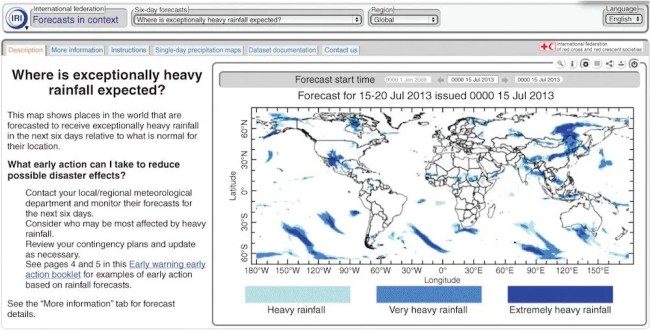
It’s not the climate itself that’s being governed here, of course, but the regulation of human technologies, behaviours and mechanisms to mitigate the causes of climate change and adapt to its unavoidable impacts. Hulme investigates and summarises these approaches to governance, including state-centric and polycentric models: the use of standards and certification, carbon markets, citizens’ assemblies, judicial courts and ‘climate services’ such as the ‘Forecast in Context Map Room’ tool developed by the International Federation of Red Cross and Red Crescent Societies for decision-making in disasters.

“[G]lobal temperature is not an entity that is directly tractable to intentional human action. Governing temperature therefore requires governing the full range of human activities and technologies … and the imaginations that give rise to them… Governing global climate therefore becomes an exercise in governing the collective of human societies but where the power to do so exists in no central or identifiable location.”

A technosocial idea of climate change: showing a screen shot of the IRI-IFRC Forecast in Context Tool
Screenshot of the IRI-IFRC Forecast in Context Tool illustrating where exceptionally heavy rainfall is expected.
Source: ‘Climate services for society: origins, institutional arrangements, and design elements for an evaluation framework’, Catherine Vaughan & Suraje Dessai (May 2014)

Given climate governance’s “totalising reach”, as Hulme identifies it, paradoxically perhaps it’s a profound relief as well as an insurmountable obstacle that no human institutions can ever have the global power to understand, decide and dictate the scale and scope of response that’s needed. There is no governing ‘matrix’. As Hulme says, “far from … vision[s] of a coordinated and intelligent Earth System Governance framework, a more plausible metaphor for climate governance is that of a clumsy multilayered meshwork of overlapping and competing competences and interests.”

Climate imaginaries

Hulme finally moves to the realm of realist and speculative imaginaries of the climate to come and how “events that have not yet happened in reality, happen in the imagination.” As such, now as in history, “future climate imaginaries wield extraordinary power over the present.” He reminds us of the totalitarian party diktat in George Orwell’s Nineteen Eighty-four — “Who controls the past, controls the future: who controls the present, controls the past” — and suggests that with respect to climate change, Orwell’s aphorism might come full circle: “Who controls the future, controls the present”. In this light, the “hopeful imagery offered up in the Paris Agreement”, of a global future climate to be kept under 1.5o to 2.0oC above pre-industrial levels is an especially powerful future narrative attempting to motivate and constrain human behaviour to a global pathway. But as such it “does not necessarily trump all other climate imaginaries … [and]  prompts the obvious question: Whose imaginaries count most?”

Among the artistic responses to ideas of climate change Hulme references is The Weather Project. Olafur Eliasson’s 2003 installation in the Tate Modern’s cavernous Turbine Hall “reminded visitors that humans are unavoidably bound up in the making and experiencing of the weather.”

“Human activities are increasingly co-producing the vaster space of the atmosphere and the climates that it yields. Through his installation Eliasson was saying that there is no standpoint outside of the weather from which humans can stand and objectively observe, measure or manipulate the atmosphere … For humans to live culturally with climate is for climate to be inescapably altered.”

An artistic idea of climate change: showing Olafur Eliasson's 2003 installation in the Tate Modern, The Weather Project.
View of Olafur Eliasson’s The Weather Project in the Tate Modern Turbine Hall, 2003
Photograph: Mark Goldthorpe © 2003

The different practices of ‘futuring’ — drawing on science, fiction, metaphor, modelling, myth, scenario-making, visualisation or other techniques — need to recognise that our futures are not reducible to climate alone but are many-sided; are produced and conditioned on different scales, not just the abstract global scale; and have geographies and histories. Also,

“imaginaries are not merely imaginaries. They are not simply inert figments of a fertile imagination. Sociotechnical imaginaries operate across the boundaries of the perceptual and the material. They can bring real worlds into being, for example carbon capture technologies, driverless vehicles, intelligent robots, or space tourism.”

Although discussed as a separate way of futuring the climate, along with models and scenarios for example, metaphor is perhaps something so intrinsic to human imagination and our faculty for language that it underpins the others as much as it stands out for investigation in its own right. As Hulme says, “metaphors help us grasp something new or unfamiliar by associating it with something more familiar and everyday.” Think of the ‘greenhouse effect’ or ‘carbon budgets’. Not intended to be taken literally, metaphors “help explain an idea, enable a comparison, or provoke a line of thought.” And metaphors are perhaps especially helpful in thinking through non-linear aspects of the complex and unpredictable world around us. Think ‘tipping points’, ‘planetary boundaries’, ‘runaway climate change’ — metaphors that Hulme picks up as phrases emanating from Earth Systems scientists. Or think ‘global thermostat’, ‘sunscreen’, or ‘insurance policy’ — metaphors deployed in the world of geoengineering. ‘Geoengineering’ is itself a metaphor, of course, one that projects as a solid science the risky business of presuming to tinker with the planet at its own scale. As Hulme says “metaphors can be hard to spot and can act as political Trojan horses” (and there goes another one), so it’s worth being on the lookout for them. Metaphors can also point in different directions, as he suggests with ‘The Anthropocene’.

“Is the Anthropocene a way of drawing attention to the awesome – but unequal – powers and responsibilities people now have for shaping the climatic future? Does it provoke a questioning of the character and wisdom of the Anthropos – the human – who has given rise to this epoch and its unequal power relations? Or does the Anthropocene metaphor dissolve the old binaries of modernity that separate nature from culture and so recognises that climate is no longer natural and never again can be?”

The overall thrust of this book is how — given the diversity of human imagination and experience, and the ever-changing state of our knowledge of the world — there can be no single narrative of climate change. Certainly, no singular strategic narrative directing what ‘we’ must do or what ‘climate’ we must end up with. There are many present experiences and understandings of what a climate is and what climate change means; and therefore many futures at stake, and many practices for reaching out to them and making use of them today. But who, in the end, can resist a convincing and pithily stated narrative?

“An indefinite future of a physically changing climate, now brought about largely by human hands, has to be confronted. But also to be grasped is the fact that the idea of an unsettled climate is with us forever.”


Find out more

Climate Change by Mike Hulme (2022) is published by Routledge. You can read about Mike’s work and thinking on climate change over many years at his website.

Some of Mike Hulme’s ideas have helped shape previous ClimateCultures blog posts, including The Stories We Live By, where Mark discusses metaphor and other aspects of our discourses and narratives on our relationships with the rest of the natural world, as explored in a free online ecolinguistics course created by ClimateCultures member Professor Arran Stibbe and volunteers from the International Ecolinguistics Association.

Mark Goldthorpe
Mark Goldthorpe
An independent researcher, project and programme manager on environmental and climate change issues - investigating, supporting and delivering cultural and creative responses to our predicaments.

The End of the World? Let’s Be Honest

Writer Philip Webb Gregg embraces our Environmental Keywords theme on Transitions with an urgent call to abandon our language of endings for one of beginnings, where we embrace the deepest change: a radical transition to more honest stories.


1,720 words: estimated reading time = 6.5 minutes


Alright, I have a confession, and I’m aware this is an uncool thing to say, but I no longer believe in the end of the world. 
 
Shocking, I know. Especially coming from me. I’m exactly the kind of person you’d expect would think the apocalypse was just around the corner. After all, I’m a second-generation activist (my mother baked bread at Greenham Common). I’ve done all the usual things; camped at the capital, given out endless leaflets, hurled abuse at the gates of Parliament with the best of them. Moreover, I’m a white, straight(ish) man with long hair, stick-and-poke tattoos on my forearms and a steady yoga practice. Of course I should believe in the imminent end of the world. Except I don’t. Not anymore. 
 
I used to. I grew up in an alternative anarchist community on the southernmost tip of Europe. In some ways, it was a happy and unremarkable childhood, but in others I have learned it was quite unique. For instance, we took for granted that the world was ending. It didn’t matter how. Could be nuclear, could be another world war. The point was, I and all my friends — and all our parents — were basically futureless. 
 
We made no five-year goals. There was never a whisper of career paths or pension plans, or even what we’d do next week. Instead, we had fun. We used the minimum effort possible to make us as happy as possible for as long as possible, until it all fell inevitably apart. In some ways, this is good for the soul. It has certainly given me an appreciation for the honesty of the present moment –- more on that later. But it also means I grew up in a world and a community that had doom on its lips. 
 
The end of the world, as we know it

So believe me when I say I understand what so many of us are going through. Call it apocalypse-anxiety, or climate-anxiety, what it amounts to is fear, dread; the empty, heavy feeling in your stomach when you see the world changing around you. When you read the science, watch the news, walk across the dead grass.
 
I have spent three decades speaking with the language of endings. But it’s only recently that I’ve come to understand that there are other tongues out there. It’s only recently that I’ve come to understand that the end of the world as we know it is not the end of the world [1]. There is a language of beginnings and a language for whatever comes in between.

Honest stories; Showing Philip Webb Gregg with a burning flower
Also a beginning… Photograph: Philip Webb Gregg © 2022

It is too easy to be seduced into the ‘last days of Rome’ metaphor. That we are Troy before the horse, Atlantis before the flood, Pompeii before the fire; living on a cliff edge with hyper-luxury behind us and the apocalypse ahead. All of this is very poetic and compelling, but ultimately inaccurate and unhelpful. 

Because, like it or not, tomorrow is coming. And it will not be the end of the world. It will just be a day, in many ways much like any other. 
 
As I write this, I can hear the voices of my family and friends gesturing frantically to their browser screens, their Facebook shares, the dry heat in the stale air. Yes, mass-disaster, societal collapse and global meltdown are already happening. Riots and starvation and power-outage are very likely in many parts of the world very soon. In other parts, they are already underway. And they are awful and inhuman and entirely avoidable. But these are symptoms of drastic (and reversible) change, not the apocalypse. And that knowledge changes everything.
 
The point of all of the above is simply this: believing the end is nigh is a forgivable form of cowardice. It excuses you from the hard work of tomorrow in favour of the pleasure, or the despair, of today. Instead I have a radical proposition worthy of the anarchist roots that bred me. I propose we embrace change, on all fronts and at all costs. 
 
Because despite everything I have said, we are in the deepest trouble, and we need the deepest change. 

An honest change

Some of this change may involve stepping forward, into what feels like an abyss. Some of it will likely feel like a step back into the past — the way things were in the ‘good ol’ days’. Most of it, I hope, will be more of a step sideways. Neither demonising the future, nor glorifying the past, but simply being more present, honest now.  Why do I use the word ‘honest’? Because I think that’s at the root of the change we need.
 
Imagine, for a moment, that you were alive a thousand, or two thousand years ago. I think it is unlikely that you cared about ‘the planet’. Almost certainly you cared about the weather. And the soil. And, in some form, the wild. Most likely you spent your days hacking away at it, fencing it, herding it, milking it, eating it, and your nights hoping it wouldn’t eat you or your loved ones. 

Give or take, that’s been the case for all of human existence. Throughout our entire collective evolutionary journey, we have not had to worry about overwhelming or choking our ecosystem in the way we do now (this is one of the reasons it is so goddamn hard to get your head around the idea of the Anthropocene). But there is another staggering change that goes hand in hand with that transition. That of honesty. Truthiness. Verisimilitude. Call it what you like, we’ve lost it. 

Sometime in the last few millennia, I believe we have learned to lie to ourselves about nature, and the nature of ourselves. Perhaps it happened the moment we overstepped our place in the food chain; began looking at the natural world as a thing separate, and beneath us. Maybe it started with the invention of fiction — that most essential and deadly of human tools — and the creation of the written word. Who knows?

All I know is that these days I see it everywhere. And the reason that these times — our times — feel like the ‘end-times’ is because they are the apex of this dishonesty. 

For me this is the core of the crisis we face, and the hinge on which our change must turn. I do not point to technology or colonialism or capitalism, though those are certainly factors, I point instead to the myths we tell ourselves. The stories, if you like, that we have built our lives upon; our cities, our skyscrapers. Stories of eternal progress, of the singularity and the isolation of the individual. We have grown so accustomed to deception we no longer see the bullshit we swim through every day. These things take us away from what we are, and have become the cause, either directly or indirectly, of the climate and ecological crisis we are facing today. 

Honest stories: showing a man holding a burning newspaper
Photo by akın akdağ from Pexels: https://www.pexels.com/photo/close-up-shot-of-a-person-holding-a-burning-newspaper-10176291/

Because really, that’s all that nature is: an honest thing. Nature is not flowers, rivers and butterflies. Sure, those things are an aspect of the natural world, but so are carnivores, rotting flesh and landslides. My point is the natural world is not a pretty or easy thing — most of it is uncomfortable, harsh and dangerous. The very opposite of our lives now. But it doesn’t lie to you. It cannot; it simply is. 

And really, so are we. When we strip away all the lies we clothe ourselves with, we are still the same scrabbling figures we were two thousand years ago, except that now the weather and the soil and the wild are all going missing and we’re left wondering what on earth is next.

Well, truthfully, I have no idea. But that’s what we’re here to find out.

If the gift of my upbringing taught me anything, it’s how to call bullshit on a world that just wants you to shut up and buy stuff. I think we need to stop being passive members of a society that’s actively slipping into chaos. We must make an effort to step away from the language of disasters and step instead toward the language of new beginnings. 

I think we need to speak, and speak honestly, and tell new stories, honest stories; not just to each other, but to ourselves. And yes, in some non-hippy way, to the world as well.


Find out more

[1] The phrase Philip uses, “the end of the world as we know it is not the end of the world”, is an adapted quote from The Dark Mountain Manifesto (2009), written by Paul Kingsnorth and Dougald Hine: “The end of the world as we know it is not the end of the world full stop. Together, we will find the hope beyond hope, the paths which lead to the unknown world ahead of us.” For its founders, the manifesto “marked a first attempt to put into words the ideas and feelings which led to Dark Mountain. Think of it as a flag raised so that we can find one another. A point of departure, rather than a party line. An invitation to a larger conversation that continues to take us down unexpected paths.”

Philip is an editor for the Dark Mountain Project, working on several of its volumes — including the forthcoming Issue 22: ARK, which is published this October.

You can read Deconstructing our Dominion Stories in a Time of Unravelling, the recent review by Joan Sullivan of two new books by the current co-editors of the Dark Mountain project, Nick Hunt and Charlotte Du Cann, and the project’s themes have also come up in several other posts, for example Conversations with Work That Connects, featuring six ClimateCultures members in wide-ranging conversations on their creativity in dark times.

Philip’s previous ClimateCultures posts include Rewilding – Slantways: an original poem exploring rewilding as a sideways step into a stranger world, resisting simplifications of ‘progress’ and the gains and losses of our current model, even as we seek to change it.

Scroll down for  Comments on this post — and add your own!

Philip Webb Gregg
Philip Webb Gregg
A writer of ephemeral things for beautiful places, exploring the disconnect between human nature and nature nature, and grappling with themes of faith, folklore and narratology.