ClimateCultures editor Mark Goldthorpe finds in Tom Hirons’s Nettle-eater concise, expansive, poetic prose on peril, discovery, and instability in the wild experience of a soul going mad to become truly sane, breaking and remaking our understanding of existence.
1,070 words: estimated reading time = 4 minutes
Poet Tom Hirons’s short prose book, Nettle-eater, is an urgent voyage into our inner wilds. They lie buried but still in reach through those outer wilds that have likewise been banished, seemingly, to the margins and to memories of a none-otherness that underpins all. There is, of course, nothing truly, completely other in this world, although our civilisation has made it its business to manufacture and commodify separation. Even our language of ecology and mutuality is reduced to ‘systems’ and ‘services’ and ‘sustainability’.
This is a book of peril and discovery, of facing head-on an instability. Not as a teetering, precarious balancing act between fates of madness and sanity as we maybe feel our nettle-eating narrator is presenting to us — the story here is not of such a tipping point so much as a wilful lunge into wildness — but an instability within those words and the experiences they try to contain. The experience he relates is of a soul first breaking and then remaking its understanding of existence, of what sanity can possibly mean in an insane world. “Some sadnesses are too great to be borne in a life built upon sanity.”
“You know the call,” he begins. “All your books speak of it. If I differ from you, it is only in this: When the call came, I heeded it.”
Nettle-eater
Nettle-eater by Tom Hirons. Artwork by Rima Staines.
Accepting the call, our narrator heads to the moor as commanded, to live wild on nettles. He weaves for us a short account to counter the long processes of our taming, of ourselves and all about us. That history has made a madness out of rationality, displacing us from where the unnamed beast still hides and calls, “beyond the edge and in the deep centre of things”. To find it, the nettle-eater unmoors himself on the moor, thankful for the spectral visions it affords him.
“There are folk both fair and foul abroad on the moor who are older than all my dreams, old as the jagged stones and those curious people who raised them; from them I learned a little humility, at times, although the lessons were mostly quickly forgotten.”
‘Rewilding’ is not a word you will find in this book, or in Sometimes a Wild God, Hirons’s poem that feels like a good walking companion to this feral story. (Both are very elegant small books, perfect for a pocket and a walk out into woods, waterways, hills or moors). This is not nature-archaeology as cure, taking us back to how things used to be. I suspect rewilding is not a word he uses much in conversation or interviews. For all the ancient, half-buried links to a feral world waiting to be discovered, attended to and lived anew, there is something much more forward-moving in these concise, expansive revelations in prose and poetry: for-wilding rather than re-wilding? Or, simply, wilding.
Wilding himself, self-willed, into the more-than-human — “waking in the night wearing fire-gloves” from the nettles, “hands … stung to red rags, pierced with pins”; bruising his naked body as he leaps, salmon-like, at the high waterfalls of the moor or forced “into impossible slivers of space between rocks”; being laughed at by wild horses “unimpressed by whatever wisdom or folly I was engaged in” — the nettle-eater seeks to turn humanity’s pale mimicry of nature with him, willing our planted world also to defect. Without much success: “I like to think, though, that a few straight larches twisted their trunks and kinked themselves towards the wild side beneath the silvery moon on nights of particular eloquence on my part.”
As the year moves on its cycles, and he moves through forgotten initiations, “enticed … from the skins of secret roots and the peculiar angles of the stars”, the nettle-eater’s spirit frees itself from his earth-bound body — but not in separation — soaring “as swift and strong as a buzzard. The land below me was as perfect as a wren, crisp as lichen or ice.”
“Do not sit there, wondering,” he ends. I have told you the truth.”
Sometimes a Wild God
‘Sometimes a Wild God’ by Tom Hirons. Artwork by Rima Staines.
Yes, Nettle-eater has heeded the call and urges to us too. “You were never more lost than you are now, if you cannot reach out, touch the wild earth and weep.” Yes, sometimes a wild god calls on you at home, perhaps disturbing your safe, quiet reading:
He will not ring the doorbell; Instead he scrapes with his fingers Leaving blood on the paintwork, Though primroses grow In circles round his feet.
…
The Fox leaps into your eyes. Otters rush from the darkness. The snakes pour through your body.
Dare we listen to that call? With the nettle-eater’s story and the wild god at our door, perhaps we take the first, faltering steps before we’ve even realised…
Nettle-eater (2018) and Sometimes a Wild God (2015) by Tom Hirons are published by Feral Angels Press (“poetry for a world on fire”), with artwork and illustrations by Rima Staines. Both are also available as audiobooks, read by Tom; Sometimes a Wild God is also available as an A3 poster. Tom and Rima are co-founders of Hedgespoken, an offgrid travelling storytelling theatre.
The suggestion of a new verb for-wild, in place of re-wild, was included in neologisms proposed by philosopher and writer Ginny Battson in her February 2020 Seasonalight blog post, Re to For: “Times are changing and, with Earth in crisis, we are needing to imagine our futures ~ preferably, good ones. With so many things re-quiring a very new approach (at least in living memory), I am beginning to dislike the prefix RE. re-wire, re-cover, re-weave, re-wild, re-store – ‘re’ as in to go back. … We need to look forward into newness that’s just. And that needs to be reflected in our language.”
On the dangers of forcefully excluding the wild, of making it monstrous by paying it too much ransom for the assumed security of civilisation, perhaps contrast a story like Nettle-eater with John Gardner’s short 1971 novel, Grendel, which I reviewed in Bringing Our Monsters Back Home. Better to take a home visit from the Wild God than from Beowulf’s monster, I think…
ClimateCultures editor — and UK Architects Declare Manager — Mark Goldthorpe looks at new initiatives for regenerative design, a paradigm shift embracing principles of being a good ancestor, coevolving with nature and creating a just space for people.
2,330 words: estimated reading time = 9 minutes
For the past few decades — certainly since before I began my career in environmental and climate issues — ‘sustainability’ or ‘sustainable development’ has been the guiding principle behind local, national and global efforts to steer us away from greater destruction of our natural world. Language has changed over that time, not least in how we talk about ‘global warming’, ‘climate change’, ‘global heating’, ‘climate catastrophe’, the ‘Anthropocene’, ‘environmental justice’, ‘ecocide’, and so much more. But ‘sustainability’ has stuck — perhaps partly because this short word covers a host of meanings and so has the potential to bring disparate communities together around common concerns, albeit often working to different priorities.
The phrase ‘sustainable development’ emerged from the UN Brundtland Commission in 1987. It proposed a goal of “meeting the needs of the present without compromising the ability of future generations to meet their own needs.” Sustainability here was conceived of as protecting a capacity for humanity to survive, even thrive, into a future that was no longer being undermined by our present acceleration of resource depletion, accumulation of waste and pollution and destruction of natural habitats and wildlife: sustainability as the ability to carry on. Part of the word’s appeal is to businesses’ powers of innovation and enterprise in ways that can sustain their profitability by diverting it to less damaging activities. At the same time, environmentalists could see it as a practical vehicle for delivering better nature conservation, greater recognition of the innate value of the world’s habitats, species and ecosystems, and an urgently needed move to ecoefficiency.
Although much debated at the time across a spectrum of opinions, from ‘deep green’ to ‘green capitalism’, the promise of sustainable development was that we could meet our needs both now and indefinitely into the future. A large banner under which to gather all our ambitions for a better world.
Has it worked? What have we been sustaining for the past 30 years? Our technological efficiency has improved, and movements to stimulate and accelerate popular and political action have flourished. But our waste and pollution, our energy demand and resource use, our habitat destruction and species extinction, and the concentration of greenhouse gases in our oceans and atmosphere have all continued to grow too, with all the impacts we imagined these would bring, and more. ‘Growth’ is still the dominant paradigm, even with sustainability as the supposed goal.
In 2023 the Stockholm Resilience Centre reported that we’ve now breached six of the nine planetary boundaries we rely on. Can we say that sustainability is succeeding? Should we say it has failed? Do we need an entirely new paradigm? What might that be?
Crossing our planetary boundaries. From Stockholm Resilience Centre.
From declaring an emergency…
Part of what that much-needed change might be is captured in the increasing presence of ‘regenerative’ in debates over the transition to a better, cleaner, more ecologically balanced and socially equitable future lived safely within planetary boundaries. And one part of that shift has been work that I’m excited to be associated with through UK Architects Declare.
That movement has been gaining momentum and reputation since long before I joined, part-time, as AD’s manager in 2021. The initiative’ was launched in May 2019 by Michael Pawlyn, founder of Exploration Architecture, and Steve Tompkins of architectural practice HaworthTompkins. As Michael put it at AD’s 5th birthday party last month, back in late 2018 he and Steve had a gloomy couple of pints together as they contemplated the latest and most depressing report from the Intergovernmental Panel on Climate Change and how little concern there seemed to be in the architectural profession. They engaged a small group to organise a declaration of climate and biodiversity emergency. Their website very quickly attracted its first few hundred signatories and caught the imagination of the profession — not least because of its insistence on the need for change in our systems, not just (but also) in our behaviours. The declaration promoted a theory of change drawing on the work of Donella Meadows, who showed how the most effective way to change a system is through its higher ‘leverage points’: the paradigm behind the system and the mindset that sustains it, and the goals the system drives all of us towards.
This interest rapidly accelerated and expanded, spawning many related declarations across the built environment sector, around the UK and the globe. Today, more than 8,000 organisations have signed declarations in 28 countries under the banner of Built Environment Declares, and many other sectors have made their own declarations — including, of course, Culture Declares.
‘When AD started, pretty much no one outside of Sweden had heard of Greta Thunberg, Extinction Rebellion had yet to hit the headlines, Doughnut Economics had only recently been published, the WellBeing Group of Governments had yet to form, China had yet to announce a date for decarbonisation, the idea of a Law of Ecocide, the Rights of Nature, or Future Generations legislation were all seen as distant dreams. And yet since then a lot of governments have actually implemented them.
‘And one area where I think all of us as signatories can enjoy some credit: five years ago hardly anyone was talking about regenerative design, and now everyone is. That’s something we’ve all created together — the potential for architects to reclaim our agency as shapers of the future, as integrators and systems thinkers, as people who want to be able to proudly look our children in the eye in ten years time and say “Yes, I saw this coming and this is what I did about it.”’
— Michael Pawlyn
UK Architects Declare works on a dual approach: providing practical support to its signatory practices so they can implement their 12-point declaration while operating in the current flawed economic and social system; and demonstrating how the system can be changed to one that works within our planetary boundaries and deliver social and environmental justice. The point, as Meadows demonstrated, is not to feed the paradigm that’s created our emergency by merely tinkering at its margins, but to build a new paradigm — in this case, based on regenerative rather than degenerative principles.
… to regenerative design for a better future
In its latest work, AD has developed a set of policies — Building Blocks — to transform the built environment, and guidance for architects and urban designers in a ‘work in progress’ Regenerative Design Primer. And, working with media partner Architecture Today, it has launched a new community initiative, the Regenerative Architecture Index. The Index will bring together, learn from and promote examples of regenerative activity at two levels: the practice and its projects. The Building Blocks address the need for government policies for resource efficiency, circular economy and social and natural infrastructure. These are based on foundations of climate literacy and climate leadership, alignment with well-being and planetary limits, and safeguarding future generations’ ability to act. Meanwhile, both the Primer and the Index promote clear principles for designers and businesses in the built environment sector: being a good ancestor, co-evolving with nature, and creating a just space for people.
Regenerative Design Primer, UK Architects Declare 2024
Being a good ancestor is about a shift in mindsets to consider the truly long-term: thinking seven generations ahead and ensuring adaptability and flexibility for the future.
Co-evolving with nature is about recognising that we’re part of nature, within integral living systems, not separate from it: actively regenerating, learning from and working with natural systems.
Creating a just space for people is about providing social connection, economic opportunity and wellbeing for all: fostering a shared sense of stewardship where neighbourhoods can self-organise and build their resilience.
Together, these principles require innovative thought, designing for circularity and encouraging closed-loop energy, material and water cycles, and adopting ethical, inclusive and participative approaches.
The Primer makes a distinction between adopting these principles and continuing with the now conventional approach. Regenerative design transcends ‘sustainability’ in three key ways:
From being ‘less bad’ to being net positive.
From being just focused on humans to considering the whole web of life.
From a mechanistic approach that can focus too exclusively on carbon (‘carbon reductivism’) to a more holistic and systemic approach.
Regenerative design mimics natural ecosystem processes, which keep cycling and transforming materials and grow healthier and more diverse ecosystems. It uses a systems approach to create resilient and equitable systems that integrate the needs of society with those of nature. This means looking beyond the boundary of a project or a specific site. By doing so, it delivers positive environmental and social outcomes, ensuring both human and planetary health.
Just as the May 2019 AD declaration of planetary emergency quickly attracted more support than the founders initially anticipated, in May 2024 the first iteration of the Regenerative Architecture Index gained an encouraging number and diversity of entries. Architecture Today and UK Architects Declare will be announcing the scheme’s inaugural results next month, with a special celebratory event and issue of AT’s magazine. AD will then work with participants to take a deep dive into their experiences and ideas. That learning, with feedback on the Regenerative Design Primer, will cycle directly into the next iterations of both Primer and Index next year, and no doubt spark new policy work and other initiatives.
Creative agency for change
For me, witnessing and supporting the huge amount of voluntary work that dedicated professionals — across AD’s steering group and others in small groups working to support architectural practices and engage policymakers — is energising and motivating. And the mounting realisation that not only do we need a new, positive paradigm but that one is possible and is actually being demonstrated is empowering and generates practical hope.
Another key distinction between regenerative and sustainability-driven approaches to change is that it is inherently creative: it calls on us to expand and engage our imaginations and to help design the difference we want to see. It is also an exercise in humility, recognising the world beyond our own self-centred horizons and timescales and drawing inspiration from others — human and more-than-human, and an enhanced sense of what the future can be and how its inhabitants too can flourish.
When I set up ClimateCultures in 2017, after working with the charity TippingPoint on immersive events for artists and scientists to explore creative responses to the emergency, it was out of a sense that to create change that seems hard or impossible, we need at least two things above all: a sense of agency and a sense of community or association. As I wrote in an article on ClimateCultutes, agency for change and the environmental imagination:
“We need to feel we can do something meaningful and that others are on board. Of course, we also need action itself, and increasing awareness of the problems. And these things are all interrelated: action, association, agency, awareness. Sometimes it’s personal action that comes first, providing the spark to taking more action as part of a community; these experiences help to grow both our personal and shared awareness of the issues, leading to yet more action, and so our agency builds and builds. It can be a virtuous circle, rather than the vicious cycle of frustration, disappointment and despondency.
“If there’s one thing that helps drive this virtuous circle and motivates change, I think it’s imagination. A sense that things can be different, that there are other ways of acting and living than we now take for granted. Even if we don’t know how to enact these differences, imagination gives us a new picture, casts new light on the old picture, or helps us realise that other people who we’ve barely acknowledged until now have pictures to share with us. Imagination is both an exploration and expansion of our horizons.”
As Culture Declares says, “culture can help stir up human response as well as breaking old habits and creating new stories and visions for our world … culture is what humans – and other species – do to create conditions for life to thrive. We can think in a new way about Culture as organised activities, so that we can create a Regenerative culture.”
Many ClimateCultures members and readers will also be signatories to Culture Declares or other declarations — Heritage Declares, Design Declares, and so on. And ClimateCultures would love to share your stories, examples and experiences. How does your work as an artist, researcher or curator draw on or inspire regenerative paradigms or goals? What creative works inspire you? How do you respond to the emergency and the history of sustainability-led approaches to tackle it? Where next?
Find more
You can find the original definition of Sustainable Development and much else about how it’s being implemented at the United Nations Sustainable Development pages.
The Stockholm Resilience Centre has produced several reports on its planetary boundaries work. This has also been adapted by Doughnut Economics Action Lab to promote the need for a social foundation that ensures no one is left falling short on life’s essentials, as well as an ecological ceiling to ensure that humanity does not collectively overshoot the planetary boundaries.
You can find the Regenerative Design Primer and information on the Regenerative Architecture Index, as well as the Building Blocks manifesto and many other resources at UK Architects Declare. If you work for or with, or know people within architectural or other construction-related organisations, have they signed a shared declaration of climate and biodiversity emergency? You can find these at Built Environment Declares. Other declarations include Culture Declares, Heritage Declares, Design Declares and Business Declares.
An independent researcher, project and programme manager on environmental and climate change issues - investigating, supporting and delivering cultural and creative responses to our predicaments.
ClimateCultures editor Mark Goldthorpe reviews Climate Change, Mike Hulme’s book exploring how the idea of climate change is shaped and used in different ways and how its meanings help us navigate climate change as predicament rather than problem.
2,900 words: estimated reading time = 11.5 minutes
“Climate change is an idea of such size, scope, and imaginative power that it escapes the capacity of any one person to grasp and for political institutions to resolve.”
The very first words in Mike Hulme’s climate book are “Not another climate book!” We’ve all read (or read about) so many different works, from the IPCC’s periodic reviews of the state of our scientific knowledge through to the polemical treatises for one solution or another. Contextualising his own book alongside some of these — the popular guides “developed for specific audiences —‘dummies’, children, planners, or environmental lawyers — and innumerable ‘short introductions’,” Hulme doesn’t neglect the work of creative writers, mentioning both the increasing volume of literary and genre fiction and its academic coverage. So-called Cli-Fi has rapidly become so well established that by 2018 it already needed a volume called Cli-Fi: A Companion.
So Hulme rightly asks “What more possibly is there to add?”, and his response convincingly adds up to: ‘quite a lot’. Or, maybe, ‘everything’, because we’ll never run out of things to say about the subject. “Climate change is not ‘over’,” he reminds us: neither in the science that underpins our knowledge, nor in coming to terms with what it means for us and our current cohabitants on the planet and its future travellers; and not in the sense of being encompassed or contained within any one field of knowledge. “There is a ‘further beyond’,” he tells us: “Plus Ultra, the epigraph engraved by Spanish grandees on the Pillars of Hercules at the Straits of Gibraltar at the turn of the sixteenth century.” By analogy, collectively we’re all in the straits now, at the beginning of a new age of human experiences of what the world is becoming and what it means to be human within it. And so there will always be a need for new guides and their challenges to the multiple ways we have of grasping, and failing to grasp, these questions.
Climate change is best regarded not as a problem needing a solution but as a predicament. In contrast to problems, predicaments “can neither be solved through engineering nor resolved through politics. A predicament just won’t go away. What predicaments need,” Hulme suggests, “are stories. Interpretive stories — what some may call guiding myths — through which to understand the predicament and to come to terms with it.” Which doesn’t mean just accepting it, standing still. The stories we tell about our predicaments are ways to find our way through a shifting landscape, in ways that seek, sustain and generate hope. “To live with it — but also to move on.”
“It is possible to use the idea of climate change creatively to bring about desirable change in the world without remaining hostage to the impossible dream of subjecting the condition of global climate to human will.”
Geography — Mike Hulme’s own field of knowledge — is a useful discipline from which to start out, taking in its own traditions of both physical and human sciences and offering space to incorporate and adapt insights from many other disciplines. Both in the main text and in many informative and illustrative vignettes throughout, this book draws on what science historians, social anthropologists, environmental economists, political ecologists, indigenous activists, geohumanities and literary scholars, sociologists, and a range of sub-disciplinary and interdisciplinary geographers have to say about climate change. At the same time, Hulme admits this is a very different book to any that researchers from any of those disciplines might offer, or even other geographers from other cultures. It’s the partial and provisional nature of our knowledge that he emphasises. Knowledge, made through scientific or other practices, occurs in particular settings, from where “it moves between people and travels between places.”
“Climate change has today become a synecdoche – it ‘stands in’ – for the status and prospects of people’s changing material, social, and cultural worlds. And these worlds are always in the making … the meaning of climate change is never fixed, nor can it ever be exhausted.”
This book has as its focus our ideas of climate change, and how those ideas have been expressed in different times and cultures, shifting and mutating as they move between them, never settling forever. Climate change “becomes an idea used to different ends.”
The earlier sections provide historical-geographical perspectives through lenses of culture and science — especially cultures of science practised by empires, superpowers and global institutions that have constructed, expanded but also contained our understanding — to become a focus of public concern, debate and mobilisation. The relationships between public and expert understandings are critical to how debates, media coverage and shaping of policy all play out and affect each other. In the middle sections, Hulme sets out different positions within two broad camps, ‘science-based’ approaches on the one hand and ‘more-than-science’ ones on the other. A crude distinction, but “a helpful device for exposing how the idea of climate change becomes imbued with multiple meanings across diverse social formations”. Finally, he discusses the future: the ways it’s being imagined now and how different understandings of climate change are trying to direct our attention to making the ‘right’ future happen. We all have positions to take and world views at stake as we try to steer the planet into one future and away from others. What ideas of climate change will come to dominate?
Between facts and meanings
What does climate change mean? Hulme suggests that broadly ‘science-based’ meanings are espoused in ‘reformed modernism’, ‘sceptical contrarianism’ and ‘transformative radicalism’. Respectively, these seek to assimilate climate change into projects of progressive technological and political development; to contest the nature or significance of climate change as a ‘thing’; or to mobilise it as a vehicle for profound social change. And in the equally expansive territories of ‘more-than-science’ positions are ‘subaltern voices’, ‘artistic creativities’ and ‘religious engagements’. These seek to supplant or speak back to the dominant scientised narrative, to reimagine it, or transcend it. One of many ‘subaltern voices’ he references is the ‘trickster’ figure — for example, represented in North Pacific cultures in Raven — that “acts as a mirror for humanity by reflecting people’s relations with the environment. Raven challenges the illusion of control that is promised by scientific knowledge and geoengineering technologies.”
Whether “getting the science right’ is the fundamental prerequisite to policy, as each of the first three otherwise differing positions assert, or we hold that science alone cannot define our knowledge and we can foreground other forms of lived or derived environmental knowledge, the meanings these six positions enact are continually constructed, sustained and deployed in our various discourses. As Hulme points out, “actions are not determined by the facts in themselves”; our choices are guided by interpretations of facts. This is why understanding the different meanings we and others attribute to our changing climate is an important early step, although not an easy one.
“How do people make sense of something that on the one hand is both physically and discursively unavoidable in the contemporary world, but that – at the same time – exceeds human ease and the imagination? Earth system scientists and literary critics alike grasp at the intangibility of climate change.”
They grasp in different ways, and each is important. Exploring creative approaches and listening to marginalised voices can offer ways to make the abstract particular where scientific knowledge-making, of necessity, strives to derive global, abstract truths from the overabundance of specifics that the natural world presents us with. Perhaps unsurprisingly for a project like ClimateCultures, the second half of Hulme’s book resonates most strongly, for all the value of the earlier, clear accounts of dominant (although fiercely competing) ‘science-based’ positions on climate change. We need to go ‘further beyond’, while maintaining a commitment to data building, knowledge construction and world modelling, if we are to grasp the many meanings of climate change and the responses we can best enact. At the very least, we need to see that scientific knowledge itself travels and translates as it moves among different places, people and processes of making sense of change.
“What climate change means locally is not simply the result of downscaling global kinds of knowledge” for, as global climate science rubs up against local subjectivities, the multiple resists becoming singular. The three broad approaches Hulme outlines as ‘more-than-science’ have much to offer as we come to terms with, celebrate and harness the “mobility and the mutability of the idea of climate change.” And these multiple voices and ways of knowing merit being listened to on their own terms, rather than merely as an attempt to ‘improve’ data and modelling.
“If science is de-centred from accounts of climate change … then different possibilities open up for identifying the underlying causes, challenges, responses, and solutions to climate change. Resisting the assumption, instinctively made by scientists, that climate change is all about molecules of carbon dioxide, global carbon budgets, modelled predictions of future climate impacts, or even about local weather extremes, makes it possible to supplant the idea of climate change using very different assumptions.”
Governing the idea of climate change
As we move into the latest global negotiations at COP27 and reflect back on the milestones (or fractions of miles) of the previous COPs, it’s worth reflecting on the concluding section of Hulme’s book, Climate change to come. The first chapter here addresses the thorny question of governing the climate and the proliferation of actors involved. For 1988’s UN General Assembly resolution, which led the way for the Framework Convention at the 1992 Earth Summit, and thus the 2007 Kyoto Protocol and 2015’s Paris Agreement, climate change was “to be regarded as a pathological condition of modernity that threatened ‘the heritage of mankind’.”
As the global regime has developed, so too the regional, national and sectoral interests that translate, advocate for and supervise what and how policies are implemented. The “agents of climate governance” now reach well beyond formal, global institutions, taking in “building inspectors, venture capitalists, media producers, trades unionists, monks, aviation authorities, professional sports clubs, farming extension officers, public celebrities, and national energy regulators.” Every kind of human activity affects the climate, and is affected by ideas of climate change. And so the annual COP attracts more and more participants, observers and influencers.
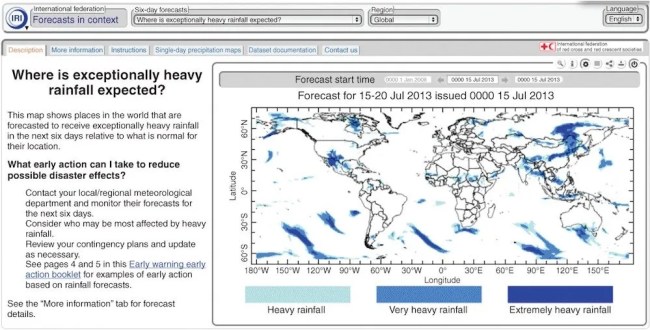
It’s not the climate itself that’s being governed here, of course, but the regulation of human technologies, behaviours and mechanisms to mitigate the causes of climate change and adapt to its unavoidable impacts. Hulme investigates and summarises these approaches to governance, including state-centric and polycentric models: the use of standards and certification, carbon markets, citizens’ assemblies, judicial courts and ‘climate services’ such as the ‘Forecast in Context Map Room’ tool developed by the International Federation of Red Cross and Red Crescent Societies for decision-making in disasters.
“[G]lobal temperature is not an entity that is directly tractable to intentional human action. Governing temperature therefore requires governing the full range of human activities and technologies … and the imaginations that give rise to them… Governing global climate therefore becomes an exercise in governing the collective of human societies but where the power to do so exists in no central or identifiable location.”
Screenshot of the IRI-IFRC Forecast in Context Tool illustrating where exceptionally heavy rainfall is expected. Source: ‘Climate services for society: origins, institutional arrangements, and design elements for an evaluation framework’, Catherine Vaughan & Suraje Dessai (May 2014)
Given climate governance’s “totalising reach”, as Hulme identifies it, paradoxically perhaps it’s a profound relief as well as an insurmountable obstacle that no human institutions can ever have the global power to understand, decide and dictate the scale and scope of response that’s needed. There is no governing ‘matrix’. As Hulme says, “far from … vision[s] of a coordinated and intelligent Earth System Governance framework, a more plausible metaphor for climate governance is that of a clumsy multilayered meshwork of overlapping and competing competences and interests.”
Climate imaginaries
Hulme finally moves to the realm of realist and speculative imaginaries of the climate to come and how “events that have not yet happened in reality, happen in the imagination.” As such, now as in history, “future climate imaginaries wield extraordinary power over the present.” He reminds us of the totalitarian party diktat in George Orwell’s Nineteen Eighty-four — “Who controls the past, controls the future: who controls the present, controls the past” — and suggests that with respect to climate change, Orwell’s aphorism might come full circle: “Who controls the future, controls the present”. In this light, the “hopeful imagery offered up in the Paris Agreement”, of a global future climate to be kept under 1.5o to 2.0oC above pre-industrial levels is an especially powerful future narrative attempting to motivate and constrain human behaviour to a global pathway. But as such it “does not necessarily trump all other climate imaginaries … [and]prompts the obvious question: Whose imaginaries count most?”
Among the artistic responses to ideas of climate change Hulme references is The Weather Project. Olafur Eliasson’s 2003 installation in the Tate Modern’s cavernous Turbine Hall “reminded visitors that humans are unavoidably bound up in the making and experiencing of the weather.”
“Human activities are increasingly co-producing the vaster space of the atmosphere and the climates that it yields. Through his installation Eliasson was saying that there is no standpoint outside of the weather from which humans can stand and objectively observe, measure or manipulate the atmosphere … For humans to live culturally with climate is for climate to be inescapably altered.”
The different practices of ‘futuring’ — drawing on science, fiction, metaphor, modelling, myth, scenario-making, visualisation or other techniques — need to recognise that our futures are not reducible to climate alone but are many-sided; are produced and conditioned on different scales, not just the abstract global scale; and have geographies and histories. Also,
“imaginaries are not merely imaginaries. They are not simply inert figments of a fertile imagination. Sociotechnical imaginaries operate across the boundaries of the perceptual and the material. They can bring real worlds into being, for example carbon capture technologies, driverless vehicles, intelligent robots, or space tourism.”
Although discussed as a separate way of futuring the climate, along with models and scenarios for example, metaphor is perhaps something so intrinsic to human imagination and our faculty for language that it underpins the others as much as it stands out for investigation in its own right. As Hulme says, “metaphors help us grasp something new or unfamiliar by associating it with something more familiar and everyday.” Think of the ‘greenhouse effect’ or ‘carbon budgets’. Not intended to be taken literally, metaphors “help explain an idea, enable a comparison, or provoke a line of thought.” And metaphors are perhaps especially helpful in thinking through non-linear aspects of the complex and unpredictable world around us. Think ‘tipping points’, ‘planetary boundaries’, ‘runaway climate change’ — metaphors that Hulme picks up as phrases emanating from Earth Systems scientists. Or think ‘global thermostat’, ‘sunscreen’, or ‘insurance policy’ — metaphors deployed in the world of geoengineering. ‘Geoengineering’ is itself a metaphor, of course, one that projects as a solid science the risky business of presuming to tinker with the planet at its own scale. As Hulme says “metaphors can be hard to spot and can act as political Trojan horses” (and there goes another one), so it’s worth being on the lookout for them. Metaphors can also point in different directions, as he suggests with ‘The Anthropocene’.
“Is the Anthropocene a way of drawing attention to the awesome – but unequal – powers and responsibilities people now have for shaping the climatic future? Does it provoke a questioning of the character and wisdom of the Anthropos – the human – who has given rise to this epoch and its unequal power relations? Or does the Anthropocene metaphor dissolve the old binaries of modernity that separate nature from culture and so recognises that climate is no longer natural and never again can be?”
The overall thrust of this book is how — given the diversity of human imagination and experience, and the ever-changing state of our knowledge of the world — there can be no single narrative of climate change. Certainly, no singular strategic narrative directing what ‘we’ must do or what ‘climate’ we must end up with. There are many present experiences and understandings of what a climate is and what climate change means; and therefore many futures at stake, and many practices for reaching out to them and making use of them today. But who, in the end, can resist a convincing and pithily stated narrative?
“An indefinite future of a physically changing climate, now brought about largely by human hands, has to be confronted. But also to be grasped is the fact that the idea of an unsettled climate is with us forever.”
Find out more
Climate Change by Mike Hulme (2022) is published by Routledge. You can read about Mike’s work and thinking on climate change over many years at his website.
Some of Mike Hulme’s ideas have helped shape previous ClimateCultures blog posts, including The Stories We Live By, where Mark discusses metaphor and other aspects of our discourses and narratives on our relationships with the rest of the natural world, as explored in a free online ecolinguistics course created by ClimateCultures member Professor Arran Stibbe and volunteers from the International Ecolinguistics Association.
An independent researcher, project and programme manager on environmental and climate change issues - investigating, supporting and delivering cultural and creative responses to our predicaments.
ClimateCultures editor Mark Goldthorpe shares participants’ reflections from a workshop exploring the word ‘Transitions’ – the final Environmental Keywords discussion from the University of Bristol – and the sense that we need better words to capture our imaginations.
2,100 words: estimated reading time = 8 minutes
Although it was a smaller group that gathered in the St Philips area of Bristol than for the University’s previous two workshops in their Environmental Keywords series, it was as full of experiences and ideas. This final event followed the same format as the others, beginning with a walk around the local area so each person could place their own thoughts on the word ‘Transitions’ in the context of their encounters there and their conversations together while walking. And, as before, this process of exploring ideas through local explorations of place proved fruitful in the discussions that then took place at the workshop.
The tricky thing
One participant reflected on the difficulties in applying a word like ‘transitions’ within the social contexts of environmental issues when compared with the seemingly simpler patterns in the natural world. “Ecological transitions are something which are much easier for me to grasp. I can see seasons progressing and [on the walk] I took images of the flowers and the blossom coming out. I know that species are migrating and then migrating to different parts [e.g. with climate change], but that’s a more gradual transition. For me, transitions become really difficult as soon as humans are involved. Humans are just so complicated.”
It’s a complexity that often seems to get reduced to quick fixes, to a reliance on technology and its promises to shift us away from a problematic state and towards a desired, improved one. But “it’s not just about these technological solutions. It’s about the really tricky thing. It’s about demand, right? And how much energy we’re using. And you can’t just magic a problem away through net zero, right? Or through electric cars.”
Indeed, one contribution suggested that “to achieve net zero targets, we need to transition to a lower energy-consuming society using about 20% of the fossil fuels we use currently and 50% of the total energy. The hope that we can transition to 100% renewable energy under the current energy demand just doesn’t add up. Also, the net zero scenarios considered by policymakers include technologies that are not ready for deployment and they may never be. So, things like green hydrogen and carbon capture and storage.”
In fact, of course, transitions — in technologies, economics, business and consumer behaviour — are also what drive our current direction deeper into ecological and climate predicaments. Seemingly small and gradual shifts ramp up our resource use. One person illustrated this, asking “are we missing out on observing some changes that are happening and then waking up and thinking ‘Oh, no. Something changed. And I haven’t noticed that transition process’? … So for example, you know, thirty years ago you would have a weekly bath and now you have a daily shower and we know norms of convenience and hygiene change because of the materials around you, and so on.”
As someone else commented, this failure to grasp the scale of the issue and the nature of the required response can quickly lead to frustration with ‘official’ models of transitions. “When people use the word, it feels like they’re just tinkering around the edges when what we need is something much more fundamental. And the tinkering around the edges of things gets quite irritating. I don’t mean the small-scale, say, small communities who make something work and then how does that scale up? I mean the imposed transitions.”
But another participant offered a more nuanced view of how transitions can take shape in the more autonomous cultural sphere, beyond policy and technological supply and demand, for example in how refugee and immigrant families respond to new surroundings and circumstances. “So I think that transition is countries, languages, cultures. I see it firsthand and it’s fascinating to me how and what rules are bent, where tradition is pulling and where, you know, modernity is pulling and just the meshing of culture and language and all that.”
Empathetic transitions
Holding each of these three workshops in different areas of the city has given the series a strong identification with the challenges and the opportunities involved in negotiating social responses to environmental change, and how change often cannot be imposed from above. “So I naively believe that you can’t implement any change if you don’t take the people who live there on board. … I think otherwise it’s like colonialism. You’re coming, you’re plonking your view onto the world on it and you’re thinking that that’s what’s wanted.” Another expanded on this: “The only way to do that is really to spend a huge amount of time talking to people and to find out how people want to use the space, how they depend on that space, how they perceive ownership of that space, and what are they willing to give up to protect that space. And those discussions are usually not happening.” Of course, these conversations are also not simple things to hold open and to engage every voice in.
Picking up on the nature of conversations and what they offer — even short explorations such as this series of half-day events — another participant observed, “You can’t just expect transitions or transformations or change to be easy. Like there will be that conflict always. And people have their own priorities and their own interests. So it’s crucial to really understand other people’s worlds, really put yourself in someone else’s shoes. That’s why we like this sort of exercise, you know, because you don’t have to agree with someone else’s interest, but it makes you realise that we could all be more than a single issue person. … That’s why I like these sort of empathetic activities.”
We begin to see here, of course, the links between ideas of ‘Transitions’ with those of ‘Justice’ and even ‘Resilience’ — how these work with or against each other, and that would be a fascinating area of future exploration. One person offered an example from South America, of changes as a nation continues to emerge from a long heritage of dictatorship and how its constitution now “recognises explicitly the different indigenous relations to the ocean. …. So there’s a change here where this has been written into a constitutional framework. Now what that then looks like in terms of how does that become concrete actions, we don’t know. But there’s a high-level political change here.”
Often, the space between formal, top-down approaches to transition and more local, autonomous change is experienced as a gap, where change fails to take shape or lead to the desired outcomes. “The risk is you end up with the gap in the middle between the small scale community initiatives and the kind of discourse, the well-meaning discourse, from the top.”
Reaching to transformation
Maybe it’s also where it’s hardest to visualise the difference that can make the difference. As one participant put it:“So if you look at climate change and transitions, people are talking about energy, people are talking about food, people are talking about cities and with some of those I could imagine transitions, but in some of them it’s so complex that I can’t envisage what a city of the future might look like where we have had a transition. … And I find that is my intellectual challenge. I just can’t imagine. I just lack the creativity to think about how crazy this could be. … Is it that I’m just so embedded in this society where I have found my space, my niche … that I can’t see transitions.”
Another person offered an almost rueful observation: “I’m just wondering whether transition has become such a gentle word and maybe we need a less gentle word?” And a point that came up more than once was how an early experience of the Covid pandemic was the sense that change was not just inevitable — a dramatic ‘push’ on how we live — but that change is also always possible, and can be turned into something positive; but there is also always the risk of it being lost, of it fading into a return to ‘business as usual’. “It is something which forces us. But we’ve had a global pandemic, that is a pretty big push. And what we’re coming to is back to living the way it was before, with variations — we might not go into the office every day, but ultimately, it is still very much the society it was before. So if that doesn’t push us, what will make us live differently?“
As one person put it, a word like ‘Transitions’ seems to speak of a smooth process and something that’s maybe linear and inevitable: something people must move with. “You’re either going forwards or backwards. It’s either a yes or no, and it doesn’t do justice to that range of different experiences that we end up thinking about in these activities. And I do really worry because there are signs now that some of the arguments about transition, and net zero as it is so often framed, are becoming really polarised.”
Another contribution emphasises the ‘real world’ nature of change that lies behind a simple word like ‘Transitions’.“In the whole engagement debate, there is not enough being taught about how conflict arises and how you can’t make everyone happy. And especially for environmental transition, the expectation that there are some standards of living which we cannot continue: how do you have that conversation …. You won’t have a low traffic neighbourhood that will satisfy everyone because it involves some sacrifices. It involves making roads one way from two ways, taking some parking space. The new cycle lane is seen as someone else taking parking space and there are the trade-offs and everything.”
Ultimately then, the conversation returns us to the adequacy of the words we use. One person summed it up by saying that ‘Transition’ is probably not the right word. “And I feel like that this exercise has really reinforced that, I think, precisely because it is so embedded in the language of the kind of top-down government initiatives. … So I think we need another word. What word would that be? I don’t know. ‘Transformation’? …. Because I think there’s stuff already happening that we can draw on and it captures a bit more of a sense of human agency. It’s actually a bit more hopeful. …. And I think ‘transition’ sounds a bit like ‘transition is happening whether you like it or not’. The word ‘transformation’, for me, means that it sounds like more of an opportunity, a kind of intention.”
One participant shared with me that they didn’t have strong feelings about the word, as “I don’t use it much in my own work, my own life.” And maybe that is part of the issue, that it has little everyday purchase.
And another contributor offered a further alternative: “So should we be talking about transitions or should we be talking about revolution?”
Find out more
Do contribute your responses below to be part of the conversation! See the Leave a Reply box underneath the existing comments.
Environmental Keywords is a short interdisciplinary project at the University of Bristol, investigating three keywords — ‘Justice’, ‘Resilience’ and ‘Transitions’ — that are common in the environmental discourses that shape how we think of, talk about and act on the ecological and climate predicaments facing us.
With funding from the Natural Environment Research Council, the project is led by Dr Paul Merchant, Co-Director of the University’s Centre for Environmental Humanities, and involves colleagues from different departments and disciplines, as well as local community groups, ClimateCultures members and other creative practitioners.
The project focused on three workshops in Bristol, facilitated by Anna Haydock-Wilsonand complemented by online content here at ClimateCultures:
‘Justice’ — Wednesday 16th February 2022 ‘Resilience’ — Wednesday 9th March 2022 ‘Transitions’ – Thursday 24th March 2022
Anna has created this short film from the series, with contributions from Paul and the different participants who joined the conversations.
An independent researcher, project and programme manager on environmental and climate change issues - investigating, supporting and delivering cultural and creative responses to our predicaments.
ClimateCultures editor Mark Goldthorpe reflects on some of the participants’ encounters and experiences at a workshop exploring the word ‘Resilience’, the second in the short Environmental Keywords series from the University of Bristol during February and March 2022.
2,100 words: estimated reading time = 8.5 minutes
For the second Environmental Keywords workshop, another group of researchers from different university departments, as well as writers (fiction, non-fiction and poetry) and others gathered in Bristol to explore a local area and one of the critical concepts in addressing how we respond to our biodiversity and climate predicaments. On this occasion, the event took place in the Barton Hill area of the city and — as with the earlier session in Easton — everyone shared a walk there before discussions back at the university’s local micro campus. While a couple of the participants had been to that earlier session on ‘Justice’, it was mostly a new group that came together here to discuss the word ‘Resilience’.
Again, my role — as someone who couldn’t be in Bristol for these workshops — has been to speak with participants afterwards and gather their reflections once a little time had passed, allowing the walk, discussions and role-playing session to ‘settle’ with them. So, as with my post on the ‘Justice’ session, this cannot offer an objective account of the workshop or of the word ‘Resilience’ and its meanings. Instead — as one commenter on that first post rightly described it — I offer a personal, ‘impressionistic view’ rather than attempt any definition: definitions (hopefully many of them) must come later, as part of the wider conversation. I hope this is a fair reflection of what participants have shared with me once they’ve had some distance from the workshop, and that it offers a way towards further conversations. As before, I encourage all ClimateCultures members and other visitors to our site to offer their own insights and responses, ideas and examples.
Getting going
As with the ‘Justice’ session, the local walk proved to be a popular way into the topic. One person noted examples of resilience in how the natural world responded to the human environment of hard structures and air pollution: “As we walked over a bridge — traffic-jammed, and rather a hideous piece of brutal architecture, I noticed from in between the cracks between the tarmac and the concrete a bed of low weeds was flowering madly. Really pretty little white blossoms. Despite the noise, the stink of exhaust fumes, the grim and rather chilly day. It struck me again (after all it’s that most miraculous of seasons, spring) that nature — plants anyway — just want to grow. And they will, given half, a quarter, a tenth of a chance.”
Another noted how “walking there was good and thinking about the reality of the area with the tower blocks and the park, which turns out to be an old chemical dump”, was maybe a way of “checking our assumptions, coming from a place of privilege.” And a reminder of how, as a more general point, it’s important to be “led by local people, and not enforcing solutions.”
Another person said of this integral part of the workshop design, “the walk at the beginning is amazing, it really gets people going,” while a fourth emphasised how “My strongest memory was the spaciousness the workshop gave, thanks to the walking format. It gave a real opportunity to reflect what we mean by resilience before jumping in to make our points.” And having a range of people with whom to share these local encounters was clearly important: “I met a wide array of people from artists, social scientists to an engineer.” As another of the respondents put it: “There was room for a range of conversations from philosophical to quite practical: what are we resilient for, for what are we resilient against?” And another mentioned that “Everybody was very eloquent and engaging, I was really taken by the stories they told.”
Reclaiming the word ‘resilience’
Thinking on the word ‘Resilience’ itself, one person reflected on how “I guess I’d been … using it without necessarily thinking how others interpret the word. I was surprised to hear that for one of the others … it has negative connotations.” And “for architects and builders the important thing is to make structures stronger and more stable, not more permeable and likely to ‘bend in the wind’, if you like.” And another person admitted that “I was not particularly attracted to this word. To me it had contradictory meanings, relating to being tough and strong.”
As one contributor said, “It’s made me look at it in a much more nuanced, complex way, more of a live way. It’s one of these words where we become almost blind to it. It’s almost like a buzzword. Some of these words now are becoming so co-opted by greenwash, it’s like a cliche: so, reclaiming that. For me it’s alongside ‘regeneration’, which is a great precept of the XR movement: we have to look at how do we regenerate ourselves, look after ourselves.”
Another person expanded on this sense of the nuanced nature of ‘resilience’: “a word I’ve been considering for some weeks now, which I think is pertinent to resilience: ‘provisionality’, in the sense that everything is provisional. None of us knows what will happen tomorrow or even in the next hour, so many things being dependent on so many others … I think emotional resilience can be improved by helping people engage their imaginations more effectively while navigating the uncertain — the provisional — and holding in tension many different uncertainties, at the same time as working for the best options available (or even imagining those options into being). So projects involving science, technology, the arts, and communities are key to this. I feel this kind of active and practical imaginative work within communities will contribute to resilience in all its many meanings.” This was reiterated by the respondent who said “I think imagination is a very powerful tool. Imagining together within the community how the future should be gives us the tools to be resilient.”
One comment maybe suggests another word that can be appropriate to discussions of resilience — ‘transience’. Someone had pointed out during the workshop conversation “that actually in nature there were things that were not resilient, that were actually very fragile. A delicate flower, for example … That led me first to think — and I think I said — ‘resilient’ does not mean ‘permanent’. The two terms are often conflated. And at the heart of the matter is our equation of death/decay/transiences with failure. When the delicate flower ‘dies’ this is not the failure of the flower to beat the odds, as it were. That ‘explanation’ makes no sense! The natural world being so continuous, contiguous, is something that we modern humans, wedded to the idea of our separateness, find extremely hard to comprehend. We are not permanent, we are fleeting — always changing, transitioning into new forms constantly.”
This opening up of one term through others — of the word ‘resilience’ through ‘provisionality’, ‘transience’, ‘imagination’ — perhaps speaks not just to those nuances of resilience itself but to the actual value of encounters and conversations like these walk-and-workshops: that our understanding of keywords such as these cannot be ‘monolingual’, so to speak. As another comment offered: “It made me realise how complex it is as a topic, how many different ways of looking at resilience there are. How there were people there who were working on it at a grassroots level, or looking at structural engineering as a form of resilience … [or] looking at resilience in terms of how do we access the land and grow our vegetables. Or myself looking at how do we prepare ourselves for what’s to come. And we drilled down into: is resilience necessarily a positive thing or not?”
Grounded connection
A couple of participants looked to particular examples like this as a way of demonstrating resilience at these different scales or sites, drawing on their own backgrounds or on the role-playing session midway through the afternoon. “Our ‘team’ worked on looking at the local streets and parks by focusing on the disused, or unloved ‘edges’. The small bits of road or edges of fields or pathways, that could be loved back into everyday life. Planting fruit trees or bushes, creating wildflower areas, making things more wildlife-friendly, especially for insects: this could all be done relatively easily but only with the direct involvement of the people who lived right next to those spaces … [who] have a more intimate and grounded connection with their own environment and place within it.”
Another reflected a personal motivation to use their ethnographic experience with engineers “to share how critical infrastructure engineers understand this concept … [So] I did share a couple of engineering perspectives on resilience, how they relate to sustainability, what their limitations are.” Terms that this contributor fed back, such as ‘redundancy’ and ‘preparedness’, and ideas of ‘bouncing back (or forward)’ from extreme events or of some things being beyond our control — all play into complementary or overlapping understandings of ‘resilience’.
One person observed that “We can’t just always be resilient … I shared something that’s important to me, that it’s important that we allow ourselves to break sometimes, or to bend. I shared some of the emotions and the psychology around it, which is something I think about a lot.” This was complemented by another’s reflection that “Particularly when we’re talking about extreme weather events (but also with the ’emotional weather’) we need to find ways to counter the common assumption that you need to do more to stand strong against these things in a direct kind of way (e.g. flood defences/higher walls) and advocate more strongly for things like tree planting, soil health, etc so water can be absorbed and dissipated and held more gently.”
Clearly, as with ‘Justice’, these are conversations that can run on in time and shift into wider territories, and will continue to influence how we see the language as well as how the issues are illustrated all around us. As one person told me, “I will carry on thinking about it for sure. Just the act of being in a room together is so much bigger than the sum of its parts. I’m such a believer in that interdisciplinary ‘just hanging out’ together, having tea and doing activities that break down the barriers.” And another suggested that this dialogue between disciplines and experiences reminds us that “There will never be a single authoritative definition (and that’s a good thing!) but it’s certainly useful to think how/whether we can apply thinking in one area to another.”
As another put it: “I definitely like the word more now. I can see it doesn’t necessarily mean to be strong but to be adaptive. Also [it] made me reflect that maybe it’s not about adapting to climate change but to a new way of living that doesn’t cause climate change.”
Find out more
Do contribute your responses below to be part of the conversation! See the Leave a Reply box underneath the existing comments.
Environmental Keywords is a short interdisciplinary project at the University of Bristol, investigating three keywords — ‘Justice’, ‘Resilience’ and ‘Transitions’ — that are common in the environmental discourses that shape how we think of, talk about and act on the ecological and climate predicaments facing us.
With funding from the Natural Environment Research Council, the project is led by Dr Paul Merchant, Co-Director of the University’s Centre for Environmental Humanities, and involves colleagues from different departments and disciplines, as well as local community groups, ClimateCultures members and other creative practitioners.
The project focuses on three workshops in Bristol, facilitated by Anna Haydock-Wilson and complemented by online content here at ClimateCultures:
‘Justice’ — Wednesday 16th February 2022 ‘Resilience’ — Wednesday 9th March 2022 ‘Transitions’ – Thursday 24th March 2022
An independent researcher, project and programme manager on environmental and climate change issues - investigating, supporting and delivering cultural and creative responses to our predicaments.

 ClimateCultures editor Mark Goldthorpe finds in Tom Hirons’s Nettle-eater concise, expansive, poetic prose on peril, discovery, and instability in the wild experience of a soul going mad to become truly sane, breaking and remaking our understanding of existence.


 ClimateCultures editor


 ClimateCultures editor