Beyond Ecosystem Collapse: New Stories to Live By

Ecopoet Helen Moore discusses the importance of econarratives and ethical leadership for how we interact with each other and the more-than-human, and how a new free online programme can help us find the new stories to live by.


1,550 words: estimated reading time = 6 minutes


In January 2026, the UK government published a report entitled Global Biodiversity Loss, Ecosystem Collapse and National Security, which linked the deleterious state of local and global ecosystems and biodiversity loss with the increasing risk of ecosystem collapse and threats to national security.1 Despite its huge significance, the report received very limited media attention, and this goes for much of the scientific research that sounds the alarm about the climate and wider ecological emergency. Research led by Stockholm Resilience Centre has stated the importance of remaining within planetary boundaries and describes how “transgressing one or more planetary boundaries may be […] catastrophic […] to human well-being”, and that of countless other species.2

Showing the cover of the Planetary Healthcheck 2025 report.

At current consumption levels, seven of the nine boundaries have been exceeded: Climate Change, Biosphere Integrity, Land System Change, Freshwater Use, Biogeochemical Flows, Novel Entities, and Ocean Acidification.3 Given the perilous situation we collectively face, effective forms of environmental communication are urgently needed to support community resilience, ecosystems regeneration and deep adaptation.

Econarratives for planetary life

Fundamental to human communication are the stories that influence how we interact with each other within the ecosystems that sustain us and that we influence. Pioneering work by my colleague (and fellow ClimateCultures member) Arran Stibbe, Professor of Narrative Ecology at the University of Gloucestershire, has shown how stories play an important role within the global ecosystems that life depends on, by shaping how humans conceptualise and act in the world — some stories encouraging people to destroy the ecosystems that life depends on, other stories encouraging attention, care and protection of the natural world.

Showing the home page banner or The Search for New Stories to Live By
Home page for The Search for New Stories to Live By

Building on his 2024 book, Econarrative: ethics, ecology and the search for new stories to live by,4 Arran led a team of colleagues at the University of Gloucestershire and a wider international team as part of the CLADES project (Critical Language Awareness, Democratic Engagement and Sustainability, funded by the European Commission under the Erasmus+ programme), to develop a free online 8-part course The Search for New Stories to Live By. In this course, which included my own contribution on ecopoetic activism in part 4, guiding themes are econarrative and ethical leadership.

Econarrative is defined as stories which see humans, more-than-human species and the physical environment in interaction with each other, while ethical leadership is defined as shaping how others perceive themselves and the society around them based on an ecological vision. As Arran Stibbe encourages, “We can all be ethical leaders, in our lives, our families, our communities, our companies, or our countries. All we need is a clear ethical vision, critical awareness of the stories that underpin our unsustainable society, the ability to seek out new stories to live by, and to communicate those stories in inspiring ways.”

The Search for New Stories to Live By examines the use of narratives by ethical leaders who are doing just that work. They include community elders, writers, poets, activists, campaigners, scientists and politicians, all of us storytellers in one way or another. The course also examines the stories we tell and how we tell them, seeking out ways of imagining a radically different society and bringing that society into being. My own contribution, which focuses on Ecopoetic Activism, looks at how ecopoets challenge the stories we live by and create new stories to transform social reality. There is a prevailing cultural narrative, maintained by literary gatekeepers, that ‘good’ poetry should not convey an apparent message. However, this is often a privileged position, arising from people who have high levels of material security and who occupy a part of the world (I’m writing here in the UK) which has yet to be severely impacted by the intersecting climate, ecological and social crises.

Acknowledging that all art is essentially political (being ‘apolitical’ is in itself a political position) and recognising the urgency of the challenges we collectively face, ecopoetry charts another course, a consciously activist stance, seeking to raise awareness, witness, mourn, commune, speak truth to power and vision new ways of living and being, among other approaches. Frequently, the work of ecopoets critiques extractivist Western attitudes and behaviours towards the ecosystems on which humans depend, along with the neocolonial exploitation of people in the Global South. Understanding that we humans are part of ‘nature’, ecopoetry may also seek to re-enchant our relationship with the more-than-human world. Or an ecopoem may narrate the restoration of a polluted river, such as the Merse in Tuscany, which the Italian ecopoet, Massimo D’Arcangelo describes, and which I explore on the course.

The search for new stories

Showing images for course units in the Search for New Stories to Live By
Course units in the Search for New Stories to Live By

Designed for anyone who is aware of the trajectory of society towards collapse under ever-growing inequality and environmental destruction, and who wants change at the only level that can make a difference, The Search for New Stories to Live By is a self-study course, where participants work their way through the eight parts — the introduction, Creation Stories, Identity, Ecopoetic Activism, Enchantment, Ethics, Emotions, Apocalypse – watching video talks, reading notes, completing exercises and looking through the detailed PowerPoint slides. Educators are also welcome to use the materials for their courses, and there is advice on teaching in the extra materials section, with stated course goals being for learners to develop critical awareness of the stories that underpin our current unsustainable civilisation, to develop skills in using language in inspiring ways to convey new stories to live by, and to contribute to bringing a new sustainable civilisation into being.

Finally, it is worth noting that this course builds on a previous course, The Stories We Live By, which explores the dominant stories that drive industrial civilisation and which have contributed to creating the destruction and far-reaching interconnected issues we currently face. Given sufficient time and interest, that first course could be explored before The Search for New Stories to Live By.


Helen’s references

  1. DEFRA, 2026, Global Biodiversity Loss, Ecosystem Collapse and National Security, UK Government
  2. Rockström, J., Steffen, W., Noone, K., Persson, Å., Chapin III, F.S., Lambin, E., Lenton, T.M., Scheffer, M., Folke, C., Schellnhuber, H.J. and Nykvist, B., 2009. Planetary boundaries: exploring the safe operating space for humanity. Ecology and society, 14(2).
  3. Kitzmann, N., Caesar, L., Sakschewski, B., Rockström, J., Andersen, L., Bechthold, M., Bergfeld, L., Beusen, A., Billing, M., Bodirsky, B.L. and Botsyun, S., 2025. Planetary Health Check 2025: A scientific assessment of the state of the planet.
  4. Stibbe, Arran, 2024. Econarrative, Ethics, Ecology, and the Search for New Narratives. London: Bloomsbury Academic.

Find more

You can access the new, free course at The Search for New Stories to Live By.

Helen mentions an earlier course, The Stories We Live By, which builds on an awareness that the issues the world faces are so severe they call into question the stories that our societies are based on. Through topics such as Ideologies and Discourses, Framing, Metaphor, Evaluations, Identities, Convictions, Erasure and Salience, it provides tools for revealing the stories we live by, questioning them from an ecological perspective. You can access that here — and read a ClimateCultures review of the early version of that course.

In a previous ClimateCultures post, Ecopoetikon: Global Ecopoetries for a Cultural Tipping Point, Helen celebrates global ecopoetries through a new project gathering poets from Global South and North. Ecopoetikon offers a powerful indicator of intersecting crises and inspiration for a tipping point in our relationship with the living world.

Helen’s latest ecopoetry collection, The Last Lighthouse in Rising Seas (Palewell Press, May 2026), explores ‘petronarcosis’ (fossil fuel addiction) and the links between forced migration and the climate crisis and has been celebrated as confirming her “as the most imaginative and committed ecopoet of our time.” In this piece for our Creative Showcase — which includes one of the poems in full — Helen reflects on the book and the genesis of the poem, which conveys hope in how we can resist the forces of destruction and seek Thrutopian paths forward.

You can read a review of her 2024 collection, river / run, by fellow ClimateCultures member and poet Fiona Moore, here.

***

From 2026, ClimateCultures is inviting members to say a sentence or two about how they use AI in their work and in their posts for us. We will be exploring this in future posts here and at our ClimateCultures & more Substack.

Helen — “I am deeply suspicious of AI for multiple reasons, including the ecological and social impacts of data centres; the disproportionate power and influence wielded by the techbro oligarchs; growing evidence of biases within AI, which one study reveals only reinforce Islamophobia, sexism, racism etc; research also evidencing it as a form of technocolonialism; the impact it has on our critical thinking and writing skills; and, last but not least, because of its theft of creative work by often poorly remunerated artists and writers.

“I have not used AI in compiling this article, although some of the text is recycled from the online course blurb. The occasional use that I do make of AI is when researching a topic, and then only where it pops up freely as part of a Google search.”

Helen Moore c Mark Simmons

Helen Moore

A pioneering British ecopoet, socially engaged artist, writer, translator and academic based in Bristol.

Hurricane Katrina and the Human — No ‘Natural Disaster’?

Researcher Anna Hartnell marks the twentieth anniversary of Hurricane Katrina, highlighting the human causes of New Orleans’ crisis (“There is no such thing as a natural disaster”) while questioning ‘Anthropocene’ labellings of human nature as hard-wired for destruction.


2,530 words: estimated reading time = 10 minutes


The hurricane that hit the US Gulf Coast in the late summer of 2005 was undoubtedly a ‘natural’ phenomenon — even if the waters of the Gulf of Mexico, that had whipped up what was initially a category 5 storm, were unusually warm as a result of changes in the climate engendered by human activity. But as the terrible toll of the storm and the subsequent collapse of the New Orleans levees became clear, so too did the role of human decision-making. Hurricane Katrina: Race Against Time, a documentary directed by Traci A. Curry to mark the twentieth anniversary of the storm this August, repeatedly emphasizes that human error is what turned ‘disaster’ into ‘tragedy’ in New Orleans in 2005. Just minutes into the first episode of this mini-series, presented by National Geographic, Malik Rahim — a former Black Panther who founded the Common Ground Collective after Katrina and whose commentary constitutes one of the film’s moral touchstones — tells us that “the tragedy of Katrina was man-made”.

Natural Disaster? Showing: National Geographic's documentary, Hurricane Katrina: Race Against Time (2025)
National Geographic’s documentary, Hurricane Katrina: Race Against Time (2025)

This is a message that has now been sounding for twenty years. Almost as soon as the storm hit, the idea that “there is no such thing as a natural disaster” became an important organizing slogan forcefully articulated in the face of those seeking to deny the facts around the criminally inept response to Katrina. When the floodwaters began to recede and analysis of the causes of the disaster began, it remained an important response to anybody unwilling to recognize the lurid portrait of America that Katrina painted: a toxic brew of racialized poverty, ever-widening social inequality, corporate irresponsibility and a rapidly retreating social safety net.

Katrina was a stark warning of the consequences of decades of neoliberal deregulation and neglect that allowed oil and gas infrastructure to destroy large parts of the Louisiana wetlands — that provided natural flood barriers and protection against hurricanes –- while the system of human-made levees surrounding the city was allowed to go into a state of managed decline. The spectacle of some of America’s poorest communities stranded in the flooded city with no food, sanitation or medical supplies was a sharp reminder of what ‘rugged individualism’ looks like in the context of an economic system that has privatized the commons and redistributed wealth upwards. This story unfolded as the grotesquely unjust ‘recovery’ that began in subsequent months revealed plans for a whiter, wealthier New Orleans. The crisis created by Katrina was used as an excuse to demolish public housing blocks that had withstood the storm remarkably well. The city’s Charity Hospital was shuttered in the midst of a public health emergency. A sizeable diaspora of displaced storm survivors, disproportionately and overwhelmingly African American, were not supported to return home.

Natural Disaster? Showing: Levee in Algiers, New Orleans. Photograph by Anna Hartnell
Levee in Algiers, New Orleans. Photograph: Anna Hartnell © 2009

“There is no such thing as a natural disaster.”

I spent about ten years researching the aftermath of Hurricane Katrina in New Orleans and know well how the human costs of this catastrophe drown out other perspectives that might more fully account for a non-human ‘nature’. I met and interviewed people working at all levels of community organization, many of whom were justifiably angry about how badly New Orleans had been let down by the public officials who were meant to serve it. My own understanding of the storm’s unravelling was drawn inexorably towards the bad actors and corrupt systems that not only allowed this tragedy to happen, but which actively constructed the world that made it a likely occurrence.

Showing: the aftermath of Hurricane Katrina - a house still closed off by authorities after the storm. Photograph: Anna Hartnell
Hurricane Katrina aftermath: a house still closed off by authorities after the storm. Photograph: Anna Hartnell © 2009

I came to the topic with interests in the climate crisis but even that larger horizon — with its inarguably anthropogenic features — seemed too big and baggy and not respectful enough of the specific and extraordinary ways in which New Orleans’s geography and population were exposed to environmental harms quite literally engineered by human beings. Yes, it represented a flashpoint moment and seemed to be a sign of things to come in a warming world. But the human story and the facts on the ground felt far more urgent than the bigger environmental picture.

We have invented a host of terminological designations to ensure that we do not forget the human contribution to our own ecological predicaments. ‘Environmental racism’ is a long-standing and important concept that evolved in the context of US grassroots environmental justice campaigns to remind us that it is no accident that people of colour are routinely and systematically exposed to environmental harms at far higher rates than more privileged and generally whiter populations. That African Americans were far more likely to inhabit flood-prone neighbourhoods and live close to collapsed levees is an instance of environmental racism that Katrina vividly illuminated. The same insight about human agency, intentions and systems runs through the idea that “there’s no such thing as a natural disaster”, which was widely appropriated from its initial deployment by activists, becoming the title of an academic collection of the same name, published in 2006, and also claimed, if I remember correctly, by one of the Katrina bus tours that snaked through destroyed neighbourhoods very shortly after the storm — presumably to perform the tour company’s allegiance to social justice.

It turns out that #NoNaturalDisasters is an organized campaign that formed in the years since Katrina and which has been adopted by the United Nations Office for Disaster Risk Reduction, to reflect mounting climate awareness in the wake of the sobering and politically momentous 2021 IPCC report — which for the first time stated unequivocally that humans are warming the planet. As the UN campaign page explains:

“By shrugging off a catastrophic event as a ‘natural disaster’ one is refusing to take responsibility for the damage and destruction … Next time you hear that phrase – ‘natural disaster’ – step up to the mark and correct the speaker: ‘There is no such thing as a natural disaster.'”

But is this protesting too much? What does this insistence entail and what do we lose sight of by refusing to see anything but human causes, actions and consequences? I’ll return to the Katrina crisis — the terminology I have preferred in my work as a way of attempting to take in the myriad points of rupture introduced by the storm as well as its illuminating role and potential as a turning point. Now, I will briefly think about these issues through what is perhaps the ‘master’ term for emphasizing human agency when it comes to environmental change: Anthropocene.

Showing: Mississippi wetlands 2012. Photograph by Anna Hartnell
Mississippi wetlands. Photograph: Anna Hartnell © 2012

Anthropocene by human choice, not by human nature

When ‘Anthropocene’ was initially proposed in 2000 as the name for a new geological era in which human agency has become central, climate denial was ubiquitous. This denial was not aimed at climate change itself — which is usually broadly accepted as a real phenomenon — but rather the human role in the crisis was disputed. Mainstream media was complicit with this narrative by framing the very existence of human-induced climate change as a ‘debate’, despite widespread scientific consensus that it was an established fact. In this context, the idea that our current era might be named the Anthropocene was an important mobilization against this denial. It was a way of naming the larger nexus of environmental harms done to Earth by human hands, but the scale of climate change has dwarfed all other related issues. The insistence that Katrina was ‘man-made’ in 2005 echoes this claim about human centrality and derives from the same political context.

Twenty years on and these contexts are fundamentally different. As Michael Mann argued in The New Climate War published in 2021, the centre of gravity of climate denial has shifted, from directly disputing human contributions via carbon emissions, to the promotion of various forms of greenwashing as ‘solutions’ to distract from the crisis. And as Curry’s twentieth anniversary documentary on Katrina demonstrates, the idea that the disaster was largely ‘human-induced’ is now widely accepted, thanks principally to community organizers who have worked tirelessly to resist attempts to whitewash the tragedy as ‘natural’ and thus inevitable.

The International Union of Geological Sciences, a representative group of the world’s geologists, voted just over a year ago to reject ‘Anthropocene’ as the official name for a new era. The proposal they voted on did not reflect the original idea put forward by Paul Crutzen and Eugene Stoermer to identify the Industrial Revolution and specifically the invention of the steam engine as the beginning of the Anthropocene. Instead, it brought the date even further forward, to 1952, to mark the first hydrogen bomb tests. Arguably it was this decision, to squeeze the timeframe of human impact, that led to the rejection of the term. While those who dissented from this decision did so vociferously and from an environmentalist standpoint — as The Guardian pithily summarises, “critics say it is a missed chance to recognise that the planet irrevocably left its natural state in the mid-20th century” — the possible reasons for not officially embracing the term are illuminating.

As one group of scientists from outside geology put it, quoted in a New York Times article, “our impacts have less to do with being human and more to do with ways of being human.” An obvious objection to the term Anthropocene which has been sounded by environmental justice campaigners for some time now is that the majority of humans on the planet are not the problem; it is those wielding enormous wealth and power who are responsible for climate and ecological breakdown and it is wrong and politically counter-productive to suggest that there is something inevitably destructive about human interaction with the planet. This objection to the term ‘Anthropocene’ thus refuses the suggestion that it is somehow ‘natural’ that humanity destroys the environment, that destructive environmental practices are a hard-wired part of ‘human nature’.

This objection is important for understanding post-Katrina New Orleans. The claim that ‘humans’ are to blame for the disaster — not ‘nature’ — overlooks the fact that humans were from the outset blamed for the tragedy, and this was a large part of the problem. The world’s media and political commentary were complicit in constructing the storm’s victims as somehow to blame for their own need, for their lack of transportation to heed the mandatory evacuation order, for their lack of food, medication, sanitation. The appalling humanitarian crisis that overtook the New Orleans Convention Center and the Louisiana Superdome — the so-called ‘places of last resort’ — were met with revulsion and disgust, with racist stereotypes about chaos and criminality abounding. ‘Nature’ was nowhere identified, and humans were certainly in the frame — just the wrong ones. This was a striking case of what Edward Said described years before as ‘blaming the victims’. 

Natural Disaster? Showing: Vacant lots, New Orleans 2011. Photograph by Anna Hartnell
Vacant lots, New Orleans. Photograph: Anna Hartnell © 2011

If we return to planetary time scales, human history is no more than the blink of an eye. It seems that the key reason that the world’s geologists declined to embrace ‘Anthropocene’ was that the period is just too short — perhaps even if it was backdated to the Industrial Revolution, the colonization of the Americas or even the beginnings of agriculture. Writing in The New York Times, Stephen Lezak picks up on the paradoxical consequences of placing humans at the centre of geological time:

By placing Homo sapiens center stage, the Anthropocene also deepens a stark and inaccurate distinction between humanity and the planet that sustains us. The idea of ‘nature’ as something separate from humankind is a figment of the Western imagination. We should be wary of language that further separates us from the broader constellation of life to which we belong.

While the obvious rebuttal to this is that the very term Anthropocene signifies humanity’s entanglement with the planet, it does inevitably seem to put humans at the centre. It seems to usher in the very anthropocentrism it was meant to name and critique. In our rush to point the finger at ourselves we can only see ourselves. This seems unnecessarily pessimistic about human behaviour — which is not generalizable in this way — and blind to any agency which is not human.

Undoubtedly the term Anthropocene and the critique of the notion of ‘natural disasters’ have represented important stages in our conversations about environmental destruction, particularly the climate crisis, and responses to disasters. But what happens when we banish ‘nature’ as a meaningful force? What happens when we suggest, inadvertently perhaps, that humans are in full control of the ship?

Even within the context of human-made systems, this seems unrealistic. Naomi Klein’s otherwise excellent book The Shock Doctrine (2006), which explores various sites of disaster capitalism, including post-Katrina New Orlean, is sometimes limited by its reliance on ‘Chicago School’ and corporate villains. Gently pushing back on this tendency in relation to Katrina’s aftermath, my friend Cedric Johnson wrote in 2011, “inasmuch as she focuses primarily on the corporate skulduggery and White House patronage streams of the Bush era, Klein’s arguments neglect the more pervasive and equally consequential phenomenon of do-good capitalism where altruism, good will, and even social antagonisms are harnessed to the profit motive.” In our present age of conspiracy theories it is perhaps important to acknowledge and reject the seductive simplicity of the fully intending villain. The reality is more frightening.

The outcomes and long-term consequences of human choices and decisions are not fully knowable. Let alone when they are interacting with non-human ecosystems as dynamic as weather and climate. What strikes me as especially poignant on this twenty-year anniversary of one of America’s most destructive storms is not that anybody was conspiring against Katrina’s victims but rather the opposite: elites were indifferent, they did not care. There was no plan, and there certainly should have been — so much knowledge was already in place that might have averted some of the worst outcomes — but even the best laid plans can be defeated. We are not fully in control of our environments, and the fiction that we might be is surely part of the problem. New Orleans should not have been abandoned in 2005, and we should not underestimate the forces of nature that human activity has helped to unleash.


Find more

Hurricane Katrina: Race Against Time, directed by Traci A. Curry, premiered on National Geographic in July 2025 and is available to watch on many streaming platforms.

The United Nations Office for Disaster Risk Reduction’s #NoNaturalDisasters campaign page explains that “Hazards may be natural. Disasters are not . … A natural hazard, such as a hurricane, earthquake, or flood, only becomes a disaster when it impacts a community that is not adequately protected, and whose population is vulnerable as a result of poverty, exclusion or socially-disadvantage.”

The Guardian article quoted is Geologists reject declaration of Anthropocene epoch, by Damian Carrington (22/3/24).

The New York Times opinion piece quoted is Scientists Just Gave Humanity an Overdue Reality Check. The World Will Be Better for It, by Stephen Lezak (22/3/24).

The Neoliberal Deluge: Hurricane Katrina, Late Capitalism, and the Remaking of New Orleans (2011), edited by Cedric Johnson, is published by University of Minnesota Press/

Anna Hartnell
Anna Hartnell
A senior lecturer in contemporary literature researching environmental justice and responses to the climate crisis, currently exploring the history of population narratives within the environmental movement ...

Thrutopian Fictions: Ways to a Better Future?

Writer Rod Raglin asks if Thrutopian fiction’s solutions-focused approaches to our climate predicaments address the real challenges. How to overcome our reluctance to make the sacrifices needed to get through the hardest times and towards a better future?


1,180 words: Estimated reading time = 4.5 minutes


Thrutopian is described as literature that avoids the pitfalls of both dystopian – paralyzing by depicting bleak futures – and utopian narratives – disconnected from the realities of current challenges. Instead, thrutopian stories are rooted in plausible solutions for getting through difficulties and towards a better future.

But do these thrutopian stories take into consideration economic realities, political expedience and an electorate that only considers their immediate needs? Do they address the reality of climate change that is already having a devastating effect on many parts of the planet?

Facing up to power …

For years, Canada has been struggling to meet the commitments it made in the 2016 Paris Agreement, involving reducing greenhouse gas emissions. The major policy initiative of federal government was to implement a carbon tax, a mechanism that puts a price on carbon emissions, aiming to encourage individuals and businesses to reduce their carbon footprint. A charge is levied on fuels like gasoline, diesel, and natural gas, increasing their cost to consumers to incentivize fuel efficiency and the use of lower-carbon alternatives. 

In addition, it responded to public pressure about the environmental hazards of pipelines and introduced a strict environmental review process that discouraged further expansions.

That was until Donald Trump got elected and declared economic war on his neighbour.

In response to Trump’s tariffs and the impact on the Canadian economy, the first piece of legislation passed by newly elected Canadian Prime Minister, Mark Carney, was to eliminate the carbon tax. His rationale for axing the tax was to “make sure our companies are competitive, and the country moves forward … it’s focused on building this economy.”

Also being reviewed (and likely modified), is the government’s policy to have all Canadian car sales powered by a battery, fuel cell or plug-in hybrid system by 2035.

In addition, old plans to build other energy projects are being revived by giving provincial governments “the environmental authority to approve pipelines”.

Before you could say “what the frack!”, the BC provincial government had passed The Infrastructure Projects Act, giving itself broad powers to override existing environmental regulations and authorities and expedite approval of major projects, public and private.  “We’re not in the business of turning away investment in British Columbia,” said the premier of the province, David Eby.

Just to make sure no investment is being turned away, The Ministry of Energy and Climate Solutions is undergoing a review of the policies and programs of CleanBC, the province’s climate strategy. 

How do environmental principles stack up against economic realities? They don’t.

Nearly three-quarters of Canadians supported getting rid of the carbon tax and the renewal of pipeline projects. Apparently, the threat of becoming the ’51st state’ far exceeds that of a climate catastrophe.

… and climate realities

Though wildfires are a natural part of the Canadian boreal forest life cycle, higher temperatures and drier conditions, caused by climate change have resulted in more frequent and severe fires and a longer fire season.

Showing Haze sun, a photograph by Rod Raglin
Haze sun. Photograph: Rod Raglin © 2025

This year’s fire season — the second worst since 2023 — has seen 3,092 wildfires that have consumed 5.17 million hectares (as of July 12, 2025). Officials with Public Safety Canada say the greatest fire danger is still to come and expected to be in the Northwest Territories, the Yukon and southern British Columbia.

I live on the west coast, and regularly wildfire smoke drifts in from the interior, making the sun appear as an orange ball and creating a haze that burns the eyes and throat. On some days, the air quality in Vancouver is the worst on the planet, and we’re advised to close windows and stay indoors. For inland communities, it’s far worse.

While Canadians worry about how tariffs will impact our economy generally, and their livelihood specifically, it’s not an existential threat, like having breathable air.

Like alcoholics, who must hit bottom before they’re motivated to sober up, Canada appears to not be there yet – environmentally speaking. As the results of our last federal election proved, we are still a society that prefers to pay less to fill up the family SUV than contribute to the mitigation of global warming.

Writing towards a better future

In the midst of this ‘reset’ of environmental priorities has emerged thrutopian literature with its “plausible solutions for getting through difficulties and towards a better future.”

A quick look at a few of the titles suggests that other than the name there’s little difference between this genre and eco-fi or cli-fi – other designations that have emerged for environmental fiction since I began writing it in 2010.

The difference between my books and these newer ones appears to be issues of subtlety and practicality. In my novels, environmental issues are not in the forefront but presented only as a subplot that must eventually be addressed in practical ways for the protagonist to achieve their goal. The few thrutopian titles I’ve reviewed flip this around, presenting the environmental problem foremost and the characterisation secondary. In my opinion, this approach makes the narrative more didactic than entertaining – usually a turnoff for the reader, though time will tell.

And though this new fictional category attempts to present possible solutions to mitigate the environmental crisis, I saw no evidence it addresses how to overcome our reluctance to make the sacrifices necessary to implement them.

This was the issue I set out to answer when researching my novel, The Triumvirate – Love for Power, Love of Power, the Power of Love. What I discovered was it’s a lot harder to create a better future than envision one – human beings notwithstanding. Political and economic issues take precedence over the environment, and it is only when “Things fall apart; the centre cannot hold”*, do we realize we’ve made the wrong choice.

I’m sure this new sub-genre will thrive. Who doesn’t want to choose hope over despair, the positive over the negative, delusion over reality? It’s easier to suggest that we still have time to prevent the worst-case scenario even while that scenario is playing out in front of us.

This is the reality of thousands of wildfire evacuees every Canadian summer (actually, fire season is now April through October, depending on where you live) as they idle away the hours in evacuation centres worrying if they’ll have a home, or for that matter, a community to return to. 

* ‘The Second Coming’ by W. B. Yeats


Find more

Rod writes about his novel The Triumvirate in his previous ClimateCultures post, Power, Love, Religion & Climate Fiction: Life Imitating Art, discussing how a story about power, love and religion finds echoes in our unfolding climate crisis and how we try to come to grips with a hostile and uncertain future.

You can read a Writers Rebel interview with novelist Manda Scott about her thrutopian novel, Any Human Power. And ClimateCultures member Denise Baden writes about her own approach to writing to a better future in Social-science fiction or Thrutopia?

Rod Raglin
Rod Raglin
A journalist, publisher of an online community newspaper, photographer and writer of novels, plays and short stories that address the human condition and serious environmental issues ...

Life Worth Living: On Becoming a ‘Sustainable Stoic’

Artist Michael Gresalfi introduces the personal value to him of adopting the ancient philosophy of Stoicism and its principles in his quest to “live a life worth living”, and to do so in a more environmentally sensitive manner.


1,480 words: estimated reading time = 6 minutes


Hello fellow Climate Cultures members and readers.

As our editor, Mark Goldthorpe, has explained in the introductory section of our network’s website: “…we haven’t got very far agreeing what ‘climate change’ means, what the priorities are, what they need from us, what we can actually do.”

Yes indeed, we face a complex set of environmental, social and economic problems that seem insurmountable and frankly, very worrisome. Again, as Mark states: “…the ‘problem’ is not merely a technical one, or a political or an economic one, or a social one — or even a simple mix of these. It seems somehow bigger and more fundamental: a predicament of the imagination.”

Perhaps, like me, you, my fellow ‘creatives’, are also busy activating your imagination through the arts. I suspect, like me, that many of you are also open to exploring new ideas and new ways of thinking about how to personally respond to these human-induced climate change interdependencies that portend an unsettling future.

We are facing multiple existential crises, from the damage and disruption of life-supporting atmosphere, water and land resources and associated seasonal cycles, to the interwoven balances of the natural world, and increasing social inequality. These crises are driven by an unsustainable form of market-based economy that promotes excessive material consumption by the few, at the expense of the many.

For me, exploring classical philosophies has been an element of my personal journey. I have found reading books by ancient, medieval and contemporary philosophers to be an excellent method for activating my imagination, particularly with respect to living a more environmentally sustainable life.

Perhaps you are familiar with the following inscription from around 700 BCE that was displayed at the entrance to the Temple of Apollo at Delphi, the site of the Greek oracle: “Gnothi Seauton” (Know Thyself).

Showing the Temple of Apollo at Delphi
The Temple of Apollo at Delphi Skyring, CC BY-SA 4.0, via Wikimedia Commons

A number of well-known and competing philosophies have assisted my personal growth over the past decades. They have helped me to understand myself better, and to reveal, or at least reconfirm, my own character strengths and weaknesses. My goal remains to correct, or at least minimize, my assorted character deficiencies and become both a better person and a better steward of planet Earth.

A life worth living, not simply one to be endured

One philosophy in particular has been of great assistance to me, with respect to my attempt to live in a more minimalist and eco-sustainable manner. Stoicism has helped me to know myself better, and has provided me with constructive methods to practice behaviors that are better aligned with my personal quest to “live a life worth living” – and to do so in a more environmentally sensitive manner.

A short historical review of stoicism reveals that it is a philosophy of Hellenic era origin. It was established by a Phoenician named Zeno of Citium around 300 BCE. Zeno and other like-minded philosophers of antiquity were clearly influenced by the teaching of Socrates and Plato. In the centuries to follow, this maturing philosophy was refined through the texts of various Roman citizens, to include Seneca, Epictetus and Marcus Aurelius. Contemporary authors and present-day philosophers of stoicism include Massimo Pigliucci, Christopher Gill, Nancy Sherman and Ryan Holiday, to name but a few.

Unfortunately, in our present times, the word stoicism (and its derivatives) has been poorly defined as “the endurance of pain or hardship without the display of feelings and without complaint.” This is not at all an accurate definition of the philosophy, which is centered on providing its practitioners with a moral-based path toward becoming a more ethical and ‘virtuous’ person.

To the ancient Greeks, becoming more virtuous embodied a range of character improvements, that through earnest practice, led to a more ethically-based “authentic human life.” Through the practice of stoicism, the ultimate goal is to truly live a life worth living, to the benefit of all.

Striving to become virtuous, Stoics contend, is essential to living a meaningful and deeply satisfying life. While stoicism is based on improving both individual ethical behavior and personal decision-making, it also requires its practitioners to ensure their efforts are supportive of their respective society’s increasing virtue as well.
It is my belief that the Stoic’s philosophical emphasis on becoming more virtuous through the principles of practical wisdom, temperance, moral courage and justice, is intrinsically linked to becoming both a more sustainable individual, and over time, a more sustainable world — in all its forms and dimensions.

“The chief task in life is simply this: to identify and separate matters so that I can say clearly to myself which are externals not under my control, and which have to do with the choices I actually control. Where then do I look for good and evil? Not to uncontrollable externals, but within myself to the choices that are my own …”
Epictetus, Discourses 2.5.4–5

Reading and practicing the principles of stoicism has helped me and countless others to become more fully aware of what is within our span of personal control and what is outside of our personal control, and how to more successfully navigate our journey towards a less stressful and more content life.

Life worth living: showing the philosopher Epictetus and his philosophical principle.

Stoicism — an active life

Stoicism is a philosophy that is focused on living a meaningful and virtuous life, in accordance with our human nature; which includes applying our inherent capacity for reason (practical wisdom) for the improvement of ourselves, our society, and the world at large. It encourages us all to participate as active members of society, and to do so with a moral obligation to both express virtue towards other peoples, and to care for all creation.

With respect to sustainable development, the four above-noted principles of virtue, while excellent individual goals, also, if practiced by enough members of a society, over time, may well demonstrate that humanity does not require limitless growth to flourish, and that we can live in harmony with our fellow life forms, in a more complementary manner.

In conclusion; from my personal journey as a practicing Stoic, I believe the following:

That through the practice of the four noted principles of virtue, we can make more environmentally sustainable, and less material-consuming decisions.

That we can improve both ourselves and our communities, as well as the world at large.

That we can become more responsible stewards of the natural environments that all forms of life rely upon.

That humanity does not require limitless growth to flourish.


Find more

You can explore the history of Stoicism and its development from ancient into modern thought in its Wikipedia entry, which explains that the name itself “derives from the Stoa Poikile (Ancient Greek: ἡ ποικίλη στοά), or ‘painted porch’, a colonnade decorated with mythic and historical battle scenes on the north side of the Agora in Athens where Zeno of Citium and his followers gathered to discuss their ideas, near the end of the 4th century BC. Unlike the Epicureans, Zeno chose to teach his philosophy in a public space. Stoicism was originally known as Zenonism. However, this name was soon dropped, likely because the Stoics did not consider their founders to be perfectly wise and to avoid the risk of the philosophy becoming a cult of personality.”

The Stoic Fellowship — a worldwide network with a mission to help build, foster, and connect communities of Stoics around the world — has a collection of resources on both ancient and modern Stoicism.

In his first post for the ClimateCultures blog, “Where Have All The Birds Gone?”, Michael shares an artwork that uses repurposed materials dating from before our mass communications ‘information age’ to witness the extensive decline of bird species and populations in his local area and the loss of natural spectacle.

You can see three of Michael’s other environment-themed artworks in our Creative Showcase, including “What Man Has Wrought”, a seven-panel installation that offers an opportunity for self-reflection, making creative use of styrofoam with melted wax, acrylics and a heat gun to reflect humanity’s darker side and visions of a world we risk if we fail to make restoring our Earth our shared priority. Our Changing Planet, a video presentation of his artworks with his own narration, offers educators and advocates one example of personally communicating the science of climate change through a creative medium. And most recently, in Mother’s Lament — his painting of past, present and possible future states of our coral ecosystems, the ‘rainforests of the seas’ –- he finds inspiration in the “elegant tit-for-tat” coral-algae relationship of shelter, food and, photosynthesis: “the algae also paint their coral hosts with their famous colors — the riotous colors of a reef are actually a symbol of one of the world’s oldest alliances.”

Michael Gresalfi
Michael Gresalfi
An artist who seeks to incorporate art with climate change data, and whose work in encaustic medium, glass paint, oils and acrylics includes 'Our Changing Planet'.

Grasping the Intangible — Our Climate Change Predicament

ClimateCultures editor Mark Goldthorpe reviews Climate Change, Mike Hulme’s book exploring how the idea of climate change is shaped and used in different ways and how its meanings help us navigate climate change as predicament rather than problem.


2,900 words: estimated reading time = 11.5 minutes


“Climate change is an idea of such size, scope, and imaginative power that it escapes the capacity of any one person to grasp and for political institutions to resolve.”

The very first words in Mike Hulme’s climate book are “Not another climate book!” We’ve all read (or read about) so many different works, from the IPCC’s periodic reviews of the state of our scientific knowledge through to the polemical treatises for one solution or another. Contextualising his own book alongside some of these — the popular guides “developed for specific audiences —  ‘dummies’, children, planners, or environmental lawyers — and innumerable ‘short introductions’,” Hulme doesn’t neglect the work of creative writers, mentioning both the increasing volume of literary and genre fiction and its academic coverage. So-called Cli-Fi has rapidly become so well established that by 2018 it already needed a volume called Cli-Fi: A Companion.

So Hulme rightly asks “What more possibly is there to add?”, and his response convincingly adds up to: ‘quite a lot’. Or, maybe, ‘everything’, because we’ll never run out of things to say about the subject. “Climate change is not ‘over’,” he reminds us: neither in the science that underpins our knowledge, nor in coming to terms with what it means for us and our current cohabitants on the planet and its future travellers; and not in the sense of being encompassed or contained within any one field of knowledge. “There is a ‘further beyond’,” he tells us: “Plus Ultra, the epigraph engraved by Spanish grandees on the Pillars of Hercules at the Straits of Gibraltar at the turn of the sixteenth century.” By analogy, collectively we’re all in the straits now, at the beginning of a new age of human experiences of what the world is becoming and what it means to be human within it. And so there will always be a need for new guides and their challenges to the multiple ways we have of grasping, and failing to grasp, these questions.

Climate change is best regarded not as a problem needing a solution but as a predicament. In contrast to problems, predicaments “can neither be solved through engineering nor resolved through politics. A predicament just won’t go away. What predicaments need,” Hulme suggests, “are stories. Interpretive stories — what some may call guiding myths — through which to understand the predicament and to come to terms with it.” Which doesn’t mean just accepting it, standing still. The stories we tell about our predicaments are ways to find our way through a shifting landscape, in ways that seek, sustain and generate hope. “To live with it — but also to move on.” 

“It is possible to use the idea of climate change creatively to bring about desirable change in the world without remaining hostage to the impossible dream of subjecting the condition of global climate to human will.”

Exploring the idea of climate change: showing the cover of Mike Hulme's book, Climate Change (2022)
‘Climate Change’ by Mike Hulme – exploring an idea.
Cover image: Dehlia Hannah © 2022

Geography — Mike Hulme’s own field of knowledge — is a useful discipline from which to start out, taking in its own traditions of both physical and human sciences and offering space to incorporate and adapt insights from many other disciplines. Both in the main text and in many informative and illustrative vignettes throughout, this book draws on what science historians, social anthropologists, environmental economists, political ecologists, indigenous activists, geohumanities and literary scholars, sociologists, and a range of sub-disciplinary and interdisciplinary geographers have to say about climate change. At the same time, Hulme admits this is a very different book to any that researchers from any of those disciplines might offer, or even other geographers from other cultures. It’s the partial and provisional nature of our knowledge that he emphasises. Knowledge, made through scientific or other practices, occurs in particular settings, from where “it moves between people and travels between places.”

“Climate change has today become a synecdoche – it ‘stands in’ – for the status and prospects of people’s changing material, social, and cultural worlds. And these worlds are always in the making … the meaning of climate change is never fixed, nor can it ever be exhausted.”

This book has as its focus our ideas of climate change, and how those ideas have been expressed in different times and cultures, shifting and mutating as they move between them, never settling forever. Climate change “becomes an idea used to different ends.”

The earlier sections provide historical-geographical perspectives through lenses of culture and science — especially cultures of science practised by empires, superpowers and global institutions that have constructed, expanded but also contained our understanding — to become a focus of public concern, debate and mobilisation. The relationships between public and expert understandings are critical to how debates, media coverage and shaping of policy all play out and affect each other. In the middle sections, Hulme sets out different positions within two broad camps, ‘science-based’ approaches on the one hand and ‘more-than-science’ ones on the other. A crude distinction, but “a helpful device for exposing how the idea of climate change becomes imbued with multiple meanings across diverse social formations”. Finally, he discusses the future: the ways it’s being imagined now and how different understandings of climate change are trying to direct our attention to making the ‘right’ future happen. We all have positions to take and world views at stake as we try to steer the planet into one future and away from others. What ideas of climate change will come to dominate?

Between facts and meanings

What does climate change mean? Hulme suggests that broadly ‘science-based’ meanings are espoused in ‘reformed modernism’, ‘sceptical contrarianism’ and ‘transformative radicalism’. Respectively, these seek to assimilate climate change into projects of progressive technological and political development; to contest the nature or significance of climate change as a ‘thing’; or to mobilise it as a vehicle for profound social change. And in the equally expansive territories of ‘more-than-science’ positions are ‘subaltern voices’, ‘artistic creativities’ and ‘religious engagements’. These seek to supplant or speak back to the dominant scientised narrative, to reimagine it, or transcend it. One of many ‘subaltern voices’ he references is the ‘trickster’ figure — for example, represented in North Pacific cultures in Raven — that “acts as a mirror for humanity by reflecting people’s relations with the environment. Raven challenges the illusion of control that is promised by scientific knowledge and geoengineering technologies.”

Whether “getting the science right’ is the fundamental prerequisite to policy, as each of the first three otherwise differing positions assert, or we hold that science alone cannot define our knowledge and we can foreground other forms of lived or derived environmental knowledge, the meanings these six positions enact are continually constructed, sustained and deployed in our various discourses. As Hulme points out, “actions are not determined by the facts in themselves”; our choices are guided by interpretations of facts. This is why understanding the different meanings we and others attribute to our changing climate is an important early step, although not an easy one.

“How do people make sense of something that on the one hand is both physically and discursively unavoidable in the contemporary world, but that – at the same time – exceeds human ease and the imagination? Earth system scientists and literary critics alike grasp at the intangibility of climate change.”

They grasp in different ways, and each is important. Exploring creative approaches and listening to marginalised voices can offer ways to make the abstract particular where scientific knowledge-making, of necessity, strives to derive global, abstract truths from the overabundance of specifics that the natural world presents us with. Perhaps unsurprisingly for a project like ClimateCultures, the second half of Hulme’s book resonates most strongly, for all the value of the earlier, clear accounts of dominant (although fiercely competing) ‘science-based’ positions on climate change. We need to go ‘further beyond’, while maintaining a commitment to data building, knowledge construction and world modelling, if we are to grasp the many meanings of climate change and the responses we can best enact. At the very least, we need to see that scientific knowledge itself travels and translates as it moves among different places, people and processes of making sense of change.

Subaltern voices and the idea of climate change: showing The Raven, a trickster figure.
Subaltern voice – Raven as Trickster, challenging the illusion of control. Image used in Mike Hulme’s ‘Climate Change’.
Artist: © Glen Rabena https://www.glenrabena.com/

“What climate change means locally is not simply the result of downscaling global kinds of knowledge” for, as global climate science rubs up against local subjectivities, the multiple resists becoming singular. The three broad approaches Hulme outlines as ‘more-than-science’ have much to offer as we come to terms with, celebrate and harness the “mobility and the mutability of the idea of climate change.” And these multiple voices and ways of knowing merit being listened to on their own terms, rather than merely as an attempt to ‘improve’ data and modelling.

“If science is de-centred from accounts of climate change … then different possibilities open up for identifying the underlying causes, challenges, responses, and solutions to climate change. Resisting the assumption, instinctively made by scientists, that climate change is all about molecules of carbon dioxide, global carbon budgets, modelled predictions of future climate impacts, or even about local weather extremes, makes it possible to supplant the idea of climate change using very different assumptions.”

Governing the idea of climate change

As we move into the latest global negotiations at COP27 and reflect back on the milestones (or fractions of miles) of the previous COPs, it’s worth reflecting on the concluding section of Hulme’s book, Climate change to come. The first chapter here addresses the thorny question of governing the climate and the proliferation of actors involved. For 1988’s UN General Assembly resolution, which led the way for the Framework Convention at the 1992 Earth Summit, and thus the 2007 Kyoto Protocol and 2015’s Paris Agreement, climate change was “to be regarded as a pathological condition of modernity that threatened ‘the heritage of mankind’.”

As the global regime has developed, so too the regional, national and sectoral interests that translate, advocate for and supervise what and how policies are implemented. The “agents of climate governance” now reach well beyond formal, global institutions, taking in “building inspectors, venture capitalists, media producers, trades unionists, monks, aviation authorities, professional sports clubs, farming extension officers, public celebrities, and national energy regulators.” Every kind of human activity affects the climate, and is affected by ideas of climate change. And so the annual COP attracts more and more participants, observers and influencers.

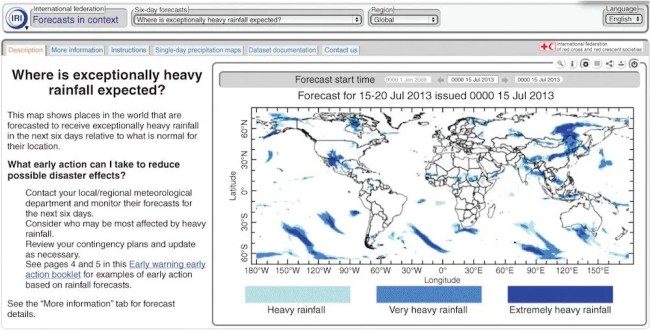
It’s not the climate itself that’s being governed here, of course, but the regulation of human technologies, behaviours and mechanisms to mitigate the causes of climate change and adapt to its unavoidable impacts. Hulme investigates and summarises these approaches to governance, including state-centric and polycentric models: the use of standards and certification, carbon markets, citizens’ assemblies, judicial courts and ‘climate services’ such as the ‘Forecast in Context Map Room’ tool developed by the International Federation of Red Cross and Red Crescent Societies for decision-making in disasters.

“[G]lobal temperature is not an entity that is directly tractable to intentional human action. Governing temperature therefore requires governing the full range of human activities and technologies … and the imaginations that give rise to them… Governing global climate therefore becomes an exercise in governing the collective of human societies but where the power to do so exists in no central or identifiable location.”

A technosocial idea of climate change: showing a screen shot of the IRI-IFRC Forecast in Context Tool
Screenshot of the IRI-IFRC Forecast in Context Tool illustrating where exceptionally heavy rainfall is expected.
Source: ‘Climate services for society: origins, institutional arrangements, and design elements for an evaluation framework’, Catherine Vaughan & Suraje Dessai (May 2014)

Given climate governance’s “totalising reach”, as Hulme identifies it, paradoxically perhaps it’s a profound relief as well as an insurmountable obstacle that no human institutions can ever have the global power to understand, decide and dictate the scale and scope of response that’s needed. There is no governing ‘matrix’. As Hulme says, “far from … vision[s] of a coordinated and intelligent Earth System Governance framework, a more plausible metaphor for climate governance is that of a clumsy multilayered meshwork of overlapping and competing competences and interests.”

Climate imaginaries

Hulme finally moves to the realm of realist and speculative imaginaries of the climate to come and how “events that have not yet happened in reality, happen in the imagination.” As such, now as in history, “future climate imaginaries wield extraordinary power over the present.” He reminds us of the totalitarian party diktat in George Orwell’s Nineteen Eighty-four — “Who controls the past, controls the future: who controls the present, controls the past” — and suggests that with respect to climate change, Orwell’s aphorism might come full circle: “Who controls the future, controls the present”. In this light, the “hopeful imagery offered up in the Paris Agreement”, of a global future climate to be kept under 1.5o to 2.0oC above pre-industrial levels is an especially powerful future narrative attempting to motivate and constrain human behaviour to a global pathway. But as such it “does not necessarily trump all other climate imaginaries … [and]  prompts the obvious question: Whose imaginaries count most?”

Among the artistic responses to ideas of climate change Hulme references is The Weather Project. Olafur Eliasson’s 2003 installation in the Tate Modern’s cavernous Turbine Hall “reminded visitors that humans are unavoidably bound up in the making and experiencing of the weather.”

“Human activities are increasingly co-producing the vaster space of the atmosphere and the climates that it yields. Through his installation Eliasson was saying that there is no standpoint outside of the weather from which humans can stand and objectively observe, measure or manipulate the atmosphere … For humans to live culturally with climate is for climate to be inescapably altered.”

An artistic idea of climate change: showing Olafur Eliasson's 2003 installation in the Tate Modern, The Weather Project.
View of Olafur Eliasson’s The Weather Project in the Tate Modern Turbine Hall, 2003
Photograph: Mark Goldthorpe © 2003

The different practices of ‘futuring’ — drawing on science, fiction, metaphor, modelling, myth, scenario-making, visualisation or other techniques — need to recognise that our futures are not reducible to climate alone but are many-sided; are produced and conditioned on different scales, not just the abstract global scale; and have geographies and histories. Also,

“imaginaries are not merely imaginaries. They are not simply inert figments of a fertile imagination. Sociotechnical imaginaries operate across the boundaries of the perceptual and the material. They can bring real worlds into being, for example carbon capture technologies, driverless vehicles, intelligent robots, or space tourism.”

Although discussed as a separate way of futuring the climate, along with models and scenarios for example, metaphor is perhaps something so intrinsic to human imagination and our faculty for language that it underpins the others as much as it stands out for investigation in its own right. As Hulme says, “metaphors help us grasp something new or unfamiliar by associating it with something more familiar and everyday.” Think of the ‘greenhouse effect’ or ‘carbon budgets’. Not intended to be taken literally, metaphors “help explain an idea, enable a comparison, or provoke a line of thought.” And metaphors are perhaps especially helpful in thinking through non-linear aspects of the complex and unpredictable world around us. Think ‘tipping points’, ‘planetary boundaries’, ‘runaway climate change’ — metaphors that Hulme picks up as phrases emanating from Earth Systems scientists. Or think ‘global thermostat’, ‘sunscreen’, or ‘insurance policy’ — metaphors deployed in the world of geoengineering. ‘Geoengineering’ is itself a metaphor, of course, one that projects as a solid science the risky business of presuming to tinker with the planet at its own scale. As Hulme says “metaphors can be hard to spot and can act as political Trojan horses” (and there goes another one), so it’s worth being on the lookout for them. Metaphors can also point in different directions, as he suggests with ‘The Anthropocene’.

“Is the Anthropocene a way of drawing attention to the awesome – but unequal – powers and responsibilities people now have for shaping the climatic future? Does it provoke a questioning of the character and wisdom of the Anthropos – the human – who has given rise to this epoch and its unequal power relations? Or does the Anthropocene metaphor dissolve the old binaries of modernity that separate nature from culture and so recognises that climate is no longer natural and never again can be?”

The overall thrust of this book is how — given the diversity of human imagination and experience, and the ever-changing state of our knowledge of the world — there can be no single narrative of climate change. Certainly, no singular strategic narrative directing what ‘we’ must do or what ‘climate’ we must end up with. There are many present experiences and understandings of what a climate is and what climate change means; and therefore many futures at stake, and many practices for reaching out to them and making use of them today. But who, in the end, can resist a convincing and pithily stated narrative?

“An indefinite future of a physically changing climate, now brought about largely by human hands, has to be confronted. But also to be grasped is the fact that the idea of an unsettled climate is with us forever.”


Find out more

Climate Change by Mike Hulme (2022) is published by Routledge. You can read about Mike’s work and thinking on climate change over many years at his website.

Some of Mike Hulme’s ideas have helped shape previous ClimateCultures blog posts, including The Stories We Live By, where Mark discusses metaphor and other aspects of our discourses and narratives on our relationships with the rest of the natural world, as explored in a free online ecolinguistics course created by ClimateCultures member Professor Arran Stibbe and volunteers from the International Ecolinguistics Association.

Mark Goldthorpe
Mark Goldthorpe
An independent researcher, project and programme manager on environmental and climate change issues - investigating, supporting and delivering cultural and creative responses to our predicaments.