The Steep Climes Quartet: My Take on Climate Fiction

Writer David Guenette shares creative insights into his Steep Climes Quartet, a longitudinal study into climate futures unfolding across an American county. This post accompanies David’s essay for our Longer feature, where he asks “What is Climate Fiction?”


2,620 words: estimated reading time = 10 minutes


I’ve been at work on the Steep Climes Quartet, a literary climate fiction series. The series is a sort of longitudinal study over time across the consistent location of Berkshire County, in Massachusetts. The first book, Kill Well, takes place in 2026. The second book, Dear Josephine, takes place in 2029. The third book, Over Brooklyn Hills, occurs in 2035. The first three books are published. The final book of The Steep Climes Quartet, Farm to Me, takes place in 2047, and I’m aiming for a Spring 2027 publishing date.

As an entrepreneur, writer, and climate change activist, I’ve studied climate change science and policies for over two decades and believe that the most effective basis for the discussion of the climate crisis in climate fiction is realism. No apocalypse, no fantasy, no deus ex machina. I believe climate fiction can be an effective way for individuals and communities to identify climate change challenges and that climate fiction can offer alternative perspectives for understanding the climate crisis and approaches for dealing with climate change. I believe that climate fiction that focuses on the reader’s familiar circumstances and provides a recognizable world will better explain the nature of the crisis and foster a more powerful identification with the problems we face and the solutions before us.

Of course, the novels better be enjoyable reading.

The changing world — a near-future climate timeline

The main theme of The Steep Climes Quartet is our fractured society and the solidarity climate progress requires of us and our communities. Over the course of writing the series — I started in 2015 — other themes evolve and the series includes some source of hope in the form of an economically competitive clean energy transition. But don’t think I’ve grown pollyannish — ongoing and important plotlines involve various misdeeds by Big Oil. I’m also not pollyannish about the rate of progress and take into consideration that political bodies and society at large typically move at snail’s pace. Still, by Book Three, Over Brooklyn Hills, 2035 sees that core court cases against Big Oil are finally starting to break for the climate, but then again, these same corporations and their political allies have managed to get too many gas-fired generator plants in place, with the net result of slowed progress on carbon emission reductions.

Showing the cover of 'Kill Well' - book one of The Steep Climes Quartet (2023) by David Guenette
‘Kill Well’ – book one of The Steep Climes Quartet (2023)

In the first three books, the residents of the Berkshires — a pleasant bucolic place, by the way — don’t have a lot of direct experience with the terrible consequences of climate change and, like most of us, hear about such negative consequences mostly through the news. Kill Well, in 2026, has a big heatwave in the upper Midwest, and the West is experiencing another plague of wildfires, but Davin, the Berkshire-based main character, is an economically pressed recent divorcee and mostly caught up in worrying about rising costs and the income he’s struggling for. The worst thing that happens to him in the first book, climate-wise, is that a heavy rain damages his vegetable garden and a part of the Airbnb apartment on the first floor of his Housatonic house. There’s a plot line of a young woman on the run after witnessing her fossil fuel divestiture boss killed on a business trip, which brings her to Chicago, where Davin’s son is living his first year out of college, but who is now heading home to escape the heat and the slowing economy. The two meet on the train heading toward Boston, and she ends up at Davin’s house, and there’s a contract killer in play, too, but the prevailing theme in Kill Well is the widespread economic stress of rising costs and the recession-like state of the nation’s economy that retards, along with Trump, clean energy progress.

Sholwing the cover of 'Dear Josephine', book two of The Steep Climes Quartet (2025) by David Guenette
‘Dear Josephine’, book two of The Steep Climes Quartet (2025)

In Dear Josephine, set in 2029, the nation is post-Trump and politics is working better, but there remains evil intent of those who run fossil fuel empires. There’s Miami’s destruction by the combination of a powerful hurricane hitting in sync with high ocean surges, but the residents of the Berkshires are unaffected directly, mostly. And then there’s a guy running around the country trying to kill billionaires and there’s a guy using Kill the Rich as cover for assassinations in service to fossil fuel think tanks to ease some newly inconvenient political ex-allies off the playing board. And yeah, in Dear Josephine there’s a fair amount of conversation and thinking about externalities by a regular series character, Jeannie Louise Smith, who’s a climate tech and policy wonk living on Cottage Street, but I did follow a beta reader’s advice to cut a lot of character talk about externalities. This book also marks the appearance of a climate action terrorist group.

Showing the cover of 'Over Brooklyn Hills', book three of The Steep Climes Quartet (2026) by David Guenette
‘Over Brooklyn Hills’, book three of The Steep Climes Quartet (2026)

Over Brooklyn Hills is six years after the second book and nine years after the first. MAGA, repudiated in the 2026 mid-term and 2028 elections, has given way to economic reforms and climate policies and America has rejoined much of the rest of the world in making climate progress, mainly by pushing the clean energy transition. There’s also a look at the consequences of choosing violence, as the climate terrorist group introduced in Dear Josephine now finds itself involved with Mexican cartels who are battling the U.S.’s militarization of the southern border as climate drought blankets large parts of Mexico, Central America, and South America, driving illegal migration. Climate migration is writ small, too, as seen in a long heatwave hovering over the New York metropolitan area and the Berkshires finds itself with very many more young people (i.e., typically less economically advantaged) escaping the heat and the energy bills demanded for safety, and the towns of South County and the second-homers aren’t enjoying the change in the character of their summer.

Showing the mockup cover to 'Farm to Me’, which will be the final book of The Steep Climes Quartet. The cover may be different by publication, in Spring 2027.
‘Farm to Me’ will be the final book of The Steep Climes Quartet. This cover is a simple mockup and may be different by publication, in Spring 2027.

Farm to Me, which is in draft and with a mess of notes, sees 2047 with reducing yields of some of the once highly productive agricultural areas in the U.S. due to chronic drought and aquifer collapse. New England has been experiencing a resurgence of its once dominant industry, agriculture. There’s been some real progress with carbon emission reduction, but climate change is locked in place, albeit at levels that would be worse without modest progress. Resiliency and adaptation programs are all the rage, but climate change continues to exert a downward pressure on the economy. Farm to Me sees human nature remaining a good news/bad news puzzle, with a murder mystery tied to one ambitious New England food distribution company. There is the issue of aging in the time of climate change and the angst and agony of the young about the future, where the cumulative effects of climate change pile on and tipping points are just the latest dread, and Davin’s granddaughter, not yet 18 years old, is of interest to a federal investigation into a climate activist group she’s part of.

One goal of the series is to present climate change as accurately as possible and with solid scientific grounding. In this way, readers who may not be similarly inclined to keep up with science and policies may consider their own understanding advanced, and, yes, this is something of an illusion for those future timelines, but then novels derive from the creative act of controlled illusion.

Creative challenges for The Steep Climes Quartet

I’d be happy enough to relax my long-running autodidact efforts on climate change, but alas, climate models keep getting tweaked and plentiful research continues. For instance, there are new findings and expanded concepts about faster rising temperatures than conventional understanding has posited, and I’ve had to make my best guess that 2035 will see a rise of 1.7-1.8 Celsius in the global annual average. By the time I have the fourth book’s manuscript well in hand, I’ll have had to best guess about the global annual average temperature rise in 2047. Yet more speculative are the political winds and social expectations governing these timelines, made all the more challenging because political and societal developments march on up and down and sideways.

CO2 emissions, global temperature rises and climate impact risks for SSP-based scenarios over the present century (IPCC Sixth Assessment Report (AR6) “Climate Change 2023” Synthesis report (adopted longer report: https://www.ipcc.ch/site/assets/uploads/2023/03/Doc5_Adopted_AR6_SYR_Longer_Report.pdf)

Of course, presenting the changing world across the series can’t be simply info-dumped, but rather seen, experienced, and understood (or not) through the characters’ own perceptions. The series uses a third person-semi-omniscient point of view, with characters alternating among chapters and some know more, some far less. Like the rest of us, the most stunning stories of climate consequences are more often heard of, not experienced directly, although over the course of the series, more and more direct experience of climate change comes to all.

There are other challenges in attempting to portray the future. These include representations of technology development and most of the characters in this series are regular people and not pioneering tech heads. Human economies and technologies roll out more slowly than the sci-fi-inclined often hope and not just more slowly but also quite unevenly (tip o’ the cap to William Gibson!). By Over Brooklyn Hills and 2035, AI and the spread of some other technologies advance, with smart glasses and haptic feedback and some modest virtual reality interfaces showing up. An AI bubble in 2030 causes a significant recession, especially in the U.S., but that industry evolves. By the last book, in 2047, AI has settled into a controlled progression, and in Farm to Me, I’m exploring the Schumacher Center for a New Economics, which happens to be based in Great Barrington, to explore what the shift toward a more local economy might look like, especially in response to climate change, although this will be more in the background, too.

This challenge of moderating readers’ expectations with tech grows harder the further one goes into the future, but faulting on the side of less-is-more is the right bet. For the Farm to Me story, there’s a part that involves regenerative agriculture, and there are advances in sensor technologies that can accurately analyze carbon sequestration in soil. This sort of development is not a big stretch but rather an incremental improvement in monitoring systems, no doubt to be aided by AI-based computations.

Still no flying cars.

The makings and markets for cultured meat and fermentation-based protein, set up in Over Brooklyn Hills, are a well-established market by 2047. The failure of property insurance and the climate threat to housing markets in some areas will be leaking into the general economy. There will be some new nuclear reactors, although fewer than one might expect, since such energy production is hampered by high costs and bankruptcies.

Did I mention no flying cars?

Of course, I’ve got to finish the damn manuscript first.

The foundation of climate fiction

Projecting out two-dozen-plus years, prognostication becomes more fluid, but keeping up with the best climate science remains an important requirement in writing this series. No magic solutions need apply, but rather only informed extrapolation. For example, it may be that regenerative agriculture is among the best of carbon sequestration strategies, but carbon capture remains an unlikely silver bullet. There’s also opportunity to explore the issue of real costs, where externalities (there I go!) of all sorts of things, from hamburgers to fast fashion, will get a nod, because sustainability will only grow as an issue in the years ahead. The world won’t be ending in 2047, but the higher and persistent loading of greenhouse gases take their toll, with some tipping points threatening. But the main story — the foundation of climate fiction — remains the progress our society makes based on our understanding of climate change and the economic, political, and moral choices we face.

Will our society make sufficient progress?

Talk about a cliffhanger!


Find more

You can read David’s new essay for our Longer feature, Telling Stories about Climate Change. 

David explores these ideas, and examples of climate fiction, at The Steep Clime on Substack. And you can find more of his writing — including the first three novels in the Steep Climes Quartet and other books — at his website, davidguenette.com.

Small Is Beautiful: A Study of Economics As If People Mattered by E. F. Schumacher, was published in 1973 and is available from Vintage (Penguin Books).

The Schumacher Center for a New Economics, in Great Barrington, MA, USA, was founded in 1980 to envision the elements of a just and regenerative global economy, “undertakes to apply these elements in its home region of the Berkshires in western Massachusetts; and then develops the educational programs to share the results more broadly, thus encouraging replication.” They produced a new study guide to Small is Beautiful to mark its 50th anniversary in 2023.

In the UK, the work and example of E. F. Schumaker’s work inspired the creation of the Schumacher Society, the Schumacher Institute, and Schumacher College.

***

From 2026, ClimateCultures is inviting members to say something about how they use AI in their work and in their posts for us. We will be exploring this in future posts here and at our ClimateCultures & more Substack.

David – “AI and writing: a tool, not a partner:

“Serving as a research agent, AI can be an excellent tool for writers who need facts and figures and overviews on a topic. This applies to non-fiction, such as the climate change articles I write, but also as convenient quick research or confirmation (or pointer to errors) for fiction writing. This is how I’ll use AI. I don’t typically worry about hallucinations because I know the knowledge domain well enough to spot AI’s missteps or the results of a poorly put query.

“AI can be helpful, too, as a high-level copy-editor and proofreader, mainly to bring in fresh eyes to discover obvious issues that the writer—having written the work—often has trouble spotting. Having a good human copy-editor remains, in my opinion, an essential element of book production. The way I’ll use AI for copy-editing and proofreading makes for less drudgery and lets the real copy-editor and the proofreader better concentrate on improving the manuscript.

“I suppose AI can be helpful with emails and letters—the sort of business correspondence best delivered as clearly and briefly as possible—although I often don’t bother because emails and letters default to a common tone and style, which isn’t anything a writer should want. I often find that AI—I typically use Gemini—offers “improvements” that are lowest denominator style choices and I often enough conclude with a “Yeah, I don’t think so” response when checking out what AI thinks an email or letter should be. Although, apparently, AI likes em dashes nearly as much as I do.

“AI in the actual work of creative writing seems to me an uninteresting cheat aimed at writing as “content” for easy, quick, and undemanding consumption and thus misses the fun part of the whole process of creating a poem, short story, or novel. My conclusion about AI as a co-author (or, I suppose, even principal author): Why bother?

“Of course, I had to use AI to assess this short essay, didn’t I? It found one typo and offered a slight improvement in another sentence. It also suggested a stronger transition in the last paragraph to better distinguish creative writing from mere content.”

David Guenette
David Guenette
A writer and author of literary climate fiction series, The Steep Climes Quartet, who also writes about climate fiction and climate change science, technology and policies.

The Wood Wide Web – Fruitful Collaboration

Artists Michael Gresalfi and Eva Strautmann‘s collaboration responds to our emerging understanding of the Wood Wide Web that connects trees, fungi and soil: networked communities threatened by our ‘competitive’ view of life and by our industrial forestry practices.


1,580 words: estimated reading time = 6.5 minutes


Eva ‘found’ Michael on ClimateCultures following one of his Creative Showcase pieces and his invitation to foster dialogue and collaborations with fellow members, which we shared in our monthly Re:Culture newsletter. We would like to encourage further sharing of ideas and new collaborations between members.

***

An interspecies symbiosis driving biological innovation

Below, Michael discusses the role of the Wood Wide Web. First, he
picks up the story of his and Eva’s collaboration:

When Eva and I began to discuss the continuing degradation and disruption of Earth’s regulating systems, we talked about the loss of habitat, and the largely unseen yet growing damage to co-evolved symbiotic relationships between different species. This discussion, and our shared love of forests, led us to our decision to focus both our attention and our art on the so-called ‘Wood Wide Web’.

We both independently created art that represents our artistic visualisation of this incredible symbiotic relationship between fungus, plants and trees.

The scientific community has confirmed many examples in nature of symbiotic relationships between animals, plants, insects, bacteria and fungi. In fact, we can look inside ourselves and find somewhere between one and three pounds of bacteria within our own large intestine: a relationship that scientists have termed a ‘mutualistic symbiosis’.

The surprise to me, when thinking about the so-called Wood Wide Web is both the complexity and the elegance of this mutualistic symbiosis between such a wide range of disparate species. Over the past 500 million years, fungi have co-evolved, along with plants and trees, to the benefit of all in this mutually supportive network.

I would contend that interspecies symbiosis is not just a common evolutionary path; that it is arguably the dominant engine of biological innovation on Earth. Today, roughly 80% to 90% of all land plants rely on fungal symbioses to survive. Without this cross-kingdom partnership, our forests and agricultural systems would collapse and the web of life itself might not exist.

Unfortunately, humans continue to cause such cross-kingdom partnerships to collapse, including the wood wide web. In fact, we have caused many such interspecies relationships to become ‘dysbiotic’.

Showing a painting 'Wood-Wide Web' by MIchael Gresalfi © 2025: 24" x 30”, mixed media on used, repurposed canvas - oils, acrylics and melted wax.
‘Wood-Wide Web’: 24″ x 30”, mixed media on used, repurposed canvas – oils, acrylics and melted wax. Artist: Michael Gresalfi © 2025

Conversation with trees

Eva shares her reflections on producing her series as part of the collaboration with Michael:

‘Conversation With Trees’ is a very personal and, at the same time, professional way of viewing my surroundings.

Living in the city, in the mountains of stone, is loud, noisy, exhausting and painful. I can not hear any Voice, just ‘Trash’ and ‘Crash!’

Outside, in the countryside, on the sea, and in the forest, you can listen to the silence, to the movement of water, of ice, of the wind and you can listen to the trees.

This is what I have been doing for years and years, this is actually my home and my inner garden.

The movement of one tree or two or three … is telling me about the day, about friends, who are coming or not, the trees tell me about myself. What I wish, why and why not.

And there is one favourite tree right here, next door to my house, he is a bit nervous about my work: Eva, you are working too much. He keeps on telling me what is better for me. Some more coloured trees tell me about my next steps, what I should do.

I do not want to say here and now what I am telling them, but I am always polite and friendly.

Soon my friend Jacob Strautmann from Boston (USA) will write poems to my paintings, maybe he can describe my works.

These three paintings are the beginning of a series ‘Conversation With Trees’, which started in the dialogue with Michael. Our Zoom session and emails were very inspiring and helpful. I am very thankful to Michael and Mark: Thank you!

Showing 'Conversation With Trees 2', (Series) 2025 - 2026 (50 x 100 cm}: Oil on Canvas. Paining by Eva Strautmann © 2025
‘Conversation With Trees 1’, (Series) 2025 – 2026 (50 x 100 cm}: Oil on Canvas. Artist Eva Strautmann © 2025
Showing a pinting, 'Conversation With Trees 2', (Series) 2025 - 2026 by Eva Strautmann © 2025: (50 x 100 cm}: Oil on Canvas.
‘Conversation With Trees 2’, (Series) 2025 – 2026 (50 x 100 cm}: Oil on Canvas. Artist Eva Strautmann © 2025
Showing a painting, 'Conversation With Trees 3', (Series) 2025 - 2026, by Eva Strautmann © 2025 (50 x 100 cm}: Oil on Canvas.
‘Conversation With Trees 3’, (Series) 2025 – 2026 (50 x 100 cm}: Oil on Canvas. Artist Eva Strautmann © 2025

Mutualism & communication: life as an interconnected community

The Wood Wide Web portrays a forest not merely as a collection of competing individuals, but as an interconnected community where cooperation, sharing, and communication play a significant role in the health and resilience of the entire ecosystem. Science has revealed that trees in a forest are linked to neighboring trees by an underground network of fungi that resembles the neural networks in the brain.

These fungi form a symbiotic relationship with plant roots. They extend tiny, thread-like filaments far into the soil, acting as an extension of both tree and plant roots and can link the root systems of multiple trees and plants, often across different species.

The network between fungi and trees acts as a conduit for transferring resources like carbon, water, and nitrogen between neighboring trees. Trees, through photosynthesis, produce sugars (carbohydrates) and transfer some of this essential carbon to the fungi. Plants and other producers convert carbon dioxide from the atmosphere and water into carbohydrates (like glucose) using light energy. This process fixes atmospheric carbon into an organic, usable form.

The core of the Wood Wide Web is a biological partnership called mycorrhiza, which means ‘fungus-root’. Mycorrhizal fungi form a symbiotic relationship with plant roots. They extend tiny, thread-like filaments called hyphae (collectively known as mycelium) far into the soil, acting as an extension of the tree’s root system.

These fungal filaments can link the root systems of multiple trees and plants, often across different species, creating what is known as a Common Mycorrhizal Network (CMN).

The mycorrhizal network is believed to enable several vital functions. Resource exchange (mutualism) is the foundation of the relationship:

    • From tree to fungi: Trees, through photosynthesis, produce sugars (carbohydrates) and transfer some of this essential carbon to the fungi.
    • From fungi to tree: The fungi, in return, use their extensive network of hyphae to scavenge for water and crucial soil nutrients (like phosphorus and nitrogen) that are often inaccessible to the tree’s main roots, and transfer them back to the tree.
    • From tree to tree: The network can act as a conduit for transferring resources like carbon, water, and nitrogen between neighboring trees. For instance, a large, well-lit ‘mother tree’ might transfer nutrients to shaded seedlings or stressed neighbors, including its own kin.

Communication is another feature of the web. Some research suggests that trees can send chemical or electrical distress signals as warnings through the network — for example, when under attack by insects or disease — prompting neighboring plants to increase their own defensive enzyme production.

In essence, the Wood Wide Web portrays a forest not merely as a collection of competing individuals, but as an interconnected community where cooperation, sharing, and communication play a significant role in the health and resilience of the entire ecosystem.

Wood Wide Web research — diversity & resilience

The Mother Tree Project is a large-scale, long-term research and outreach initiative led by Dr. Suzanne Simard at the University of British Columbia. It is essentially a real-world experiment in regenerative forestry, building directly upon her decades of research into the Wood Wide Web.

The project’s goal is to find new, sustainable forest management practices that maintain forest health and resilience in the face of accelerating climate change, wildfires, and other disturbances.

Dr. Simard’s research on the Wood Wide Web and Mother Trees has been one of the most significant forces challenging conventional, industrial forestry practices that were largely based on a Darwinian view of tree competition.

Her field studies revealed that trees are linked to neighboring trees by the underground network of fungi described above, which resembles the neural networks in the brain. In one study, Simard watched as a Douglas fir that had been injured by insects appeared to send chemical warning signals to a ponderosa pine growing nearby. The pine tree then produced defense enzymes to protect against the insect.

Simard’s work proved that our aggressive removal of ‘competitors’ actually harmed the desired trees, as the clearcut seedlings were disconnected from the vital mycorrhizal network and the resources provided by the Mother Trees and neighboring species.

Both plants and fungi associate with multiple symbiotic partners at once, and both plants and fungi are capable of preferentially allocating resources to one partner over another.

Her findings advocate for promoting diversity, keeping a mixed-species forest and protecting the oldest, most-connected trees to ensure the entire ecosystem remains resilient.

Mycorrhizal associations have profoundly impacted the evolution of plant life on Earth ever since the initial adaptation of plant life to land. In evolutionary biology, mycorrhizal symbiosis has prompted inquiries into the possibility that symbiosis, not competition, is the main driver of evolution.


Find more

To inform his and Eva’s collaboration, Michael compiled information on the Wood Wide Web from data extracted using AI (Genesis).

The Mother Tree Project was established in 2015 by internationally acclaimed author and University of British Columbia ecologist Dr. Suzanne Simard, to address the urgent need to steward and safeguard British Columbia’s forests amid intensifying climate threats.

Michael also highlights this paper by Lucette Flandroy & colleagues: The impact of human activities and lifestyles on the interlinked microbiota and health of humans and of ecosystems (Science of The Total Environment, Volume 627, 15 June 2018, pages 1018-1038).

Michael Gresalfi
Michael Gresalfi
An artist who seeks to incorporate art with climate change data, and whose work in encaustic medium, glass paint, oils and acrylics includes 'Our Changing Planet'.
Eva Strautmann
Eva Strautmann
An artist, author and lecturer exploring the question of ecological relationships through themes of nature and animals, physicality and abstraction, with recent exhibitions on climate change.

Solarpunk Symphony: Where Are the Music Programmers Who Heed the Science?

Composer Lola Perrin introduces her special essay for our Longer feature on a recent Solarpunk Symphony residency in Norway, describing how her symphony responds to frustration with cultural venues’ lack of response to the climate risks we face.


2,900 words: estimated reading time = 11.5 minutes


Longer is the place for works that don’t fit within the normal ‘short reads’ format of our blog. Longer is for essays, fiction or other forms that haven’t appeared online elsewhere and explore in more detail the creative responses to our ecological and climate crisis. With each new Longer piece, the author introduces it here with an original post, where they can reflect on the motivation or inspiration behind the work or the process of creating it.

***

In my essay, Climate Music — From Hill to Hill, I describe my trip to Norway for a music-climate residency at Bergen’s Grieg Academy of Music to workshop and perform my new climate composition ‘Solarpunk Symphony, Music from the Erratocene for 4 pianos and citizen voices’. This was also an opportunity to debate publicly with artists and climate scientists.

11th January 2025, shows at the 130,000 square foot Pasadena Convention Center in LA should be opening. An exhibitor announces dates in March; “In light of the ongoing fires and the challenges many of us are facing, we’ve made the difficult decision to postpone the Pasadena Bead & Design Show.” A Washington Post video report1 shows residents sheltering from the fires at the centre, whose website now has this; “We understand how deeply these events are affecting our community, and we are here for you. Your safety and well-being are our top priority, and we look forward to gathering again in March, when we can all come together, support one another, and celebrate the art and creativity that unites us.” In the video we see hundreds of America’s latest internal climate migrants streaming around, temporarily housed in the site’s 1,200 hotel rooms. I see the elegant lettering of the frontage, Exhibition Hall & Ballroom, and immediately grab a screenshot, thinking “it’s already happening”.

Showing: Screenshot from Washington Post video report Altadena evacuees lose family homes to Eaton Fire, 12/1/25
Screenshot from Washington Post video report Altadena evacuees lose family homes to Eaton Fire, 12/1/25

I wrote about exactly this situation in the introduction to my 2024 climate composition, ‘Solarpunk Symphony’, describing how communities impacted during increasing climate events will seek shelter in our modern-day temples — those cultural institutions with their thousands of square feet of protection — transforming them into places of refuge.

“August 2024’s environmental news; within the next twenty-five years millions of Americans will be affected from sea level rise and coastal flooding. Many of the world’s leading classical concert venues are in regions threatened by sea level rise and flooding. To name a few; Boston Symphony Hall is in between the Charles River Basin and the coastline, both are around 3km away. Guangzhou Opera House is 3km from the Pearl River that flows into the South China Sea. Concert halls closer to the water’s edge include Manhattan’s Carnegie Hall roughly in between East River and Hudson River, both around 1.6km away. Teatro Colón in Buenos Aires is 1.5k from the coast. Artscape Theatre Centre in Cape Town is 1km from the coastline. Southbank Centre in London is 300m from the River Thames. Kanagawa Kenmin Hall in Yokohama and Harpa in Reykjavik are both on the coast with a 200m walk to the shoreline. Given what’s happening, venues on the waterfront may wish now to consider relocating. Venues three kilometres from the water’s edge could hypothetically be far enough away to avoid becoming flooded themselves this century, but, critically, being so close to flood zones, they’re in a good position to offer shelter and safety, just as some theatres in hurricane zones already do”.

– Introduction to the 2024 composition ‘Solarpunk Symphony’

Let’s start at the end

In the early twenty-tens I went to science-led events to learn more about climate change and where artists were encouraged to make creative responses. In one such response I decided to compose a climate work for two pianos but then became increasingly blocked with no ideas at all, except wanting to work from imagined visions of a flooded London, and these images by Phil Maxwell.

Showing: Banglacam. Photomontage by Phil Maxwell 2010
Banglacam. Photomontage: Phil Maxwell © 2010 philmaxwell.org
Showing: Anti-Nazi Demo. Photo by Phil Maxwell, early 1990s
Anti-Nazi Demo. Photo: Phil Maxwell © early 1990s philmaxwell.org

I remember sitting for days on end trying to get some kind of musical idea, eventually shouting in frustration “if I can’t find the beginning let’s start at the end”, and there it was, the entire piece hit me in an instant.

“I flew over the piano and began playing an enormous climax as if a very long and dramatic piece was trying to end; it was loud, full of chords and kept trying to slow down,” Lola said. “This was my beginning, Let’s Start At The End would commence with a sense that something huge was ending.” The piece consists of six movements in which we travel backwards from the edge of destruction to an innocence“ full of promise”.

– Extract, interview with Abdul Hamid (2014)

The year before, Manhattan had flooded in Hurricane Sandy’s deadly demonstration of how the defences of a metropolis can be overcome by extreme weather. Up to forty-two people drowned, thousands of homes were destroyed, power was shut down. Climate events like hurricanes might have been getting stronger and more impactful, but talk of ‘global warming’ was still a taboo, conversations were hard to find and harder to have. My programme notes spelled out the work’s train of thought, aiming to increase audience engagement with the crisis. The world premiere was performed by Ivory Duo Piano Ensemble at Women of the World Festival 2013 at London’s Southbank Centre.2

Solarpunk Symphony: showing: Southbank Centre, London. Photo: Lola Perrin © 2024
Southbank Centre, London. Photo: Lola Perrin © 2024

Planning for climate futures

That iconic cultural complex was established in 1951, ironically — for me — coinciding with the beginning of The Anthropocene. Its three concert halls, art gallery, ballroom, archive studio and library are situated on the banks of the River Thames, and are not far from the Thames Barrier, a feat of engineering to keep the waters from flooding London’s streets, one that is overwhelming when you see it close up.

Solarpunk Symphony: Showing theThames Barrier, London. Photo by Andy Roberts
Thames Barrier, London. Photo: Andy Roberts https://commons.m.wikimedia.org/wiki/File:Thames_Barrier_03.jpg#file

Planning for the Barrier began decades before its 1981 opening, “after 1953, when England experienced its worst flood of the twentieth century during a storm surge in the North Sea causing the collapse of a 300ft sea wall, over 300 deaths on land and two hundred people lost their homes in Canning Town.3 

The Barrier was designed to be closed only around twice a year, mainly for maintenance checks. However, instead of the anticipated eighty-four or so closures, it’s already been closed a slightly embarrassing 221 times in 42 years, mainly to alleviate increased flooding from more intense rainfall.4 

Is the Barrier designed to adapt to the changes we’re seeing as we proceed through this century’s forthcoming impacts, or might Southbank Centre one day be a bit like today’s Pasadena Convention Center, but with thousands of displaced Londoners whose homes have been inundated, seeking water-free safety in its compound? I reach out to members of Extinction Rebellion Scientists for answers. An engineer sees my message and creates a new WhatsApp group, ’Thames Barrier’, adding a handful of experts who have since been generously helping me with information.

For example, geologist Andrew Zolnai, from a blog he wrote; “A group considered the necessity for a second barrier under Climate Change that increases both flooding and sea level seasonal elevations. I made maps & handouts here 5 yrs. ago among a DIY series here to encourage citizen science: these help address Climate Change in a proactive way using freely available UK gov data on almost-free software”.5 

Thames tidal defences are reviewed every ten years, and to avoid being worn out before its end-of-century lifespan the Environment Agency (EA) plans to stop using it to manage rainfall flooding by 2035, by installing ‘alternative flood management’.6 This seems of quite critical importance when you think of all the drainage systems in properties constructed before increased rainfall from global warming was factored in. Another message comes in; “in the case of the Southbank Centre, the drainage was probably installed when it was built in 1951, so would not be sized to cope with increases in rainfall due to climate change”.

The EA surface water flood map indicates that the Centre is generally at low to medium risk of flooding. Not much in life is ever certain, and that includes flood defences protecting London. According to the EA these defences “can fail or water could spill over the top if it is deep enough”. Not too comforting! You can find the flood risk of every postcode in the UK online.7 Back in 2013 civil engineer Dr Richard Bloore, part of the project management team completing the Barrier, said that a second barrier would be needed because of the effects of global warming. The Southbank Centre is in Flood Zone 3, meaning high risk from river and sea flooding. The risk does not take account of the protection offered by the Thames river defences — so, it probably won’t flood as long as the barrier doesn’t fail!

How does sea-level rise affect the Thames Barrier? The EA has said that environmental changes are unpredictable and the current infrastructure “may not be enough to hold back the flood”.8 The defences need reinforcing.

Showing: London River Thames Inundation Risk, sea level rise model (colour halftone), Risk of Flooding from River & from Sea. Contains OS data Crown Copyright and data from Environment Agency under Open Government Licence
London River Thames Inundation Risk, sea level rise model (colour halftone), Risk of Flooding from River & from Sea Populated Places @azolnai & blog.zolnai.ca Contains data from OS Zoomstack, Contains OS data ©️ Crown Copyright and database right 2025 Contains data from Environment Agency under Open Government Licence. For more information please visit blog.zolnai.ca/2025/02/london-thames-barrier-update.html

Unless the Barrier fails, Southbank Centre and its neighbourhood may well be spared from flooding in the next few decades. It’s a different story down the river in East London. In commemorations marking the 40th anniversary of the Thames Barrier, experts at The Institution of Civil Engineers discussed how the lower-lying riverside regions in East London from Poplar to Romford are at risk of flooding by 2050. Do the people living in places like Hackney Marshes know about this? I think there’s a case for an internationally recognised concert hall concerning itself with the fate of thousands of people vulnerable to flooding down the river. Something akin to this is already starting. Culture Declares Emergency’s brilliant work provoked Southbank Centre into declaring a Climate and Ecological Emergency in 2024. Resolutions include “the provision of space twice a year, free-of-charge, to artists, activists and community organisations”.

The disconnect between scientists working on climate risk and communities having little opportunity to organise around their research is disturbing. I can think of two American climate scientists who have been vocal in recent days about having left California because of increased fire risk. Citizens all over the world need clear information.

A chartered surveyor once told me he couldn’t believe how many homeowners knew next to nothing about the construction of their homes. We’re just not in the type of society where we connect with the most important things, are we?

In a fun-sounding biometric study concert goers were fitted with an “EEG wearable headband to measure brain-wave activity”. Results suggested “a sizeable increase in oxytocin, the hormone that acts as a neurotransmitter in the brain contributing to a number of warm-and-fuzzy human emotions.”9 Live music very helpfully causes an “overall positive shift in brain activity, including spikes in attention, engagement, and emotional intensity”.10 Another study looking at synchronised emotions found “live music creates a remarkable physiological bond among audience members”.11 

Come out, come out wherever you are!

Where are the music programmers who pull all of the above together? We’re in a (insert swearword) Emergency and it would be lovely if more venues would jump on board.

Sydney Opera House https://commons.wikimedia.org/wiki/File:Interior_of_Sydney_Opera_House_Concert_Hall_during_performance.jpg

Look at forthcoming concerts in say, Sydney, where five million people are vulnerable through sea level rise along the coast, flooding in river catchments, bushfires in forested areas and increased temperatures causing more heatwaves and urban heat islands.12 Sydney’s Symphony Orchestra commence their 2025 season with “The eight horns opening Mahler’s Third Symphony set the tone for the monumental drama about to unfold … a riveting introduction to our 2025 Season”. Not to pick on this orchestra, (the Mahler is a miraculous work), but I can’t find a single concert in the season that builds community in audiences around our existential problem.

Imagine this beautiful concert hall, the orchestra on stage tuning up, the audience erupting as the conductor takes her place. But who is this at her side? She’s been joined by the director of programming who speaks about a new concert series to inform and plan resilience to Sydney’s anticipated 50cm of sea level rise and temperature increases of 1.8oC by 2050 …

We might as well go a step further in this thought exercise. Someone somewhere has the bright idea that the great power of music to positively supercharge our emotions be put at the service of climate science internationally. Music to kickstart a new era of programming around the science is being sourced. In a flurry of activity (a WhatsApp group springs up, ‘Climate Music Programmers’?), a gentlewoman’s agreement has been made between programmers in venues across the world, Boston, Guangzhou, Manhattan, Buenos Aires, Cape Town, London, Yokohama, Reykjavik … to increase homegrown capacity around climate risks in their combined millions of square feet of audience space.

There could be a silver lining to this – excuse the pun because I’m talking about silver-haired concertgoers. As Dianna Skinner wrote in Violinist.com “There is an ever-growing concern as to how to get people, particularly younger people, into our concert halls and opera houses”.13 Not so long ago thousands of young people joined Greta Thunberg’s school strikes, because where else do they have but the street to express themselves? Catering for this climate generation, with their music and their musicians, would be a good step for them and also for the venues.

Long-term budgets in our institutions are obvious barriers to the imaginative thinking above. But is it too imaginative or can institutions shift to create the ‘war-like response’ that’s been called for by climate scientists for too long now? And what about the description ‘climate activist’? Shouldn’t we move away from the notion that doing something about the frightening future means you’re on the sidelines somehow, an ‘activist’? There are bound to be untold numbers of employees in the world’s cultural organisations who are also in the climate activist category.

Are You with Us in National Service? World War 1 poster public domain https://commons.wikimedia.org/wiki/File:Are_You_with_Us_in_National_Service?_Art.IWMPST13964.jpg

Can a ‘war-like response’ to climate threats come into being in these cultural hubs, inspired by National Service in wartime? How about today’s workers having opportunities to volunteer in a ‘Climate International Service’ hosted by venues? Activists would come out of silos, repositioned within cultural centres joining up to make a tsunami of climate responses. Even more reason now with the growing suppression across today’s American society. The trustees of Washington’s Kennedy Centre have been dismissed by the American President for its progressive programming, apparently he is replacing the Chairman with none other than himself (and undoubtedly bringing in other climate deniers and rejectors of diversity, equity and inclusion).14 We should forcefully integrate climate science, mitigation and adaptation as part of our culture to increase the fight back — wherever we are in the world.

Heat deaths in Europe may triple by the end of the century, but do people in Europe know? This kind of information was talked about during audience conversation at the world premiere of Solarpunk Symphony in Bergen. As scores of musicians proved in their ClimateKeys concerts, my climate-engagement concert series, audiences welcome these formats. Venues just have to find more ways to let in projects like these.

Solarpunk Symphony: Showing ClimateKeys poster, 2017
ClimateKeys poster, 2017

A buddy from Extinction Rebellion, playwright April de Angelis, told me about her forthcoming libretto for Jonathan Dove’s new community opera, ‘Uprising’.15 It’s the story of Greta Thunberg and the school strikers. This gives me goosebumps because Kristian Skår, one of the young pianists who performed Solarpunk Symphony in Bergen had been a school striker in Oslo. Something hopeful is happening; ‘Uprising’ is being snapped up and being programmed in more venues even before it’s had its world premiere at Glyndebourne. That’s a really positive indicator that should inspire my fantasy WhatsApp group of international climate music programmers to swing into action and get with the programme!16

***

Lola’s full essay, Climate Music — From Hill to Hill, is the fourth piece for our Longer feature, which provides space to explore in more depth creative and critical responses to our ecological and climate crisis. Her residency at Grieg Academy was funded by Culture Moves Europe Mobility Fund.


Lisa’s references

  1. Washington Post video report ‘Altadena evacuees lose family homes to Eaton Fire‘, 12/1/25
  2. Ivory Duo Piano Ensemble
  3. The Tide is High: the Thames Barrier  Historic London Tours (9/2/22)
  4. Thames Barrier Wikipedia
  5. Andrew Zolnai blog, Thames barrier update (5/2/25)
  6. What needs to be done across the estuary (outcomes): Thames Estuary 2100 (DEFRA, 2/5/24)
  7. UK Long-term flood risk map, by postcode
  8. Flood experts discuss the future of the Thames Barrier as water levels rise, Poplar London, 10/4/24
  9. Biometric Study At St. Vincent Concert Shows Live Music Increases Emotional Brain Activity, Live For Live Music 25/6/18
  10. Why Does Live Music Make Us Feel So Happy? Medium 25/8/23
  11. Scientists observe a remarkable synchronization effect among classical music listeners, PsyPost 24/8/24
  12. Climate change in Metropolitan Sydney, Adapt NSW 
  13. Classical Kids… Raising the Next Generation of Audience Members, Violinist.com 12/10/19
  14. Trump says he is firing Kennedy Centre trustees and naming himself chairman, The National 8/2/25
  15. Uprising! Director Sinéad O’Neill on Glyndebourne’s new community opera written by Jonathan Dove and April De Angelis, Planet Hugill 8/1/25
  16. Severe Weather is Threatening the Future of Outdoor Concerts, Rolling Stone 12/8/24

Find more

You can read Lola’s artist statement for Solarpunk Symphony on her website. Her previous ClimateCultures posts include ClimateKeys — Moving Climate Conversations Centre Stage, where she describes her own and many others’ experiences of the major global ClimateKeys initiative she set up to bring together musicians, experts and audiences to engage in climate change conversations.

Showing composer and pianist Lola Perrin performing at the piano.
Lola Perrin 
A composer and classically trained pianist focused on the disconnect between the climate emergency and programming in music venues and her ClimateKeys global no-fly concert series.

Modernism in the Anthropocene

Researcher Peter Adkins explores how radical early 20th-century literary shifts reimagined the human within broader planetary processes, a ‘Modernist Anthropocene’ expanding understandings of our geological agency long before global environmental predicaments became the widespread crises of our times.


2,000 words: estimated reading time = 8 minutes


1922 is often considered a golden year when it comes to literature. James Joyce published his epic modernist novel Ulysses, a work that was almost immediately banned in Britain and America on account of its transgressive content. T. S. Eliot’s The Waste Land arrived as a fiery example of how verse might respond to the upheavals of post-World War One life. And Virginia Woolf’s experimental narrative of a young man who doesn’t return from the front, Jacob’s Room, established her as one of the foremost novelists of her generation.

Literature was reinventing itself, pushing at the boundaries of what could and couldn’t be said. Along with similar revolutions in the visual arts, music, and architecture, rapid transformations were sweeping cultural forms, breaking down the old ways of experiencing the world and offering new ways of conceptualising lived experience.

Less well-known is the degree to which 1922 was something of a threshold year in attempts to conceptualise what we now refer to as the Anthropocene. The Cambridge geographer, R. L. Sherlock published a book entitled Man as a Geological Agent, in which he argued that we have to think of the human species as both a biological and geological actor — predating Dipesh Chakrabarty’s influential argument about the human as a geological agent in the Anthropocene by almost 90 years. And perhaps even more remarkably, the Russian geologist Aleksey Pavlov actually used the word ‘Anthropocene’ in a 1922 paper, arriving at it as a term that might recognise the longstanding influence of human activity on the planet. 

Human in the nonhuman world

When I began the research on what would become my book, The Modernist Anthropocene, I wanted to know if there were any links between these two spheres of activity: one revising how we understand literature and the other revising how we understand planetary life.

Certainly, it was the case that modernist writers were interested in how humans interact with and imagine the nonhuman world. In one of the moments of Jacob’s Room that moved me when I first read it during my PhD, Jacob Flanders is described as overcome with the urge to press himself against the ground and “feel the earth spin; to have–positively–a rush of friendship for stones and grasses”. Woolf’s writing is so often attuned to geology and ecology. The middle portion of her novel To the Lighthouse (1927), entitled ‘Time Passes’, is largely devoid of human characters and instead imagines the decay of a house on the Isle of Skye, left abandoned during World War One and slowly succumbing to the sea air. It is a vision of life after humans, of the world we might leave behind us. While in Orlando (1928), whose narrative covers over four hundred years, Woolf charts the vicissitudes of the English climate seeming, at moments, to appear to intuit the concept of anthropogenic climate change (possibly, as I discovered during my research, influenced by her reading of the early climatologist John Tyndall).

Modernist Anthropocene: Showing the cover for the first edition of Virginia Woolf's 'To the Lighthouse' (1927) featuring a jacket design by Vanessa Bell
Cover for first edition of Virginia Woolf’s ‘To the Lighthouse’ (1927) featuring a jacket design by Vanessa Bell

This cosmological orientation towards the earth and the air is shared by Joyce, albeit in starkly different ways. Leopold Bloom, one of the principal characters in Joyce’s Ulysses, frequently turns in his thoughts towards nonhuman life, from other animals to celestial bodies. Towards the end of Ulysses, the reader finds Bloom reflecting on the puniness of the human when placed within a planetary frame that runs from macroscopic to micro. In a tour de force sentence, Joyce presents Bloom meditating on:

the eons of geological periods recorded in the stratifications of the earth: of the myriad minute entomological organic existences concealed in cavities of the earth, beneath removable stones, in hives and mounds, of microbes, germs, bacteria, bacilli, spermatozoa: of the incalculable trillions of billions of millions of imperceptible molecules contained by cohesion of molecular affinity in a single pinhead: of the universe of human serum constellated with red and white bodies, themselves universes of void space constellated with other bodies, each, in continuity, its universe of divisible component bodies of which each was again divisible in divisions of redivisible component bodies, dividends and divisors ever diminishing without actual division till, if the progress were carried far enough, nought nowhere was never reached.

For Bloom, whose interest in science provides a worldview in which the human is itself a constellation of otherworldly processes, there is a clear continuity between the geological and the biological. As we find throughout Joyce’s writing, the human is divisible into flows and processes that firmly situates it within broader planetary processes. The human is, in an important sense, resolutely inhuman.

Modernist Anthropocene: Showing the first edition of James Joyce's 'Ulysses' (1922), banned in Britain and USA.
First edition of James Joyce’s ‘Ulysses’ (1922), banned in Britain and the USA.

Tipping points in the Modernist Anthropocene

As I wrote The Modernist Anthropocene, I discovered that there were clear points of confluence between the modernist writers shaking up the literary world and those in the sciences, both in terms of direct points of connection and indirect areas of resonance and overlap. The French philosopher, Henri Bergson, provided one such connection. Eliot had attended Bergson’s lectures while in Paris and his writing on evolution both inspired Joyce (who owned a copy of Creative Evolution while writing Ulysses) and Vladimir Vernadsky, whose work Geochemistry helped pave the way for the field of climatology. Indeed, Joyce and Vernadsky lived in Paris at the same time in the 1920s. Although I am yet to find any evidence of their having met, I like to think that they might have drank at the same cafés or attended the same operas, unaware that they were in the company of a fellow intellectual revolutionary.

Another question which presented itself as I wrote my book was: why then? Why was it during the 1910s, 20s and 30s that these developments took place in literature and science?

Part of the reason was that they were looking to dislodge ideas from the previous century that now appeared lacking in certain respects. In literature, modernist writers were looking to challenge (although not necessarily wholesale reject) Victorian literary conventions. For novelists, this meant utilising narrative techniques such as free indirect discourse and interior monologue to break with what they saw as the artificiality of the realist novel and get closer to the subjective experience of life itself. A similar rationale could be found among figures such as Bergson and Vernadsky, who saw nineteenth-century ideas in evolutionary biology and physics as being too mechanistic, unable to account for what Bergson famously termed ‘élan vital’ – the vital spark which powers life onward.

Yet this was only half the story, as I discovered. The early twentieth century was also a period of environmental tipping points and thresholds. The period saw the development and use of liquid fuels, the nascence of motor and air travel, the invention of human-made nitrate fertiliser, as well as continued rapid growth in industrialism, urbanisation, fossil fuel extraction, and intensive agriculture, all of which were responding to, and fuelled by, ever-expanding population levels.

And although the figures I look at in my book cannot be said to be ‘environmental writers’ in the sense of writing with the explicit aim of ecological consciousness-raising, they were nonetheless alert to the poisoning of the world around them. In Joyce’s Ulysses, for instance, we find repeated descriptions of Dublin’s polluted status. In one particularly memorable description, the River Poddle is described as a “tongue of liquid sewage” emptying out into the Liffey. Later in the book we discover that Bloom knows a family who, reliant on collecting mussels for food, have been poisoned by the sewage. In his attention to the unequally distributed consequences of pollution, Joyce might be seen as intuiting the notion of slow violence, or the way in which many of the effects of the Anthropocene materialise not through cataclysmic instances but gradual processes that unfold so slowly as to become near invisible to all those but most directly impacted.

Showing a postcard image of the River Liffey, Dublin, in 1900. The Liffey, and the tributaries that fed into it, were heavily polluted by the end of the nineteenth century.
Postcard image of the River Liffey, Dublin, in 1900. The Liffey, and the tributaries that fed into it, were heavily polluted by the end of the nineteenth century.

The concept of the ‘Modernist Anthropocene’ emerged as a synthesis of these observations and insights. The term, as I use it, denotes both a historical period, in which significant environmental change and scientific developments occurred that profoundly altered our relationship to the planet, and an identifiable set of aesthetic responses to that historical moment, represented in the works of innovative writers who were highly aware of the way in which humans were influencing nonhuman processes.

The finished book explores this idea by looking in detail at three modernist writers: James Joyce, Virginia Woolf and Djuna Barnes. T. S. Eliot, E. M. Forster, D. H. Lawrence, Gertrude Stein, Franz Kafka, Vita Sackville-West and others also make appearances at various points. As I write, I’ve just finished a follow-up book, an edited collection entitled Virginia Woolf and the Anthropocene. Woolf, for me, might be the modernist writer who was most sensitive to developments in the physical world and the edited collection, which brings together essays from ten leading scholars, explores various facets of her writing as they relate to the Anthropocene. My own contribution to the volume is a chapter on Woolf, petroleum and colonial extractivism and reflects what, I hope, will be the subject of my next book: modernism, energy transition and oil.

Literary works are, as critics are increasingly recognising, uniquely poised to open up new ways of thinking about emergent planetary conditions. As Tobias Menely and Jesse Oak Taylor frame it in the introduction to their edited collection, Anthropocene Reading: Literary History in Geologic Times (2017), literature might be approached as offering a kind of stratigraphic record, providing us with snapshots of specific points in planetary history and thereby helping us understand how we have historically imagined the world. Yet this stratigraphic approach also insists that texts are not just historical artefacts but lively and vibrant materials which can enter into dialogue with the present and help us make sense of ongoing crises and challenges.
Reading and writing are, as the modernists showed us, activities that can help us see the world afresh and foster new ways of understanding what it means to live on a damaged planet. 

Showing 'The Modernist Anthropocene' by Peter Adkins


Peter Adkins

Peter Adkins

A researcher and writer exploring how literature helps us imagine, understand and rethink environmental history, planetary change, resource use, and relationships between humans and other animals.

The Modernist Anthropocene: Nonhuman Life and Planetary Change in James Joyce, Virginia Woolf and Djuna Barnes by Peter Adkins (Edinburgh University Press, 2024) is published in a paperback edition and is also available for free as an open access e-book. 

Virginia Woolf and the Anthropocene is forthcoming with Edinburgh University Press, due for publication in June 2024. 

Peter mentions how the writings of key modernist authors such as Joyce prefigure or intuit ideas that have become established in 21st-century accounts of the Anthropocene. Among these are the works of historian Dipesh Chakrabarty and literary scholar Rob Nixon. 

In 2009, Dipesh Chakrabarty published The Climate of History: Four Theses (Critical Inquiry, Volume 35, Number 2) in which he suggested that: anthropogenic explanations of climate change spell the collapse of the age-old humanist distinction between natural history and human history; the idea of the Anthropocene, the new geological epoch when humans exist as a geological force, severely qualifies humanist histories of modernity/globalisation; the geological hypothesis regarding the Anthropocene requires us to put global histories of capital in conversation with the species history of humans; and the cross-hatching of species history and the history of capital is a process of probing the limits of historical understanding.

In 2013, Rob Nixon published Slow Violence and the Environmentalism of the Poor (Harvard University Press), discussing how the violence wrought by climate change, deforestation, oil spills, and the environmental aftermath of war takes place gradually and often invisibly: a “slow violence, because it is so readily ignored by a hard-charging capitalism, exacerbates the vulnerability of ecosystems and of people who are poor, disempowered, and often involuntarily displaced, while fueling social conflicts that arise from desperation as life-sustaining conditions erode.”

Grasping the Intangible — Our Climate Change Predicament

ClimateCultures editor Mark Goldthorpe reviews Climate Change, Mike Hulme’s book exploring how the idea of climate change is shaped and used in different ways and how its meanings help us navigate climate change as predicament rather than problem.


2,900 words: estimated reading time = 11.5 minutes


“Climate change is an idea of such size, scope, and imaginative power that it escapes the capacity of any one person to grasp and for political institutions to resolve.”

The very first words in Mike Hulme’s climate book are “Not another climate book!” We’ve all read (or read about) so many different works, from the IPCC’s periodic reviews of the state of our scientific knowledge through to the polemical treatises for one solution or another. Contextualising his own book alongside some of these — the popular guides “developed for specific audiences —  ‘dummies’, children, planners, or environmental lawyers — and innumerable ‘short introductions’,” Hulme doesn’t neglect the work of creative writers, mentioning both the increasing volume of literary and genre fiction and its academic coverage. So-called Cli-Fi has rapidly become so well established that by 2018 it already needed a volume called Cli-Fi: A Companion.

So Hulme rightly asks “What more possibly is there to add?”, and his response convincingly adds up to: ‘quite a lot’. Or, maybe, ‘everything’, because we’ll never run out of things to say about the subject. “Climate change is not ‘over’,” he reminds us: neither in the science that underpins our knowledge, nor in coming to terms with what it means for us and our current cohabitants on the planet and its future travellers; and not in the sense of being encompassed or contained within any one field of knowledge. “There is a ‘further beyond’,” he tells us: “Plus Ultra, the epigraph engraved by Spanish grandees on the Pillars of Hercules at the Straits of Gibraltar at the turn of the sixteenth century.” By analogy, collectively we’re all in the straits now, at the beginning of a new age of human experiences of what the world is becoming and what it means to be human within it. And so there will always be a need for new guides and their challenges to the multiple ways we have of grasping, and failing to grasp, these questions.

Climate change is best regarded not as a problem needing a solution but as a predicament. In contrast to problems, predicaments “can neither be solved through engineering nor resolved through politics. A predicament just won’t go away. What predicaments need,” Hulme suggests, “are stories. Interpretive stories — what some may call guiding myths — through which to understand the predicament and to come to terms with it.” Which doesn’t mean just accepting it, standing still. The stories we tell about our predicaments are ways to find our way through a shifting landscape, in ways that seek, sustain and generate hope. “To live with it — but also to move on.” 

“It is possible to use the idea of climate change creatively to bring about desirable change in the world without remaining hostage to the impossible dream of subjecting the condition of global climate to human will.”

Exploring the idea of climate change: showing the cover of Mike Hulme's book, Climate Change (2022)
‘Climate Change’ by Mike Hulme – exploring an idea.
Cover image: Dehlia Hannah © 2022

Geography — Mike Hulme’s own field of knowledge — is a useful discipline from which to start out, taking in its own traditions of both physical and human sciences and offering space to incorporate and adapt insights from many other disciplines. Both in the main text and in many informative and illustrative vignettes throughout, this book draws on what science historians, social anthropologists, environmental economists, political ecologists, indigenous activists, geohumanities and literary scholars, sociologists, and a range of sub-disciplinary and interdisciplinary geographers have to say about climate change. At the same time, Hulme admits this is a very different book to any that researchers from any of those disciplines might offer, or even other geographers from other cultures. It’s the partial and provisional nature of our knowledge that he emphasises. Knowledge, made through scientific or other practices, occurs in particular settings, from where “it moves between people and travels between places.”

“Climate change has today become a synecdoche – it ‘stands in’ – for the status and prospects of people’s changing material, social, and cultural worlds. And these worlds are always in the making … the meaning of climate change is never fixed, nor can it ever be exhausted.”

This book has as its focus our ideas of climate change, and how those ideas have been expressed in different times and cultures, shifting and mutating as they move between them, never settling forever. Climate change “becomes an idea used to different ends.”

The earlier sections provide historical-geographical perspectives through lenses of culture and science — especially cultures of science practised by empires, superpowers and global institutions that have constructed, expanded but also contained our understanding — to become a focus of public concern, debate and mobilisation. The relationships between public and expert understandings are critical to how debates, media coverage and shaping of policy all play out and affect each other. In the middle sections, Hulme sets out different positions within two broad camps, ‘science-based’ approaches on the one hand and ‘more-than-science’ ones on the other. A crude distinction, but “a helpful device for exposing how the idea of climate change becomes imbued with multiple meanings across diverse social formations”. Finally, he discusses the future: the ways it’s being imagined now and how different understandings of climate change are trying to direct our attention to making the ‘right’ future happen. We all have positions to take and world views at stake as we try to steer the planet into one future and away from others. What ideas of climate change will come to dominate?

Between facts and meanings

What does climate change mean? Hulme suggests that broadly ‘science-based’ meanings are espoused in ‘reformed modernism’, ‘sceptical contrarianism’ and ‘transformative radicalism’. Respectively, these seek to assimilate climate change into projects of progressive technological and political development; to contest the nature or significance of climate change as a ‘thing’; or to mobilise it as a vehicle for profound social change. And in the equally expansive territories of ‘more-than-science’ positions are ‘subaltern voices’, ‘artistic creativities’ and ‘religious engagements’. These seek to supplant or speak back to the dominant scientised narrative, to reimagine it, or transcend it. One of many ‘subaltern voices’ he references is the ‘trickster’ figure — for example, represented in North Pacific cultures in Raven — that “acts as a mirror for humanity by reflecting people’s relations with the environment. Raven challenges the illusion of control that is promised by scientific knowledge and geoengineering technologies.”

Whether “getting the science right’ is the fundamental prerequisite to policy, as each of the first three otherwise differing positions assert, or we hold that science alone cannot define our knowledge and we can foreground other forms of lived or derived environmental knowledge, the meanings these six positions enact are continually constructed, sustained and deployed in our various discourses. As Hulme points out, “actions are not determined by the facts in themselves”; our choices are guided by interpretations of facts. This is why understanding the different meanings we and others attribute to our changing climate is an important early step, although not an easy one.

“How do people make sense of something that on the one hand is both physically and discursively unavoidable in the contemporary world, but that – at the same time – exceeds human ease and the imagination? Earth system scientists and literary critics alike grasp at the intangibility of climate change.”

They grasp in different ways, and each is important. Exploring creative approaches and listening to marginalised voices can offer ways to make the abstract particular where scientific knowledge-making, of necessity, strives to derive global, abstract truths from the overabundance of specifics that the natural world presents us with. Perhaps unsurprisingly for a project like ClimateCultures, the second half of Hulme’s book resonates most strongly, for all the value of the earlier, clear accounts of dominant (although fiercely competing) ‘science-based’ positions on climate change. We need to go ‘further beyond’, while maintaining a commitment to data building, knowledge construction and world modelling, if we are to grasp the many meanings of climate change and the responses we can best enact. At the very least, we need to see that scientific knowledge itself travels and translates as it moves among different places, people and processes of making sense of change.

Subaltern voices and the idea of climate change: showing The Raven, a trickster figure.
Subaltern voice – Raven as Trickster, challenging the illusion of control. Image used in Mike Hulme’s ‘Climate Change’.
Artist: © Glen Rabena https://www.glenrabena.com/

“What climate change means locally is not simply the result of downscaling global kinds of knowledge” for, as global climate science rubs up against local subjectivities, the multiple resists becoming singular. The three broad approaches Hulme outlines as ‘more-than-science’ have much to offer as we come to terms with, celebrate and harness the “mobility and the mutability of the idea of climate change.” And these multiple voices and ways of knowing merit being listened to on their own terms, rather than merely as an attempt to ‘improve’ data and modelling.

“If science is de-centred from accounts of climate change … then different possibilities open up for identifying the underlying causes, challenges, responses, and solutions to climate change. Resisting the assumption, instinctively made by scientists, that climate change is all about molecules of carbon dioxide, global carbon budgets, modelled predictions of future climate impacts, or even about local weather extremes, makes it possible to supplant the idea of climate change using very different assumptions.”

Governing the idea of climate change

As we move into the latest global negotiations at COP27 and reflect back on the milestones (or fractions of miles) of the previous COPs, it’s worth reflecting on the concluding section of Hulme’s book, Climate change to come. The first chapter here addresses the thorny question of governing the climate and the proliferation of actors involved. For 1988’s UN General Assembly resolution, which led the way for the Framework Convention at the 1992 Earth Summit, and thus the 2007 Kyoto Protocol and 2015’s Paris Agreement, climate change was “to be regarded as a pathological condition of modernity that threatened ‘the heritage of mankind’.”

As the global regime has developed, so too the regional, national and sectoral interests that translate, advocate for and supervise what and how policies are implemented. The “agents of climate governance” now reach well beyond formal, global institutions, taking in “building inspectors, venture capitalists, media producers, trades unionists, monks, aviation authorities, professional sports clubs, farming extension officers, public celebrities, and national energy regulators.” Every kind of human activity affects the climate, and is affected by ideas of climate change. And so the annual COP attracts more and more participants, observers and influencers.

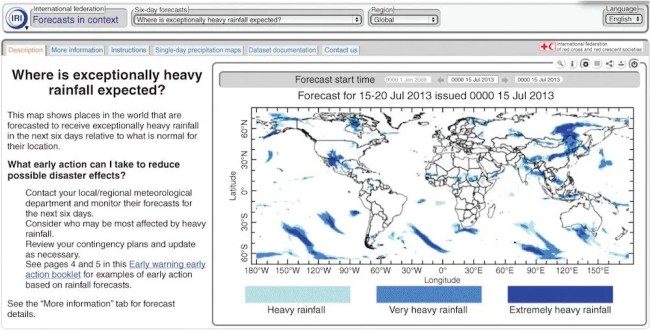
It’s not the climate itself that’s being governed here, of course, but the regulation of human technologies, behaviours and mechanisms to mitigate the causes of climate change and adapt to its unavoidable impacts. Hulme investigates and summarises these approaches to governance, including state-centric and polycentric models: the use of standards and certification, carbon markets, citizens’ assemblies, judicial courts and ‘climate services’ such as the ‘Forecast in Context Map Room’ tool developed by the International Federation of Red Cross and Red Crescent Societies for decision-making in disasters.

“[G]lobal temperature is not an entity that is directly tractable to intentional human action. Governing temperature therefore requires governing the full range of human activities and technologies … and the imaginations that give rise to them… Governing global climate therefore becomes an exercise in governing the collective of human societies but where the power to do so exists in no central or identifiable location.”

A technosocial idea of climate change: showing a screen shot of the IRI-IFRC Forecast in Context Tool
Screenshot of the IRI-IFRC Forecast in Context Tool illustrating where exceptionally heavy rainfall is expected.
Source: ‘Climate services for society: origins, institutional arrangements, and design elements for an evaluation framework’, Catherine Vaughan & Suraje Dessai (May 2014)

Given climate governance’s “totalising reach”, as Hulme identifies it, paradoxically perhaps it’s a profound relief as well as an insurmountable obstacle that no human institutions can ever have the global power to understand, decide and dictate the scale and scope of response that’s needed. There is no governing ‘matrix’. As Hulme says, “far from … vision[s] of a coordinated and intelligent Earth System Governance framework, a more plausible metaphor for climate governance is that of a clumsy multilayered meshwork of overlapping and competing competences and interests.”

Climate imaginaries

Hulme finally moves to the realm of realist and speculative imaginaries of the climate to come and how “events that have not yet happened in reality, happen in the imagination.” As such, now as in history, “future climate imaginaries wield extraordinary power over the present.” He reminds us of the totalitarian party diktat in George Orwell’s Nineteen Eighty-four — “Who controls the past, controls the future: who controls the present, controls the past” — and suggests that with respect to climate change, Orwell’s aphorism might come full circle: “Who controls the future, controls the present”. In this light, the “hopeful imagery offered up in the Paris Agreement”, of a global future climate to be kept under 1.5o to 2.0oC above pre-industrial levels is an especially powerful future narrative attempting to motivate and constrain human behaviour to a global pathway. But as such it “does not necessarily trump all other climate imaginaries … [and]  prompts the obvious question: Whose imaginaries count most?”

Among the artistic responses to ideas of climate change Hulme references is The Weather Project. Olafur Eliasson’s 2003 installation in the Tate Modern’s cavernous Turbine Hall “reminded visitors that humans are unavoidably bound up in the making and experiencing of the weather.”

“Human activities are increasingly co-producing the vaster space of the atmosphere and the climates that it yields. Through his installation Eliasson was saying that there is no standpoint outside of the weather from which humans can stand and objectively observe, measure or manipulate the atmosphere … For humans to live culturally with climate is for climate to be inescapably altered.”

An artistic idea of climate change: showing Olafur Eliasson's 2003 installation in the Tate Modern, The Weather Project.
View of Olafur Eliasson’s The Weather Project in the Tate Modern Turbine Hall, 2003
Photograph: Mark Goldthorpe © 2003

The different practices of ‘futuring’ — drawing on science, fiction, metaphor, modelling, myth, scenario-making, visualisation or other techniques — need to recognise that our futures are not reducible to climate alone but are many-sided; are produced and conditioned on different scales, not just the abstract global scale; and have geographies and histories. Also,

“imaginaries are not merely imaginaries. They are not simply inert figments of a fertile imagination. Sociotechnical imaginaries operate across the boundaries of the perceptual and the material. They can bring real worlds into being, for example carbon capture technologies, driverless vehicles, intelligent robots, or space tourism.”

Although discussed as a separate way of futuring the climate, along with models and scenarios for example, metaphor is perhaps something so intrinsic to human imagination and our faculty for language that it underpins the others as much as it stands out for investigation in its own right. As Hulme says, “metaphors help us grasp something new or unfamiliar by associating it with something more familiar and everyday.” Think of the ‘greenhouse effect’ or ‘carbon budgets’. Not intended to be taken literally, metaphors “help explain an idea, enable a comparison, or provoke a line of thought.” And metaphors are perhaps especially helpful in thinking through non-linear aspects of the complex and unpredictable world around us. Think ‘tipping points’, ‘planetary boundaries’, ‘runaway climate change’ — metaphors that Hulme picks up as phrases emanating from Earth Systems scientists. Or think ‘global thermostat’, ‘sunscreen’, or ‘insurance policy’ — metaphors deployed in the world of geoengineering. ‘Geoengineering’ is itself a metaphor, of course, one that projects as a solid science the risky business of presuming to tinker with the planet at its own scale. As Hulme says “metaphors can be hard to spot and can act as political Trojan horses” (and there goes another one), so it’s worth being on the lookout for them. Metaphors can also point in different directions, as he suggests with ‘The Anthropocene’.

“Is the Anthropocene a way of drawing attention to the awesome – but unequal – powers and responsibilities people now have for shaping the climatic future? Does it provoke a questioning of the character and wisdom of the Anthropos – the human – who has given rise to this epoch and its unequal power relations? Or does the Anthropocene metaphor dissolve the old binaries of modernity that separate nature from culture and so recognises that climate is no longer natural and never again can be?”

The overall thrust of this book is how — given the diversity of human imagination and experience, and the ever-changing state of our knowledge of the world — there can be no single narrative of climate change. Certainly, no singular strategic narrative directing what ‘we’ must do or what ‘climate’ we must end up with. There are many present experiences and understandings of what a climate is and what climate change means; and therefore many futures at stake, and many practices for reaching out to them and making use of them today. But who, in the end, can resist a convincing and pithily stated narrative?

“An indefinite future of a physically changing climate, now brought about largely by human hands, has to be confronted. But also to be grasped is the fact that the idea of an unsettled climate is with us forever.”


Find out more

Climate Change by Mike Hulme (2022) is published by Routledge. You can read about Mike’s work and thinking on climate change over many years at his website.

Some of Mike Hulme’s ideas have helped shape previous ClimateCultures blog posts, including The Stories We Live By, where Mark discusses metaphor and other aspects of our discourses and narratives on our relationships with the rest of the natural world, as explored in a free online ecolinguistics course created by ClimateCultures member Professor Arran Stibbe and volunteers from the International Ecolinguistics Association.

Mark Goldthorpe
Mark Goldthorpe
An independent researcher, project and programme manager on environmental and climate change issues - investigating, supporting and delivering cultural and creative responses to our predicaments.